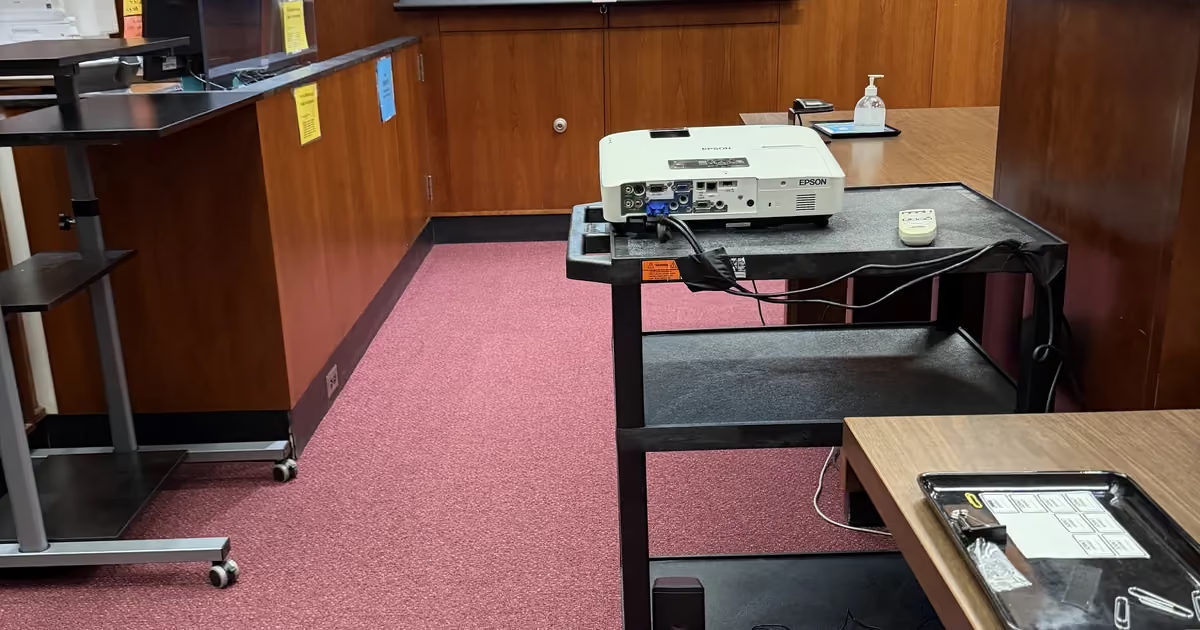

Courtroom Technology & Trial Tech Support
Displays, audio, switching, and cabling, installed, tested, and backed up before the room fills.
Displays, audio, switching, and cabling, installed, tested, and backed up before the room fills.
A trial date is set. Exhibits are ready. Then the projector will not sync, or the audio cuts out during a critical deposition clip, and the jury's attention drifts. This happens more often than most attorneys expect, because courtrooms vary widely in their built-in technology.
The goal is simple: make sure technology never becomes the story of the trial.
Courtroom AV setup is not the same as a conference room. Evidence has to meet chain-of-custody standards, displays must be positioned so the judge, jury, and opposing counsel can all see clearly, and some courts restrict certain technology or require pre-approval. Courtroom AV failures can interrupt testimony and undercut the credibility of a carefully built case.
Before
Review the courtroom's technology, sync depositions, format exhibits, and test equipment in advance.
During
Set up early, then a technician stays present to troubleshoot without disrupting the case.
After
Multi-day trials get daily adjustments as exhibits and strategy evolve.
Preparation matters, presentation matters, and helping clients feel supported in high-stakes moments matters most.
Yes. Redundant systems are standard practice, not an optional add-on. Backup equipment is brought to every trial to prevent single points of failure.
Yes. Support is structured to adapt each day as exhibits, witnesses, and strategy evolve.
Yes. Federal courtrooms often have specific technology requirements, and experience there helps ensure compliance and smooth setup.
Tested & backed up
Do courtroom technology requirements vary between Southeast Michigan courts?
They do, sometimes more than attorneys expect. Wayne, Oakland, Macomb, and Washtenaw County courthouses each have their own built-in technology, courtroom layouts, and IT policies. Some courtrooms come equipped with modern displays and integrated systems, while others require bringing in most of the equipment from scratch. Knowing these differences ahead of time, rather than discovering them on the morning of trial, is part of what makes preparation so important across different venues.
Do you test courtroom audio and video equipment before trial begins?
Always. Equipment testing happens well before opening statements, not after something goes wrong. This typically includes confirming compatibility with the specific courtroom's existing systems, checking microphone levels throughout the room, testing playback on every screen, and running a full walkthrough of the day's presentation materials. Courthouses vary widely in their built-in technology, so testing in advance means fewer surprises once the trial is underway.
What equipment is needed for a witness to testify remotely from another state?
Remote testimony has become far more common, but it still requires the right setup to hold up under courtroom scrutiny.
The goal is for remote testimony to feel as seamless and credible to the jury as if the witness were sitting in the courtroom.
What happens if courtroom technology fails during trial?
This is exactly why "prepared" isn't just a buzzword for us — it's the whole philosophy.
Courtroom technology failing in front of a jury isn't just inconvenient, it can undercut your credibility. Our job is to make sure that never happens on our watch.
Do Michigan courts provide courtroom technology, or should we bring our own?
It varies a lot by courthouse, and honestly, this is one of the most common surprises for attorneys who have not tried a case in a particular courtroom before.
Some Michigan courts have built-in AV systems, but the quality and reliability vary widely. Others have little to no permanent technology, meaning everything needs to be brought in.
Even when a courtroom does have equipment, we typically recommend supplementing it rather than relying on it exclusively. Part of what we do before trial is confirm exactly what a specific courthouse offers, so there are no surprises on day one.
What equipment do you bring to every trial?
Every trial is different, but our baseline kit does not change, because reliability is the whole point.
We would rather show up with more than we need than be caught short in front of a jury.
What happens if courtroom technology fails during trial?
This is exactly why "prepared" is not just a buzzword for us. It is the whole philosophy.
Courtroom technology failing in front of a jury is not just inconvenient; it can undercut your credibility. Our job is to make sure that never happens on our watch.
Backups, redundancy, calm. The mobile office goes where your case goes.
John is calm, prepared, and invisible in the best way. The technology simply works, every deposition, every trial day.
Laura Johnson, Smith Haughey Rice & Roegge
From remote witnesses to courtroom playback, everything ran without a hitch. I never had to think about the equipment once.
Farah Israel, Kitch Attorneys & Counselors
The most reliable trial technician we have worked with. Redundant systems meant we never lost a minute of courtroom time.
Eric Ramar, Ottenwess Law, PLC
Tell us about your case. We'll bring the technology, the preparation, and the calm.