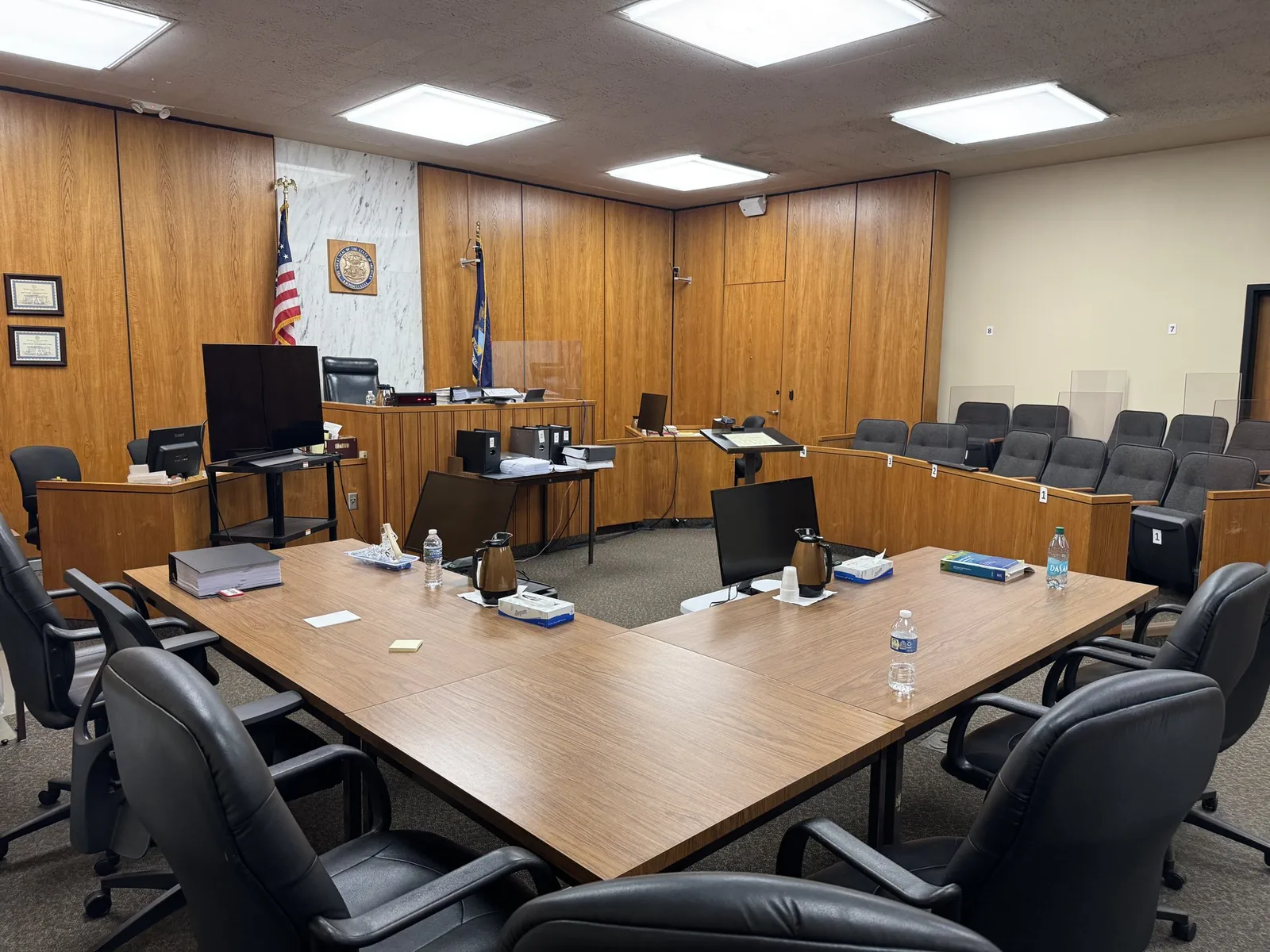

Michigan-based. Multi-state capable. The mobile office travels to your courtroom.
We are based in Southeast Michigan and travel statewide, so you have one prepared trial partner wherever your case is heard.
It's 9:40 on a Sunday night, and opening statements start at 9:00 tomorrow morning. You know your theory of the case cold. What keeps you up is smaller and harder to control: whether the timeline exhibit will actually appear on the jurors' monitors when you reach for it.
Picture a juror who teaches middle school math. She is looking at a nurse's note from 2:14 a.m., a string of vital signs, and a fetal monitoring strip that looks like a seismograph. Nobody has ever asked her to judge whether a physician acted reasonably.
The trial date finally lands on the calendar, and something shifts in the office. A case that lived for two years in depositions, discovery folders, and expert reports now has to become a story a jury can follow.
It's 8:52 on a Tuesday morning. Your expert is sitting in a hotel room in Ohio, the court reporter is logged in from Lansing, and opposing counsel just asked whether everyone can hear them. Nobody knows yet if the witness's Wi-Fi will hold for three hours.
A trial week in Southeast Michigan rarely stays in one building. You might pick a jury in Pontiac on Monday, defend a deposition in Ann Arbor on Wednesday, and bring in an out-of-state expert by video before Friday.
A cardiologist with thirty years of practice can still lose a jury in the first minute of a recording. The audio hums, a window behind her washes out her face, and the chart she keeps pointing to never appears on screen.
The witness is on the stand, and cross is finally building momentum. You ask for the email with the highlighted line, the one your whole examination was built around. The screen stays dark.
The attorney turns toward the screen and says, "Let's play the clip." Twelve jurors shift in their seats. The judge looks up from the bench. For a few seconds, the entire courtroom waits to see whether the testimony appears exactly as promised.
An attorney stands, clicks to the first exhibit, and waits. The jury monitors stay dark. Someone checks a cable, someone else reboots a laptop, and twelve jurors watch the clock instead of the evidence. Every trial lawyer has seen a version of that moment, and nobody wants to live through it twice.
A witness can spend an entire day answering questions under oath, and a jury may hear only a handful of minutes from it. Those minutes carry real weight. They need to match the certified transcript, reflect every ruling the judge has made, and play cleanly the moment an attorney calls for them.
There is a strange gap between reading a deposition transcript and watching the moment it describes. On paper, a witness's answer is just text on a line. On video, that same answer carries a pause, a shift in posture, a tone that says more than words alone.
Picture the moment. An attorney stands in front of a Wayne County jury, ready to play a two minute deposition clip. That clip undercuts the opposing witness completely, if it plays right. The clip needs to start exactly where it should.
A witness who cannot be in the room does not have to be a weak link in your case. Attorneys have learned to expect the unexpected. A doctor testifies from another state. An expert gets stuck on a delayed flight.
There is a real difference between hiring someone with a camera and hiring someone who understands what happens once that footage ends up in front of a jury. Attorneys learn this the hard way more often than anyone would like.
Trial lawyers rarely lose cases because the facts were weak. More often, something breaks down in the execution. A deposition clip will not sync. A courtroom monitor refuses to cooperate.
There is a specific kind of quiet that settles over an attorney's office the night before trial. The witness list is finalized. The opening statement is memorized. And somewhere on the desk sits a folder of exhibits that need to become something a jury can actually understand in the space of a few seconds on a screen.
Jurors do not remember most of what they hear. They remember what they see. A well-built timeline or a simple chart can explain a case better than twenty minutes of testimony. That is the quiet power of legal graphics, and it is why Detroit attorneys now treat visual evidence as core trial strategy.
There's a moment right before opening statements when the courtroom goes quiet. The jury is watching, and the judge is waiting. Somewhere behind the scenes, someone either has everything ready or is scrambling to fix a surprise problem.
A deposition transcript can tell a jury what a witness said. It cannot show them the pause before an answer, the shift in posture, or the moment a witness's confidence cracks under a hard question. Those details often matter more than the words themselves, and they only survive if someone captured them on video.
Attorneys spend months building a case, gathering evidence, and shaping arguments. All of that work deserves to be seen clearly when it finally reaches the jury.
Most attorneys don't think much about the trial technician until they're standing in front of a jury and a key exhibit won't display.
Tell us about your case. We'll bring the technology, the preparation, and the calm.