
Courtroom Presentation Services
Attorneys spend months building a case, gathering evidence, and shaping arguments. All of that work deserves to be seen clearly when it finally reaches the jury.
Attorneys spend months building a case, gathering evidence, and shaping arguments. All of that work deserves to be seen clearly when it finally reaches the jury.
Attorneys spend months building a case, gathering evidence, and shaping arguments. All of that work deserves to be seen clearly when it finally reaches the jury.
Courtroom presentation services exist to protect that moment. They cover the technology, the coordination, and the steady hands that make sure exhibits, video, and testimony show up exactly as planned. When it works well, nobody in the room notices it at all. Everyone is simply watching the case unfold.
This is the part of trial work that rarely gets discussed until something goes wrong. A frozen screen or a missing file can pull focus away from the argument itself. So can a courtroom projector that will not cooperate. Good presentation support means attorneys never have to think about any of that.
Courtroom presentation services often get reduced to "hooking up a laptop." That description misses almost everything that actually happens. The real work starts long before trial. Planning has to account for the courtroom itself, the exhibits, and how the case will be told visually.
It also covers the in-the-moment coordination that keeps a trial moving. Someone has to know exactly when to pull up an exhibit, cue a video clip, or switch between witness testimony and supporting documents. That timing matters as much as the technology behind it.
A full-service courtroom presentation setup typically includes several moving parts working together.
Presentation support does not exist in isolation. It connects directly to trial strategy, exhibit preparation, and how the legal team wants the story to unfold in front of the jury. The technology serves the argument. It never replaces it.
Attorneys who bring in presentation support early tend to have more flexibility. They can adjust how exhibits get introduced, test different sequencing, and make sure nothing depends on last-minute guesswork once the trial actually starts.
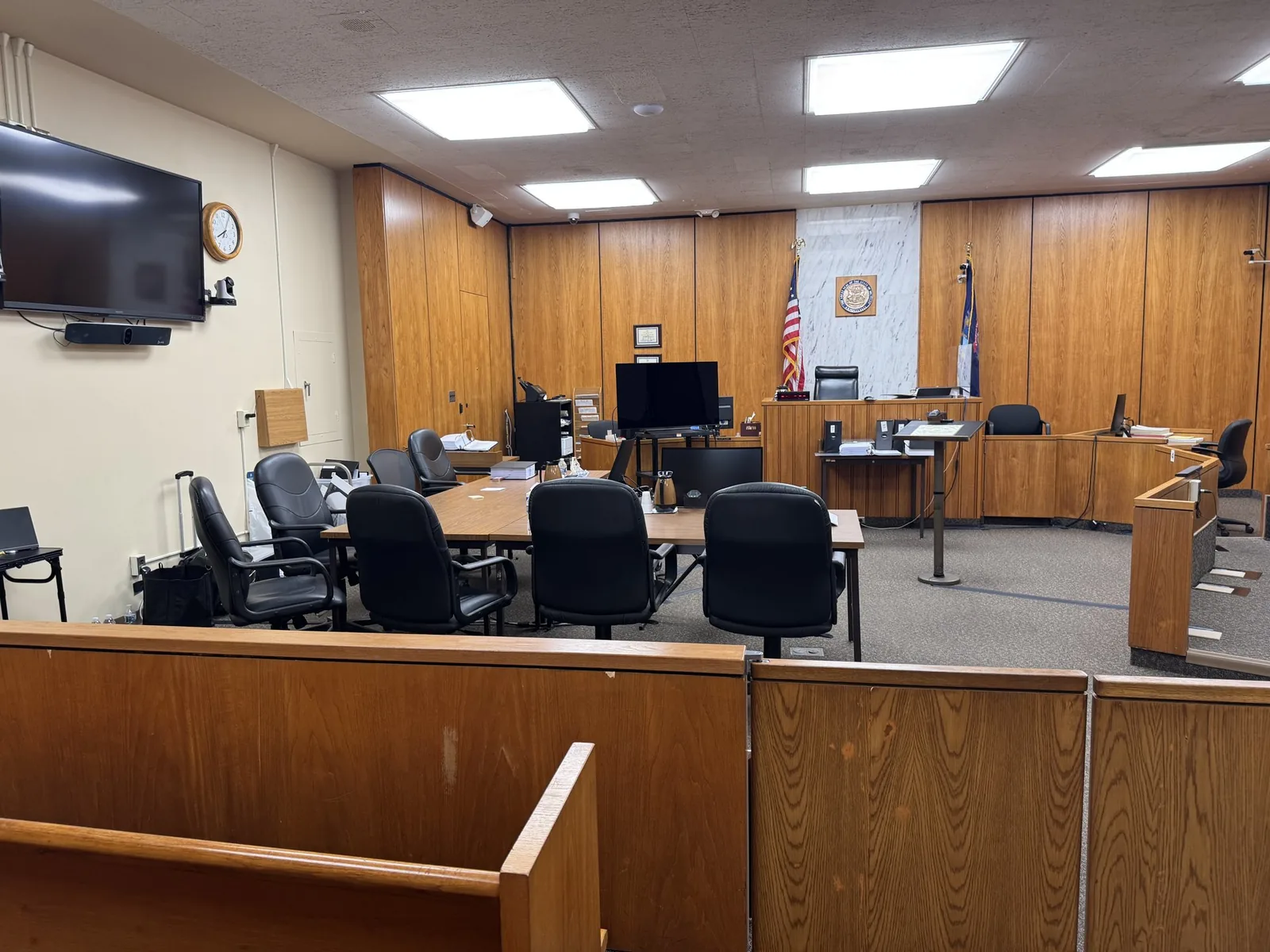
Every courtroom is different. Some have modern built-in displays and sound systems. Others rely on decades-old equipment that was never designed for digital exhibits. Presentation technology has to work with whatever exists in that specific room.
That means testing compatibility ahead of time rather than assuming it will simply work. A cable that fits one courtroom's projector may not fit the next one down the hall. Small details like this decide whether a presentation runs smoothly or stalls in front of the jury.
Trials do not pause for technical difficulties. A single point of failure can bring an entire presentation to a stop. One laptop, one cable, one file location, and the worst possible moment to lose any of them. Redundancy is not optional in high-stakes litigation.
Some courtrooms have excellent built-in technology. Others have almost none. A strong presentation partner adapts to both situations without asking the court for anything unusual or difficult to accommodate.
This flexibility matters more than it sounds. Attorneys should never have to worry about whether their presentation setup will work in a specific courthouse. That planning should already be handled before the trial date arrives.
A trial technician's work begins well before opening statements. Exhibits get organized, tested, and loaded into whatever system will be used in the courtroom. Video clips get cued to the exact moments they will be needed.
This preparation phase also includes a walkthrough of the actual courtroom whenever possible. Seeing the room in advance means fewer surprises once the trial is underway and the pressure is on.
Once trial starts, the technician's job becomes about timing and precision. Exhibits need to appear the instant an attorney references them. Video clips need to start and stop exactly where planned, without fumbling in front of the jury.
Equipment fails. Files do not always load the first time. Courtrooms sometimes have technical quirks nobody anticipated.
What separates a strong trial technician is not avoiding every problem. It is solving problems so quickly that the jury never notices anything happened.
This is where redundant systems and thorough preparation actually pay off. A backup device that is already loaded and ready means a technical issue becomes a ten-second fix instead of a five-minute delay.
When an exhibit appears matters almost as much as what it contains. Introducing a document too early can blunt its impact. Waiting for the right moment, often coordinated with testimony, gives it far more weight in front of the jury.
This kind of timing requires close coordination between the attorney and the presentation team. It is not something that can be improvised well in the moment.
Deposition testimony rarely gets played in full. Attorneys select designations, opposing counsel adds counter-designations, and specific clips get pulled for impeachment when a witness contradicts earlier testimony. Managing all of this requires careful organization.
The strongest presentation support feels collaborative rather than purely technical. A good trial technician understands the case well enough to anticipate what an attorney needs before being asked. That kind of familiarity comes from genuine preparation, not guesswork.
Attorneys should feel like they have a partner in the room, not just someone running equipment. That distinction shapes how smoothly a trial actually runs.
Every engagement starts with preparation, not equipment. Exhibits get reviewed, courtroom specifics get confirmed, and a full plan gets built around the actual case, not a generic template. Nothing gets left for the morning of trial.
Support does not end once trial starts. Someone experienced stays present throughout, ready to adjust, troubleshoot, and keep the presentation moving smoothly no matter what the day brings.
Schmitzer Video & Trial Services operates on what might best be described as a Mobile Office model. Everything needed for trial travels along, fully redundant and ready to deploy in nearly any courtroom setting. Preparation, backup systems, and calm execution are not add-ons. They are the foundation of how the work gets done.
A trial is built on preparation, and that preparation deserves to show up clearly when it matters most. The technology behind courtroom presentation should never be the thing anyone remembers about a trial. It should simply do its job quietly, letting the case speak for itself.
Attorneys carry enough weight walking into a courtroom. The visual and technical side of a trial should never add to that weight. It should lift some of it instead, giving legal teams one less thing to worry about while everything else demands their full attention.
Trial dates have a way of arriving faster than expected. The best time to think through courtroom presentation needs is before the calendar gets tight, not the week before opening statements. A short conversation now can save a lot of stress later.
Schmitzer Video & Trial Services works directly with attorneys across Michigan to build a presentation plan around the specific courtroom, the specific exhibits, and the specific case. There is no generic package here, just a setup built around what the trial actually requires.
Contact Schmitzer Video & Trial Services Phone: (555) 000-0000
Address: St. Clair Shores, MI
Email: hello@schmitzervideo.com
Have a trial or deposition coming up? Tell us about your case and we will help you get courtroom ready.
Request a consultation →More than a decade of legal video, trial presentation, and courtroom technology experience across Michigan.
Meet John →Trial presentation, legal video depositions, courtroom technology, and remote testimony support.
View services →Trial presentation, legal video, courtroom technology, and remote testimony support for litigation teams across Michigan.
Home base in St. Clair Shores, with same-day reach across Southeast Michigan and travel statewide.
Tell us about your case. We'll bring the technology, the preparation, and the calm.