
Trial Consulting Services
Pre-trial technology planning, courtroom walkthroughs, and war-room setup.
Pre-trial technology planning, courtroom walkthroughs, and war-room setup.
Most attorneys think they need a videographer. What they actually need is someone who understands how a courtroom works from the inside out. Trial consulting fills that gap, building a strategy for how your case will look, sound, and land with a judge or jury.
The real value is fewer surprises, more control, and a case that presents the way you intended it to.
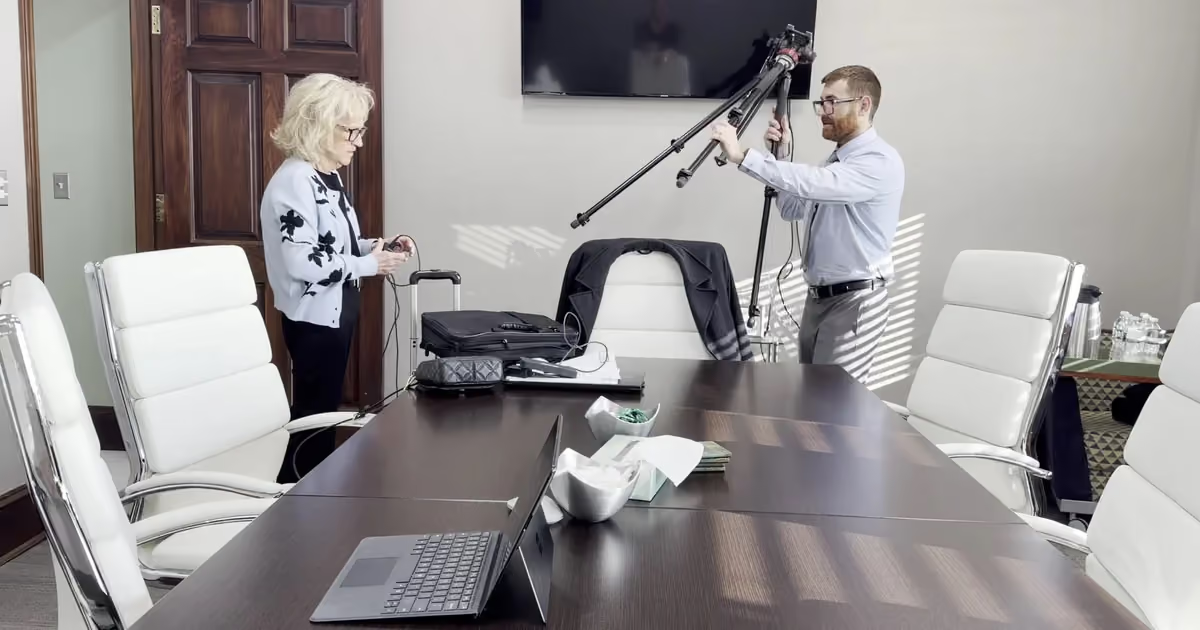
Every courtroom is different. A consultant visits the space in advance, tests the setup, and identifies issues before they become problems on trial day: layout walk-through, AV testing, juror visibility, cable and screen placement, and coordination with court staff.
Jurors process information visually and sequentially. Jury consulting support structures the order evidence is presented, simplifies complex information, times exhibit reveals to testimony, and avoids visual clutter, removing friction between the evidence and the jury's understanding of it.
Myth
Trial consulting is only for large, complex cases.
Fact
Cases of any size benefit. A single misplaced exhibit can derail a straightforward case just as easily as a complicated one.
Myth
Trial consulting is the same as hiring a videographer.
Fact
Videography is one component. Consulting covers strategy, logistics, courtroom technology, and presentation as a whole.
As early as possible, often during discovery, especially if depositions will later be used as trial exhibits. Early involvement allows more time to prepare and troubleshoot.
Consulting focuses on strategy: how evidence is sequenced and how a case flows. Tech support focuses on the equipment itself, including setup and troubleshooting.
No. Bench trials and administrative hearings also benefit from clear presentation, organized exhibits, and reliable courtroom technology.
Planned in advance
Do courtroom technology requirements vary between Southeast Michigan courts?
They do, sometimes more than attorneys expect. Wayne, Oakland, Macomb, and Washtenaw County courthouses each have their own built-in technology, courtroom layouts, and IT policies. Some courtrooms come equipped with modern displays and integrated systems, while others require bringing in most of the equipment from scratch. Knowing these differences ahead of time, rather than discovering them on the morning of trial, is part of what makes preparation so important across different venues.
Do you test courtroom audio and video equipment before trial begins?
Always. Equipment testing happens well before opening statements, not after something goes wrong. This typically includes confirming compatibility with the specific courtroom's existing systems, checking microphone levels throughout the room, testing playback on every screen, and running a full walkthrough of the day's presentation materials. Courthouses vary widely in their built-in technology, so testing in advance means fewer surprises once the trial is underway.
Do you work directly with attorneys, court reporters, or both?
Both and honestly, coordination between all parties is a big part of what makes a deposition or trial run smoothly.
Litigation is a team effort, and we see our role as making sure the technology side of that team never becomes the weak link.
Can remote expert witnesses be displayed alongside exhibits during testimony?
Yes, .this is one of the more technically involved things we do, and it's become much more common since remote testimony became standard practice.
Done well, jurors shouldn't even notice the added complexity, it should feel as natural as an in-person witness.
What happens if courtroom technology fails during trial?
This is exactly why "prepared" isn't just a buzzword for us — it's the whole philosophy.
Courtroom technology failing in front of a jury isn't just inconvenient, it can undercut your credibility. Our job is to make sure that never happens on our watch.
Can you assist if my trial starts in just a few days?
Yes. We understand trial dates shift, settlements fall through, and sometimes you inherit a case with almost no runway. We can move quickly to review your exhibits and build a presentation on a compressed timeline.
We bring backup equipment and redundant systems to every job, which matters even more when there's been less prep time. We'll ask direct questions upfront about courtroom layout, exhibit format, and witness needs so nothing gets missed in the rush.
Short notice isn't ideal, but it's not a dealbreaker. Call us, we'll tell you honestly what's possible in the time you have.
Backups, redundancy, calm. The mobile office goes where your case goes.
John is calm, prepared, and invisible in the best way. The technology simply works, every deposition, every trial day.
Laura Johnson, Smith Haughey Rice & Roegge
From remote witnesses to courtroom playback, everything ran without a hitch. I never had to think about the equipment once.
Farah Israel, Kitch Attorneys & Counselors
The most reliable trial technician we have worked with. Redundant systems meant we never lost a minute of courtroom time.
Eric Ramar, Ottenwess Law, PLC
Tell us about your case. We'll bring the technology, the preparation, and the calm.