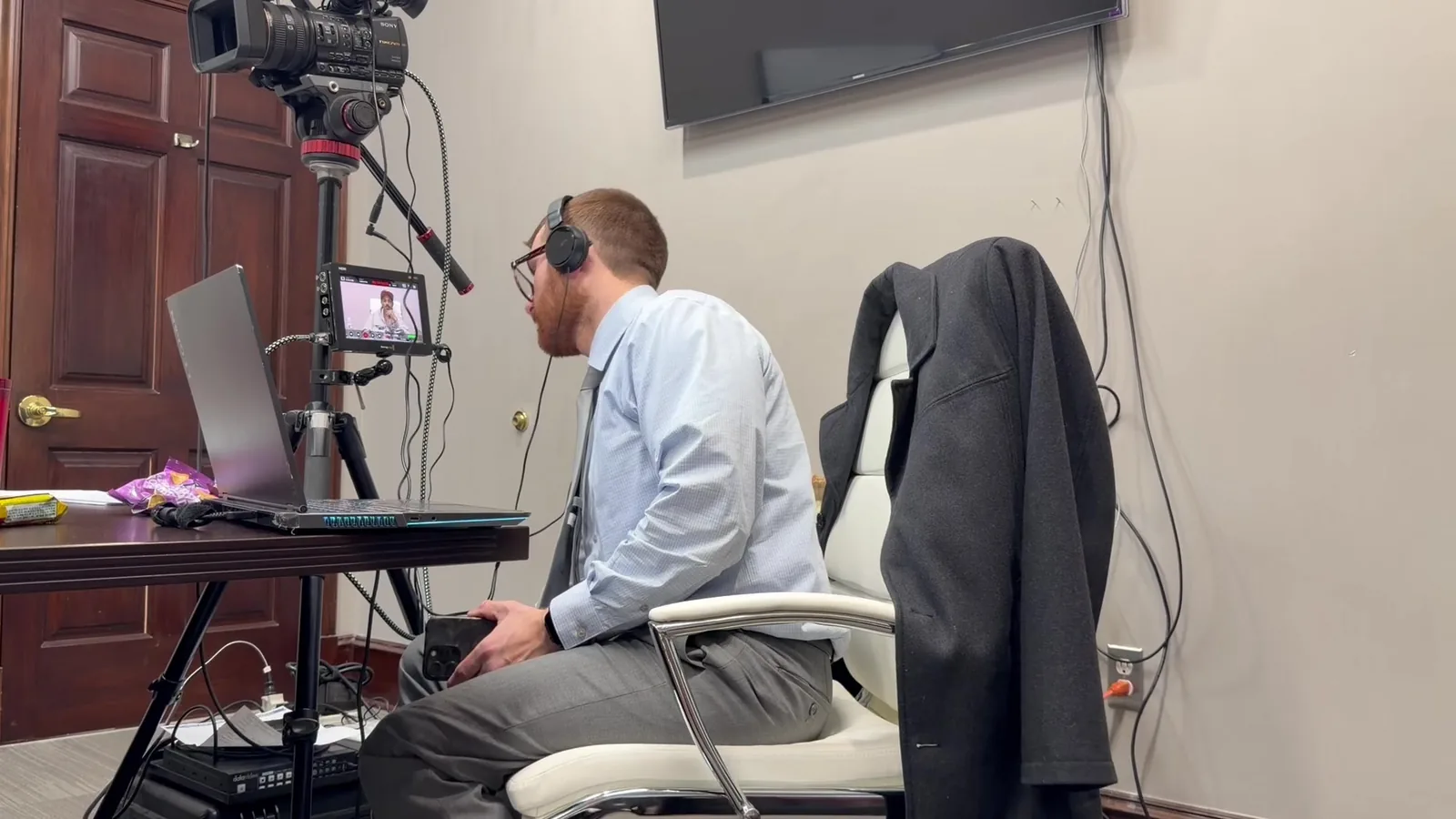
Picture this. A witness is on the stand. Counsel pulls up a critical exhibit, and the screen goes black. The projector won't sync. The laptop freezes. Every second of silence stretches longer in front of a jury that's watching closely.
This isn't a hypothetical scenario. It happens more often than most attorneys expect, and it rarely happens at a convenient moment. Courtroom technology is unpredictable, and a single point of failure can derail testimony that took months to prepare. Weeks of strategy, witness prep, and exhibit design can be undercut by something as small as a loose HDMI cable.
Trial presentation isn't just about having the right equipment in the room. It's about having enough of it, tested in advance, and backed up so nothing depends on a single device or connection working perfectly. That's the entire idea behind what we call a mobile office, and it's why we build it into every trial we support, regardless of size or venue.
In This Article
- What "Courtroom Ready" Actually Requires
- What Happens When Trial Technology Fails
- Common Causes of Courtroom Technology Failures
- The Solution: What a Mobile Office Means
- What This Looks Like in Practice
- Preparation Is the Presentation
What "Courtroom Ready" Actually Requires
Many attorneys assume trial tech support means showing up with a laptop, a cable, and a copy of the exhibits. In reality, courtroom readiness is far more involved than that. It means preparing for a working environment that's often outside anyone's direct control, and that can change from one courthouse to the next without warning.
The Assumption Gap
Attorneys are experts in law, not AV infrastructure, and that's exactly how it should be. It's reasonable to assume that if you show up with the right files, the technology will simply work as intended. That assumption is exactly where problems tend to start, often at the worst possible moment.
- Courthouse wifi is often unreliable, restricted, or shared across multiple courtrooms at once
- Courtroom AV systems vary widely in age, brand, and compatibility with modern devices
- Outlets, HDMI ports, and adapters aren't standardized across venues or even across rooms in the same building
- IT support is rarely available on short notice once a trial is already underway
What Happens When Trial Technology Fails
Disruption in Front of the Jury
Jurors notice everything, even small things attorneys might overlook in the moment. A delay while someone reboots a laptop or searches for a missing cable pulls attention away from the testimony itself. It can make a well-prepared case look disorganized, even when the underlying legal strategy is sound and thoroughly researched.
Perception matters in a courtroom. A jury that watches a team scramble to fix a screen may start to question the team's overall preparation, fairly or not. That impression can linger long after the technical issue is resolved.
Lost Time and Lost Momentum
Trial time is expensive, limited, and tightly scheduled. Every minute spent troubleshooting is a minute not spent building the case or reinforcing key arguments. Judges have little patience for delays, particularly in trials with tight calendars or multiple parties waiting on the schedule.
Opposing counsel may also use the interruption to shift the room's attention or momentum in their favor. A pause that seems minor to the tech team can feel much larger to the jury and the judge overseeing the proceedings.
Attorneys Pulled Away From Their Role
When something breaks, someone has to fix it, and too often that responsibility falls on the attorney or paralegal instead of a dedicated technician. That's a distraction no legal team can afford in the middle of an argument or cross-examination. Attorneys should be focused on the witness, not on why a laptop won't connect to the courtroom display.
- Credibility takes a hit when technology fails publicly in front of the jury
- Momentum is difficult to rebuild once an interruption breaks the flow of testimony
- Attorneys lose focus on strategy while managing equipment instead of arguments
- Rescheduling or extending trial time adds real financial and logistical cost
Common Causes of Courtroom Technology Failures
Relying on a Single Device
Many teams show up to trial with one laptop and no real backup plan. If that device fails, malfunctions, or simply won't connect properly to the courtroom's system, there's nothing ready to take its place. A single point of failure means a single mistake can stop the entire presentation.
Assuming the Venue's Systems Will Work
It's easy to assume courthouse wifi or AV equipment will perform the same way it did during a previous trial. Venues change over time. Equipment ages, gets replaced, or gets shared across more courtrooms than it was designed to support. What worked reliably last time is never guaranteed to work the same way this time.
Untested Setups
Files that were never tested on courtroom-specific equipment. Adapters that don't match the room's available ports. Software that hasn't been verified against the courtroom's operating system or display settings. These are small oversights on paper, but they carry outsized consequences once the trial is underway.
No Contingency for Basic Failures
Power outages, dead batteries, and dropped wifi connections happen more often than people expect. Without a backup plan in place, any one of these ordinary issues can bring an entire presentation to a stop in front of the jury.
- No backup power source if an outlet fails or a battery dies unexpectedly
- No secondary internet connection if courthouse wifi drops mid-testimony
- No spare cables, adapters, or connectors if one goes missing or stops working
- No second technician available if the primary operator needs to step away
The Solution: What a Mobile Office Means
A mobile office is a self-contained trial support setup that doesn't depend on the courtroom's existing technology to function. It's built on redundancy from the ground up, so no single point of failure can interrupt a presentation at a critical moment.
Built Around Redundancy
Redundant systems aren't about bringing excess equipment for the sake of it. They're about eliminating risk in an environment where there's no room for a second attempt once the jury is watching. Every critical piece of equipment has a backup ready to deploy the moment it's needed.
- Multiple laptops loaded with identical, tested presentation files
- Backup projectors, monitors, and cabling for every connection type
- Independent internet connectivity, completely separate from courthouse wifi
- Battery backups and power contingencies for extended sessions
- On-site troubleshooting capability without relying on courthouse IT staff
What This Looks Like in Practice
Before the Trial
Preparation starts well before the first day in court, often weeks in advance. Equipment is tested against the specific courtroom whenever possible, including checking outlets, display types, and available connections. Files are checked and rechecked, backups are loaded onto every device, and connectivity is confirmed independently of the courthouse's own systems.
During the Trial
A calm, experienced trial technician manages the setup throughout each day of trial. If something unexpected happens, whether it's a dropped connection or a failed device, a backup system is already in place and ready to go. The presentation continues smoothly, and in most cases, the judge, jury, and attorneys never notice that an issue occurred at all.
Across Different Venues
This approach doesn't change based on location, courthouse, or case type. Whether it's a courtroom in Detroit, a federal court appearance with stricter technical requirements, or a hybrid trial involving remote witnesses testifying from another state, the same standard applies consistently.
- Local courtrooms across Southeast Michigan, each with its own equipment quirks
- Federal court proceedings, which often carry stricter technology and security requirements
- Remote and hybrid trials involving witnesses testifying from multiple states simultaneously
- Multi-week trials requiring consistent, dependable support day after day without fail
Preparation Is the Presentation
Trial presentation success isn't decided in the courtroom. It's decided in the preparation that happens quietly before anyone walks through the door. A strong case deserves a presentation that matches its strength, without technical distractions getting in the way of the argument being made.
A mobile office isn't about having more equipment than necessary just to appear thorough. It's about making sure the moment that took months of preparation goes exactly as planned, without a single technical issue getting in the way of the work already done.
Discuss Your Trial's Technology Needs With Our Team
Every trial comes with its own set of technology requirements, from courtroom setup and exhibit presentation to remote testimony coordination across multiple states. Our team is ready to walk through what your upcoming trial needs and how a fully redundant setup can support it from start to finish.
Key Takeaway
A mobile trial office with backup technology and redundant systems helps prevent courtroom disruptions and keeps trial presentations running smoothly.
Planning a trial or deposition in Michigan? Let us make the technology the last thing you have to worry about.
Request a Consultation