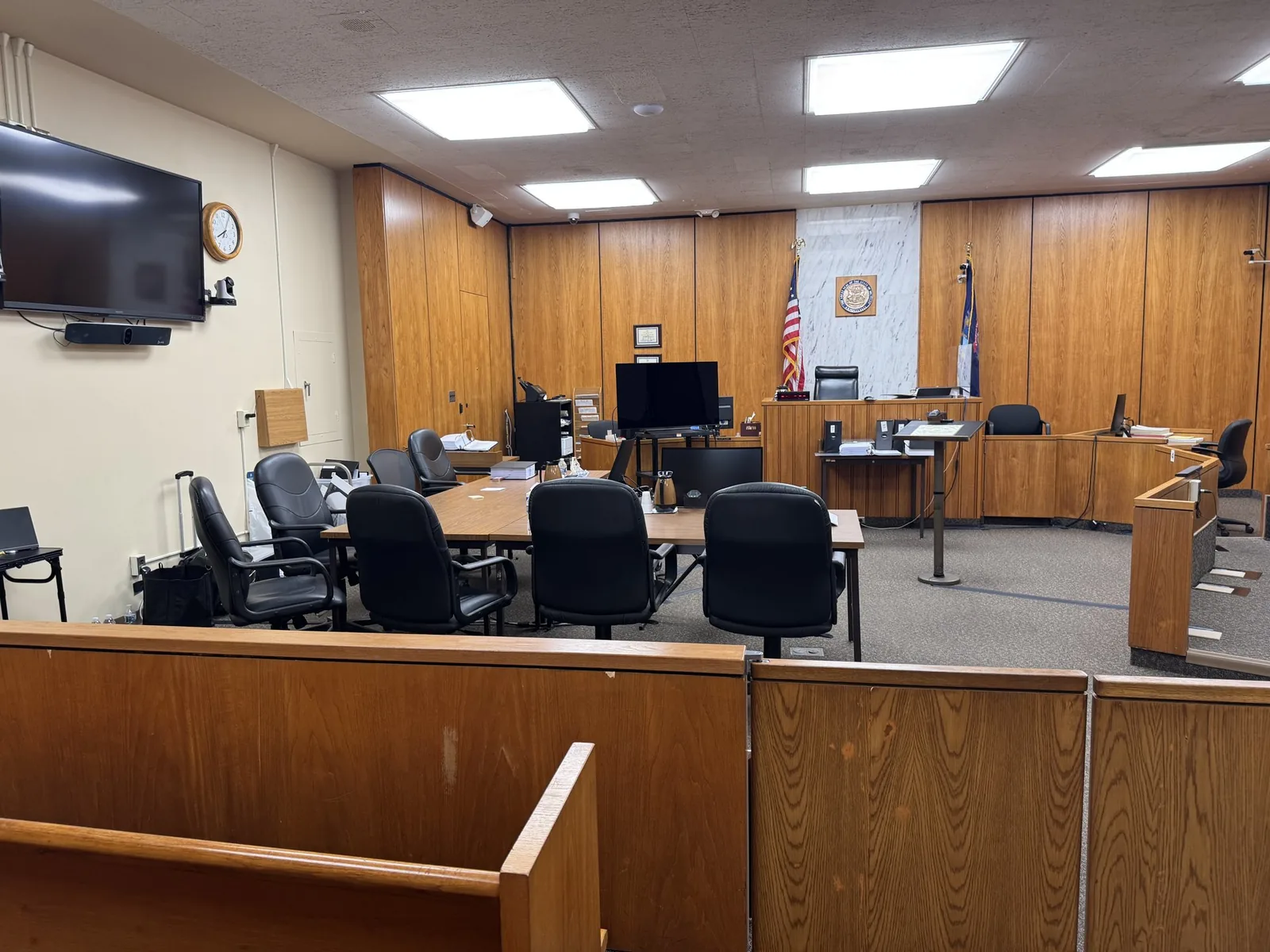
There's a moment right before opening statements when the courtroom goes quiet. The jury is watching, and the judge is waiting. Somewhere behind the scenes, someone either has everything ready or is scrambling to fix a surprise problem.
That moment is where trial presentation earns its keep. Michigan courtrooms are not identical. A Wayne County courtroom doesn't run the same way as one in Grand Rapids or a federal courtroom downtown.
Equipment varies, and judges have their own preferences. What worked last month in one building might not work at all in another. John Schmitzer II has spent more than 13 years learning those differences so attorneys don't have to.
Trial presentation is not about being the person with the nicest laptop in the room. It's about being the person who already thought through what could go wrong, and built a plan for it. That's the work Schmitzer Video & Trial Services does for legal teams across Michigan.
What Trial Presentation Really Involves
More Than Running a Laptop in the Courtroom
A trial technician manages the flow of evidence in real time. That means pulling up the right exhibit the second it's needed, syncing video testimony with transcript text, and making sure every piece of visual evidence appears exactly when the attorney calls for it. Timing matters. A three second delay while a screen loads can break the rhythm of a cross examination.
Beyond the technical side, there's judgment involved too:
- Knowing which exhibit version has been admitted versus which is still under objection
- Reading the courtroom to sense when the attorney needs a beat before moving forward
- Adjusting on the fly when a judge asks to see something out of sequence
- Keeping calm when opposing counsel raises an unexpected objection about a display
The Role of a Trial Technician During Testimony
During live testimony, a trial technician works almost like a co-pilot. The attorney focuses on the witness and the jury. The technician handles everything happening on screen. That division of labor lets attorneys stay present in the moment instead of splitting their attention between arguing the case and running a slideshow.
This becomes especially important during video depositions played for impeachment purposes. Cueing the exact clip without fumbling in front of the jury takes preparation most people never see.
How Trial Presentation Connects to Every Other Phase of a Case
Trial presentation doesn't start on the first day of trial. It connects backward to depositions, exhibit designations, and pretrial conferences. It connects forward to how a jury remembers the case during deliberation. Every earlier decision, from deposition syncing to exhibit labeling, shows up again at trial.
Why Michigan Courtrooms Present Their Own Challenges
Varying AV Capabilities Across County Courthouses
Some Michigan courtrooms have modern built-in displays and reliable connections. Others still rely on a single projector and a cart wheeled in from a storage closet. A trial team that assumes every courtroom is identical is setting itself up for a rough surprise.
Judges' Preferences and Local Courtroom Culture
Every judge runs their courtroom a little differently. Some want exhibits pre marked and filed digitally days in advance. Others prefer a more informal approach and expect adjustments in real time. Local familiarity with these preferences prevents avoidable friction during trial.
A few examples of what shifts from courtroom to courtroom:
- How far in advance exhibit lists need to be shared with chambers
- Whether video clips require separate pre-approval before playback
- How much latitude is given for adjusting the schedule mid-trial
- Preferred screen placement so it doesn't block the judge's sightline
What Changes for Federal Cases in Michigan
Federal courtrooms in Michigan tend to have stricter technology protocols. There's less flexibility once the trial begins. Redundancy planning becomes even more important here, since there's often less room to improvise if something fails. Federal judges also tend to expect a more polished, buttoned up presentation.
The "Mobile Office" Approach to Trial Support
Why Redundant Systems Matter More Than People Realize
Redundancy isn't overkill. It's the difference between a five second recovery and a fifteen minute delay in front of a seated jury. Backup laptops, backup cables, backup internet connections, and backup power all exist for the same reason: courtrooms are unpredictable, and trials don't pause for technical difficulties.
What's Actually Packed for a Trial Day
A typical trial day setup includes far more than most attorneys expect:
- Primary and backup laptops, fully loaded with synced exhibits
- Multiple display adapters to match whatever the courtroom provides
- A mobile hotspot as backup internet in case courthouse Wi-Fi drops
- Backup audio equipment for playing video depositions clearly
- Extension cords, surge protectors, and extra batteries for every device
Staying Calm When Something Goes Wrong Mid-Trial
Something eventually goes wrong in almost every multi-day trial. A cable fails, a file won't load, or a courtroom's projector bulb dies at the worst possible moment. What separates a smooth recovery from a visible disruption is preparation done long before anyone noticed a problem.
What Happens Before the Trial Even Starts
Reviewing Exhibits and Designations Ahead of Time
Every exhibit, every deposition clip, and every designation and counter-designation needs to be reviewed and tested before trial. This includes checking video quality, confirming synchronization with transcript text, and making sure nothing was left out during the exchange of exhibit lists.
Coordinating With the Attorney's Trial Strategy
Trial presentation works best when it reflects the attorney's actual strategy, not a generic template. That means conversations ahead of time about which exhibits carry the most weight, which witnesses need special handling, and where the case's emotional turning points are likely to land with the jury.
Walking the Courtroom Before Trial Day
Whenever possible, visiting the actual courtroom before trial starts solves problems in advance instead of during testimony. Outlet placement, jury box sightlines, and Wi-Fi reliability are worth confirming firsthand rather than assuming.
Quick Takeaway: What Should Be Finalized One to Two Weeks Before Trial
- All exhibits tested and synced with transcript text
- Video deposition clips cued and timestamped for playback
- Courtroom AV compatibility confirmed or backup equipment arranged
- A clear plan discussed with the attorney for pacing and sequencing
Common Mistakes Attorneys Make With Trial Technology
Assuming the Courthouse Will Provide Adequate Equipment
Courthouses vary widely in what they actually have on hand. Assuming a courtroom has working, modern AV equipment is one of the costliest assumptions attorneys make.
Waiting Too Long to Test Exhibits and Video Clips
Testing exhibits the morning of trial leaves no room to fix a problem. Files that look fine on a laptop screen sometimes behave differently once projected. Catching that a week early is a minor fix. Catching it in front of the jury is not.
Not Having a Backup Plan for Technical Failure
Even reliable systems fail occasionally. Attorneys who walk in without any contingency plan are gambling with a moment they can't get back. A jury doesn't forget an awkward technical delay, even if the case itself is strong.
Frequently Asked Questions
How far in advance should trial presentation services be booked?
Several weeks ahead is ideal, especially for cases with heavy exhibit lists or video depositions requiring synchronization. Last-minute scheduling is sometimes possible, but it limits how much preparation and testing can happen beforehand.
Does Schmitzer provide trial support outside of major Michigan cities?
Yes. Coverage extends across Michigan, including smaller county courthouses that may have more limited in-house technology.
What equipment is brought to a typical trial?
Primary and backup laptops, display adapters, backup internet, audio equipment, and power backups are standard, with adjustments based on courtroom specifics and case needs.
What happens if equipment fails during a live trial?
Backup systems are built in specifically for this reason. A trial technician can typically switch to backup equipment within seconds, minimizing disruption to testimony.
Prepared for Whatever the Courtroom Brings
A trial is not the moment to discover a weak link in your presentation plan. It's the moment everything either holds up or it doesn't, in front of the people who matter most. Preparation done weeks earlier is what makes that moment feel steady instead of stressful.
Attorneys deserve a trial support partner who treats every case with the same level of care, whether it's a single day bench trial or a multi-week jury trial. That's the standard this work is built around.
Let's Talk Before Your Trial Date Arrives
If a trial date is already on the calendar, now is the right time to start the conversation. Reach out to walk through your case, your exhibits, and what a prepared courtroom setup looks like.
Contact Schmitzer Video & Trial Services
Address: St. Clair Shores, MI
Phone: (555) 000-0000
Email: hello@schmitzervideo.com