Last-Minute Trial Requests: How We Stay Ready When the Schedule Changes
July 5, 2026
Share
Last-Minute Trial Requests: How We Stay Ready When the Schedule Changes
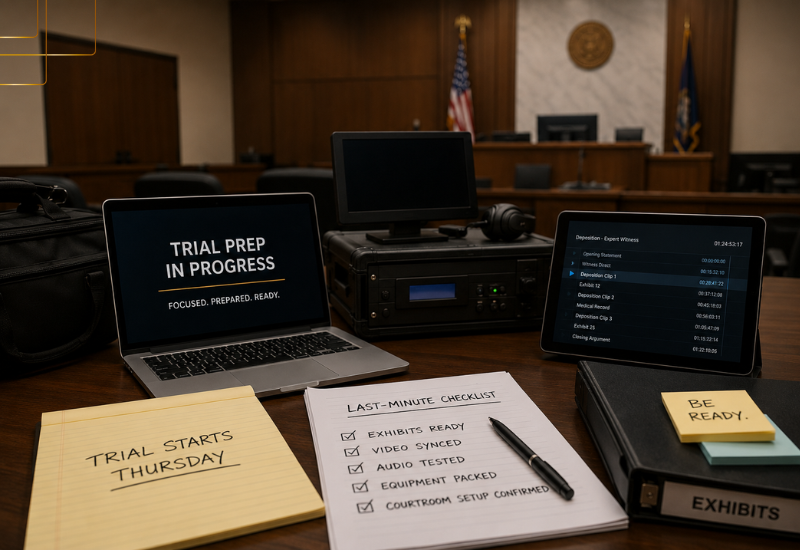
Trial dates rarely move in an attorney's favor. One week you're preparing for a hearing three months out. The next, you're told trial starts Thursday. It happens more often than most people outside the courtroom realize.
When that call comes in, the pressure shifts fast. Exhibits need to be ready. Video depositions need to be synced. Courtroom technology needs to work the first time, because there is no second chance in front of a jury. The real question isn't whether schedules will change. It's what happens to your trial presentation when they do.
In This Article
Why Trial Schedules Change Without Warning
What's at Stake When Preparation Time Disappears
How We Stay Ready: Our Approach to Rapid Response
What Attorneys Can Do to Help Us Help You
Preparation Is What Makes Last-Minute Look Effortless
Why Trial Schedules Change Without Warning
Litigation timelines look predictable on paper. In practice, they shift constantly, and rarely with much notice. Attorneys who have tried more than a handful of cases already know this. The rest of the legal team, and often the client, gets caught off guard.
Common Causes of Sudden Scheduling Changes
Several factors drive last-minute trial movement, and most are outside anyone's direct control:
Court docket congestion: judges reshuffle trial calendars based on caseload, and your case can move up or back with little warning
Settlement talks falling through: negotiations that seemed close can collapse days before trial, suddenly making full trial prep urgent again
Witness or expert availability: a key witness becomes available on short notice, or unavailable, forcing schedule adjustments
Continuances granted or denied: an expected delay doesn't materialize, or an unexpected one does
Opposing counsel or co-counsel conflicts: scheduling conflicts on either side can push trial dates in unpredictable directions
The Misconception That Slows Teams Down
Many attorneys assume trial presentation support requires weeks of lead time to be done well. That belief makes sense on the surface. Video synchronization, exhibit prep, and courtroom tech setup all sound like processes that need a long runway.
In reality, the teams that struggle most aren't the ones facing short timelines. They're the ones without a system built to handle short timelines in the first place. Preparation time and preparation systems are not the same thing.
What's at Stake When Preparation Time Disappears
When a trial date moves up unexpectedly, the risks multiply quickly. It's not just about being busy. It's about what happens when trial presentation technology and materials aren't fully ready.
The Real Cost of Being Caught Unprepared
Several things tend to go wrong when preparation time evaporates:
Scrambling for equipment: pulling together courtroom-compatible technology under time pressure increases the chance something gets overlooked
Untested technology failing live: equipment that hasn't been checked in advance is far more likely to malfunction in front of a jury
Unsynced exhibits: video depositions and transcripts that aren't properly aligned undermine the clarity attorneys are trying to create
Compounding stress: attorneys already managing a compressed timeline don't need trial technology adding to that burden
Credibility risk: a presentation that looks rushed or glitchy can shape how a jury perceives the entire case
None of these outcomes are inevitable. They're the result of preparation systems that weren't built to absorb sudden change. This is exactly the moment where staying calm under pressure matters most, and it's the standard we hold ourselves to on every case.
How We Stay Ready: Our Approach to Rapid Response
Being ready for last-minute trial requests isn't about working faster under stress. It's about having systems in place long before the phone rings. We built our entire operation around one idea: preparation should never depend on how much notice we get.
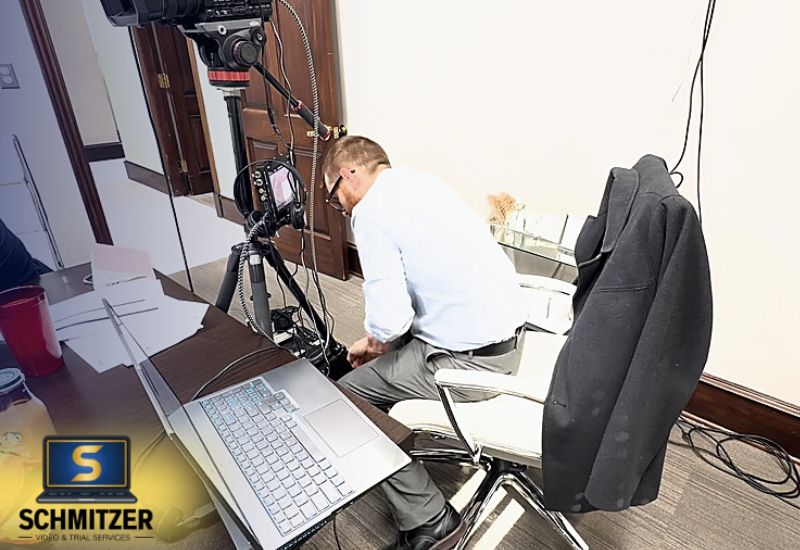
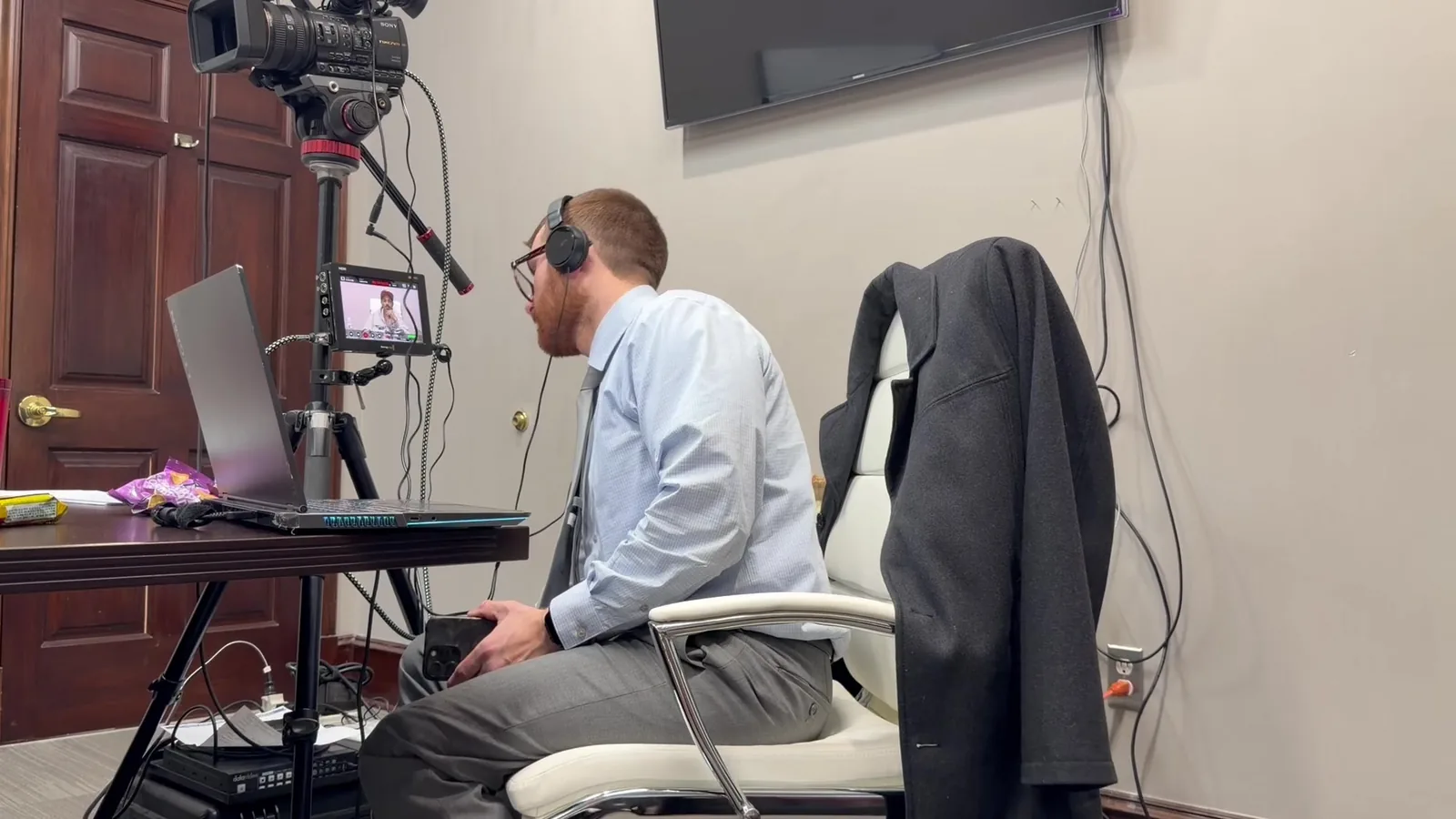
John setting up his camera and laptop workflow
A Mobile Office, Ready to Deploy
We operate like a mobile office built for courtroom deployment on short notice. Every piece of equipment we bring to trial has already been tested, packed, and accounted for well before a case ever calls for it. That means when a trial date moves, our equipment doesn't need to catch up.
Redundant Systems, Every Time
We don't rely on a single piece of equipment for anything critical. Every core system has a backup:
Backup cameras and audio equipment for every deposition and courtroom setup
This redundancy isn't extra caution for its own sake. It's what allows us to walk into a courtroom with confidence, even when the timeline is tight.
Established Courtroom Relationships Across Michigan
Years of working in courtrooms throughout Michigan have given us familiarity with courtroom layouts, equipment requirements, and IT protocols across multiple jurisdictions. That familiarity matters when time is short. We're not learning a courtroom's setup for the first time on the day of trial.
Streamlined Workflows for Compressed Timelines
Video synchronization and exhibit preparation can be expedited when the underlying process is already efficient. Our standard workflow is built for accuracy first, which means it can also be compressed without cutting corners when a deadline demands it. Speed without sacrificing quality is only possible when the process was solid to begin with.
A Clear Intake Process for Urgent Requests
When an attorney calls with a compressed timeline, we don't start from scratch figuring out what we need. We have a defined intake process that quickly identifies:
What exhibits or video sources are already available
What courtroom technology the venue requires
What synchronization or editing work still needs to happen
What timeline is realistic given the resources on hand
That clarity, established quickly, is often what separates a smooth trial start from a chaotic one.
What Attorneys Can Do to Help Us Help You
Rapid response works best as a partnership. There are a few things attorneys can do, even under time pressure, that make a meaningful difference in how smoothly last-minute trial support comes together.
Loop Us In Early, Even for Tentative Dates
If there's any chance a trial date could move, let us know as soon as that possibility exists. We don't need a confirmed date to start preparing. Early awareness, even for a date that might shift, gives us a head start if it does.
Keep Exhibits and Video Sources Organized
The more organized your exhibits and video depositions are going in, the faster we can synchronize and prepare them. Disorganized files add time to a process that may not have time to spare. A simple, consistent filing structure throughout a case pays off when the schedule tightens.
Communicate Courtroom Logistics as Soon as You Know Them
Courtroom location, available technology, and any venue-specific restrictions all affect our setup. The sooner we know these details, the sooner we can prepare accordingly. This is especially true for courtrooms we haven't worked in recently.
Keep an Open Line for Last-Minute Confirmations
Trial logistics can shift again even after a date is set. Staying reachable for quick confirmation calls helps us adjust in real time. This kind of responsiveness on both sides is often what keeps a compressed timeline manageable rather than overwhelming.
Preparation Is What Makes Last-Minute Look Effortless
A smooth trial presentation under a compressed timeline isn't luck. It's the result of redundant systems, tested equipment, and a team that has done this enough times to know what matters most. When schedules change, the goal isn't to work harder in a panic. It's to already have the infrastructure in place to absorb that change without missing a step.
At Schmitzer Video & Trial Services, we built our approach around a simple philosophy: preparation matters, presentation matters, and helping attorneys feel supported in high-stakes moments matters most. Last-minute trial requests test that philosophy more than almost anything else. It's exactly the kind of moment we're built for.
Let's Talk Before You Need Us
The best time to prepare for a scheduling emergency is before one happens. If you have a trial on the horizon, even a tentative one, reach out to discuss your upcoming trial calendar. We'll help you understand what preparation looks like on your timeline, whether that's months away or much sooner than expected.
Key Takeaway
Effective trial support helps attorneys handle last-minute schedule changes with reliable technology, synced evidence, and courtroom-ready systems.
Planning a trial or deposition in Michigan? Let us make the technology the last thing you have to worry about.
What Changes From One Southeast Michigan Courtroom to Another?
Courtrooms across Southeast Michigan can differ significantly in technology, layouts, access procedures, judge preferences, and remote testimony capabilities. Scouting the room and preparing redundant equipment can help litigation teams avoid technical disruptions and keep trial presentations running smoothly.
Trial Is Next Month. What Should the Litigation Team Be Organizing Now?
Trial preparation becomes more manageable when litigation teams organize exhibits, deposition clips, courtroom technology, witness logistics, and backups throughout the final month. A structured four-week timeline can reduce last-minute problems and help attorneys stay focused on presenting the case.
Three Courtroom Technology Problems We Plan for Before Anyone Else Arrives
Courtroom technology problems often involve display failures, poor audio, or a single equipment failure that can interrupt testimony and distract jurors. Testing the actual courtroom early and preparing redundant systems helps trial teams keep exhibits, video, and testimony running smoothly.