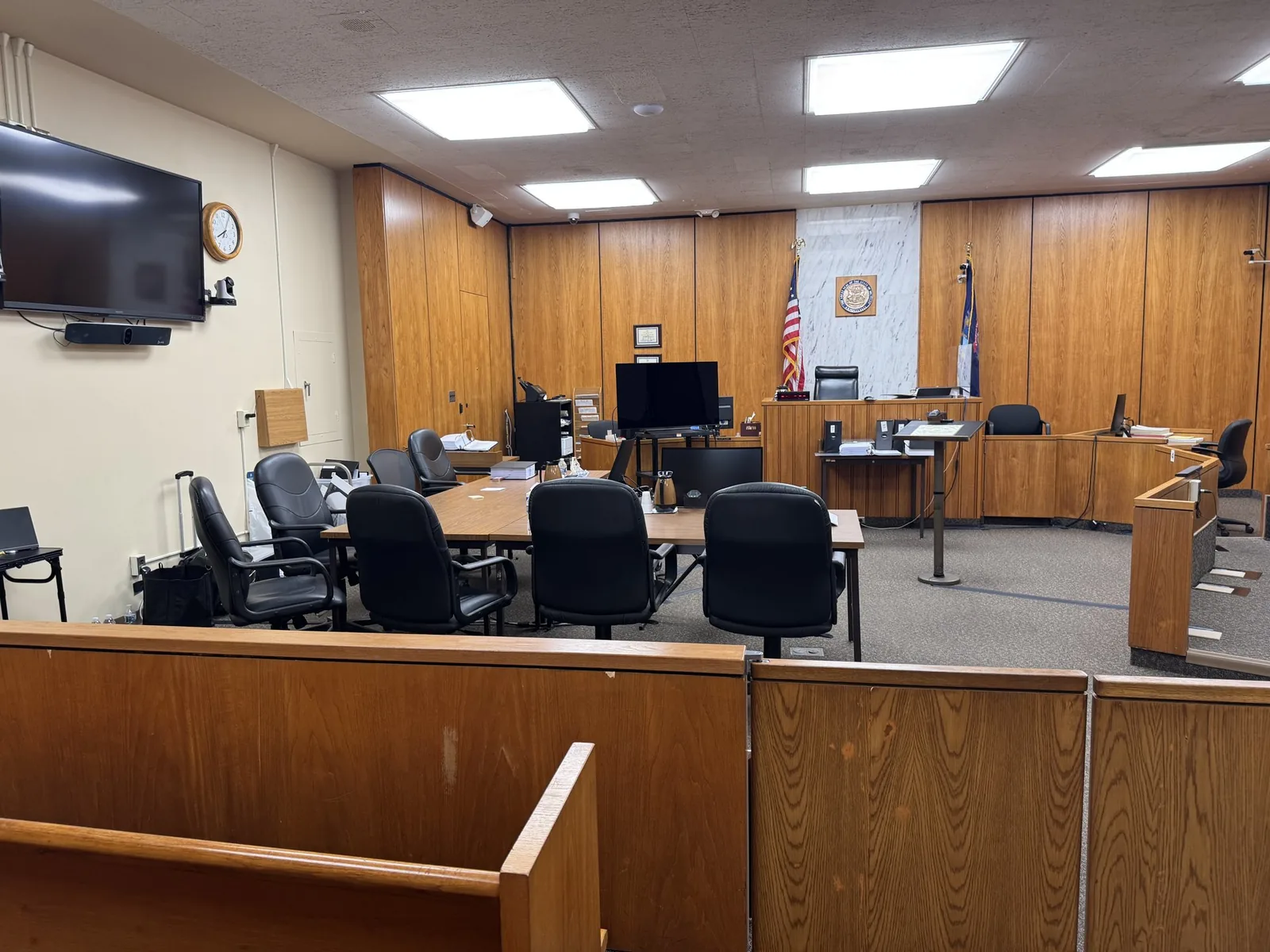
Picture the moment. An attorney stands in front of a Wayne County jury, ready to play a two minute deposition clip. That clip undercuts the opposing witness completely, if it plays right. The clip needs to start exactly where it should.
The audio needs to be clear. The screen needs to work the first time. There is no second first impression in front of twelve people who are already forming opinions.
That moment is what deposition playback services are really about. It is not just having a video file saved somewhere. It is knowing the file will play cleanly, on cue, in whatever courtroom it needs to play in.
Detroit attorneys who have lived through a stalled clip know how much that single moment can matter. A garbled audio track at the wrong second can undo weeks of preparation. Schmitzer Video & Trial Services was built around that moment.
What Deposition Playback Actually Means
Beyond Just Pressing Play
Deposition playback sounds simple on paper. Someone recorded a deposition months ago, and now that recording gets shown in court. In practice, there are several steps between the original recording and a courtroom ready clip.
The video has to be formatted correctly for whatever system the courtroom uses. It has to be cued to the exact timestamp counsel needs, not just the general area. The audio has to be clean enough that jurors in the back row can hear every word without straining.
None of that happens automatically. It happens because someone prepared it in advance and tested it before trial started.
Where Playback Fits in the Litigation Timeline
Playback services are not only a trial tool. They show up throughout litigation in several settings:
- Trial testimony, where a witness cannot appear live
- Motion hearings, where a judge needs to see specific deposition testimony
- Arbitration proceedings, which often move faster and leave less room for technical delays
- Settlement conferences, where a strong clip can shift the tone of negotiations
Why Detroit Attorneys Need Local Playback Support
Wayne County Courthouse Realities
Every courthouse has its own quirks. Some rooms have modern AV systems built into the bench and jury box. Others rely on a projector cart that gets wheeled in and connected fresh for each trial.
Detroit attorneys who have tried cases across different Wayne County courtrooms know this firsthand. A setup that worked perfectly in one room might not translate to another without adjustment. A technician who already knows which rooms run smoothly saves real hours during trial prep. That same technician also knows which rooms need extra testing time built in.
Local familiarity is not a small advantage. Some courthouses have older wiring that limits which connectors will work without an adapter. Others restrict what equipment can be brought in without advance clearance from courthouse staff.
It is the difference between showing up and hoping everything connects. It is showing up already knowing it will.
The Cost of Getting It Wrong in Front of a Jury
A frozen screen or muffled audio does more than waste time. It breaks the rhythm of an argument at the exact moment it needs to land. Jurors notice technical stumbles, and some of them quietly translate those stumbles into doubts about preparation.
Judges notice too. A trial that keeps stopping for tech issues reflects on the legal team running it, fairly or not. Even a short delay can shift the room's attention away from the substance of the case.
The goal of professional playback support is simple: the technology should never become the story. Jurors should remember the testimony, not the delay before it played. That is the standard every Schmitzer setup is built to meet.
Core Components of Professional Playback Services
Video and Audio Quality Standards
Courtroom playback depends on source quality that holds up on a big screen and through courtroom speakers. Recordings need clear audio levels, stable video, and formatting that matches the display equipment in use. A file that looks fine on a laptop screen can fall apart projected across a courtroom.
Video-Transcript Synchronization
Synchronization ties the spoken testimony to the written transcript, timestamp by timestamp. This lets counsel jump directly to a specific line of testimony. There is no need to scrub through footage looking for it.
Accurate sync is one of the most technical parts of preparation. Small errors can cause a clip to start a sentence too early. A clip that cuts in mid word looks sloppy in front of a jury, even when the substance of the testimony is strong.
Designations and Counter-Designations Handling
Before trial, both sides typically submit designated portions of a deposition. Counsel intends to use these segments at trial. Opposing counsel submits counter-designations in response. Playback preparation needs to account for:
- Which designated segments belong to each side
- Any objections or rulings that affect what can be shown
- The order those segments will play in front of the jury
- Redactions that must be removed or blurred before playback
Impeachment Clip Preparation
Impeachment testimony often needs to be ready on short notice during cross examination. These clips have to be cued and accessible instantly, sometimes mid-question, without breaking the momentum of the exam. Preparation here means having the right clip ready before it is needed, not searching for it in real time.
How Schmitzer Prepares Before Trial Day
Pre-Trial Testing and Courtroom Walkthroughs
Every playback setup gets tested well before the trial date. Testing never happens on the morning testimony is scheduled to play. This includes confirming file compatibility with the specific courtroom's equipment.
It also means running through cued segments in the exact order they will play. A walkthrough of the actual courtroom, when possible, adds one more layer of certainty. Knowing the room in advance removes guesswork on the day it counts.
Redundant Systems and Backup Equipment
Quick Takeaway: Trial technology should always have a backup plan, because courtroom equipment can fail without warning. Schmitzer brings redundant systems to every trial, including backup laptops, extra cabling, and duplicate copies of every file. If one system has a problem, the trial keeps moving without the jury ever noticing a gap.
Coordinating with Trial Counsel on Clip Order
Attorneys often adjust strategy the night before testimony. Playback needs to flex with them without losing accuracy. Coordination means confirming clip order and checking last minute designation changes.
It also means making sure counsel knows exactly what will appear on screen and when. A quick check-in the evening before trial catches most last minute surprises early. This kind of close communication is what keeps trial day calm instead of chaotic.
Mini FAQ: Deposition Playback Questions Attorneys Ask
Does every video format work in Michigan courtrooms?
No. Compatibility depends on the specific courtroom's display system, and files often need to be converted or reformatted before trial.
How far in advance should playback be scheduled?
As early as possible, ideally as soon as a trial date is set, though experienced technicians can also accommodate tighter timelines when needed.
Can playback services support remote or hybrid depositions?
Yes. Remote testimony and hybrid trial setups follow the same preparation standards as in-person playback. Extra attention goes toward connection stability and backup internet access.
What happens if equipment fails during trial?
Redundant systems and backup equipment are built into the preparation process. A single equipment failure never stops testimony from playing when backups are already in place.
Who handles designation and counter-designation conflicts before trial?
Trial counsel makes the legal decisions about what can be shown. Schmitzer handles the technical side, making sure approved segments are cued correctly and any excluded material is removed before playback.
A Team That Shows Up Ready
Trial day is not the time to find out whether a system works. It is the time to already know it does. That certainty comes from testing that happened weeks earlier and backups already sitting ready in the room.
That kind of confidence is not luck. It comes from a team that treats preparation as the whole job, not an extra step. It also comes from having done this in enough Detroit courtrooms to know what each one requires.
Schedule Your Detroit Deposition Playback Consultation
A trial date has a way of arriving faster than expected. Playback preparation works best when it starts early rather than in the final week. This holds true whether the case involves a single impeachment clip or a full day of designated testimony.
Getting the technical details right takes time. That time is worth carving out now, while the schedule still allows for it. Reach out to Schmitzer Video & Trial Services to talk through the courtroom and the case. Together, that conversation can map out what a fully prepared playback plan looks like before trial week arrives.
Contact Schmitzer Video & Trial Services
Address: St. Clair Shores, MI
Phone: (555) 000-0000
Email: hello@schmitzervideo.com