
Litigation Support Services for Trial Lawyers
Trial lawyers rarely lose cases because the facts were weak. More often, something breaks down in the execution. A deposition clip will not sync. A courtroom monitor refuses to cooperate.
Trial lawyers rarely lose cases because the facts were weak. More often, something breaks down in the execution. A deposition clip will not sync. A courtroom monitor refuses to cooperate.
Trial lawyers rarely lose cases because the facts were weak. More often, something breaks down in the execution. A deposition clip will not sync. A courtroom monitor refuses to cooperate.
An exhibit gets fumbled in front of the jury at exactly the wrong moment. The legal argument was sound. The delivery was not.
That gap between a well-prepared case and a well-presented one is where litigation support lives. It is not a single service or a single vendor showing up on trial day with a projector. It is the coordinated work of video depositions, synchronized transcripts, courtroom technology, exhibits, and trial consulting. Together, these pieces help the strongest version of a case actually reach the jury.
Litigation support gets used as a catch-all term, and that vagueness causes confusion. Some attorneys hear it and think only of video depositions. Others associate it strictly with courtroom AV setup. In reality, it covers the full spectrum of services that help a legal team gather, organize, and present evidence.
That includes everything from the first deposition recording to the final playback of an impeachment clip. It is a broad category. Trial work itself is broad, and no single moment in a case exists in isolation.
What ties all of these services together is continuity. A deposition recorded months before trial needs to sync perfectly with its transcript. That synced footage needs to translate cleanly into a courtroom presentation system. The exhibits built during trial prep need to display correctly on the courthouse's own equipment.
A decade ago, litigation support typically entered a case only once trial dates were set. That timeline has shifted. More attorneys now bring in support during discovery, well before a trial date exists.
Early involvement means depositions get recorded with trial use already in mind. Camera angles, audio quality, and synchronization all become easier to manage. Planning from the start beats patching things together later under pressure.
A video deposition is more than a recording of testimony. Done well, it becomes a trial ready asset. It gets synced word for word with the transcript, so any moment can be pulled up instantly. That synchronization is what turns a deposition into a usable impeachment tool months later.
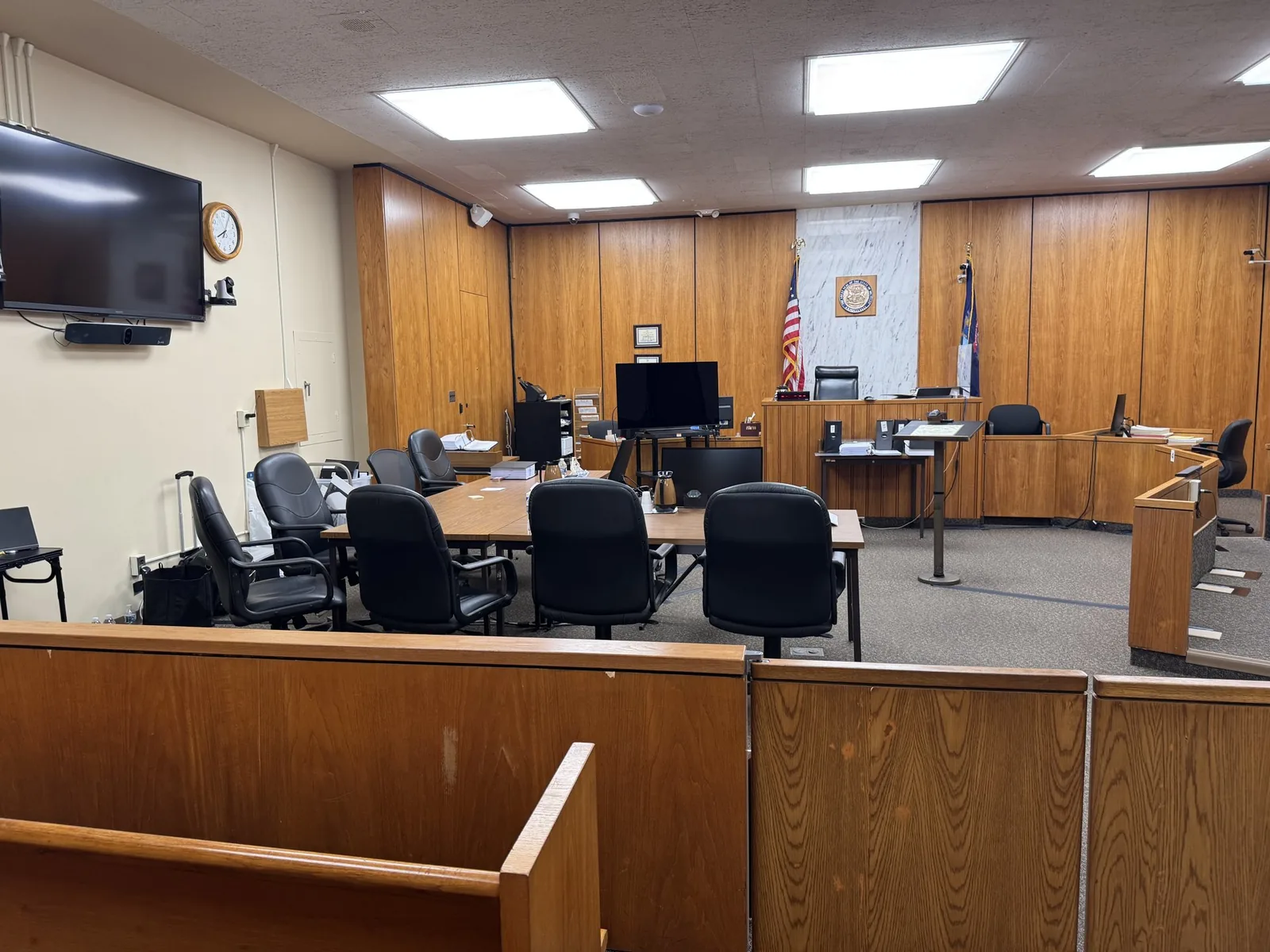
This is the visible, in-room side of litigation support. It covers everything from monitor setup to the software that displays exhibits and plays clips at the right moment. Courtroom AV compatibility matters more than most attorneys expect. Not every courthouse runs the same equipment.
Remote and hybrid testimony has become a permanent fixture in modern litigation, not a temporary workaround. Coordinating a witness appearing by video alongside an in person jury takes real planning.
Audio clarity, camera framing, and connection redundancy all deserve the same seriousness as in person testimony. A dropped connection during a key witness's testimony can cost far more than the technical fix itself.
Jurors process visual information differently than spoken testimony. Trial exhibits and demonstratives translate complex facts, medical records, and timelines into something a jury can absorb and retain.
Trial consulting sits closer to strategy than to equipment. It involves thinking through how testimony, exhibits, and presentation choices support the argument an attorney is making. This is where litigation support stops being purely technical. It starts shaping how a case gets told.
Modern litigation generates enormous volumes of evidence. Medical records, financial documents, expert reports, and digital communications all pile up in ways that were rare a generation ago. Presenting that volume of material clearly takes more than a binder and a highlighter.
Jurors today consume information visually, quickly, and constantly. They are used to clear graphics, organized timelines, and media that gets to the point. A case built entirely on spoken testimony asks a lot of a jury's attention.
Visual evidence does not replace testimony. It reinforces it, giving jurors something concrete to hold onto as they work through complicated facts.
Courtrooms increasingly run on digital systems, remote testimony platforms, and electronic exhibit display. Attorneys who assume a courthouse will simply have compatible equipment on trial day take an unnecessary risk. Litigation support exists partly to close that gap.
Some legal teams still use separate vendors for depositions, synchronization, and courtroom technology. Each handoff introduces a chance for something to get lost, mislabeled, or delayed. A transcript formatted one way may not sync cleanly with video handled by another vendor.
A single litigation support partner carries context from the very first deposition through closing arguments. They already know which clips matter, how exhibits were built, and what the courtroom setup requires. That continuity saves time. It also reduces the risk of something falling through the cracks.
Every handoff between separate providers is a moment where something can go wrong. Working with one coordinated team keeps that risk contained. One phone call solves a problem instead of three separate conversations with three companies.
Reliable litigation support begins weeks before anyone steps into a courtroom. Equipment gets tested. Exhibits get reviewed.
Video clips get organized and cross checked against the transcript. None of this happens the morning of trial if it is done right.
Equipment fails. Cables get damaged. Software glitches at inconvenient moments. What separates a dependable litigation support team from a risky one is backup systems for everything that matters.
Even with redundancy, unexpected moments happen. What matters is how a trial technician responds. A calm response keeps the courtroom's attention on the case, not on a technical hiccup. That composure comes from experience, not luck.
Every case that goes to trial deserves a team that treats preparation as seriously as the attorneys do. That means showing up early, testing everything twice, and having a backup plan for the backup plan. A trial technician's job is not just running equipment. It is protecting the moments where a case gets won or lost.
John Schmitzer II built Schmitzer Video & Trial Services around that exact philosophy. He draws on more than 13 years of experience across depositions, courtroom technology, and trial presentation. Litigation teams throughout Michigan rely on that experience, since it removes one major source of uncertainty from an already demanding process.
If a trial date is on the calendar, or even just on the horizon, now is the time to start the conversation. Litigation support works best when it has room to plan, test, and prepare rather than scramble at the last minute.
Schmitzer Video & Trial Services works with attorneys across Michigan to make sure every deposition, exhibit, and courtroom moment is ready before it matters most. Reach out to talk through what your case needs and how a coordinated support plan can come together well ahead of trial.
Contact Schmitzer Video & Trial Services Address
Address: St. Clair Shores, MI
Phone: (555) 000-0000
Email: hello@schmitzervideo.com
Have a trial or deposition coming up? Tell us about your case and we will help you get courtroom ready.
Request a consultation →More than a decade of legal video, trial presentation, and courtroom technology experience across Michigan.
Meet John →Trial presentation, legal video depositions, courtroom technology, and remote testimony support.
View services →Trial presentation, legal video, courtroom technology, and remote testimony support for litigation teams across Michigan.
Home base in St. Clair Shores, with same-day reach across Southeast Michigan and travel statewide.
Tell us about your case. We'll bring the technology, the preparation, and the calm.