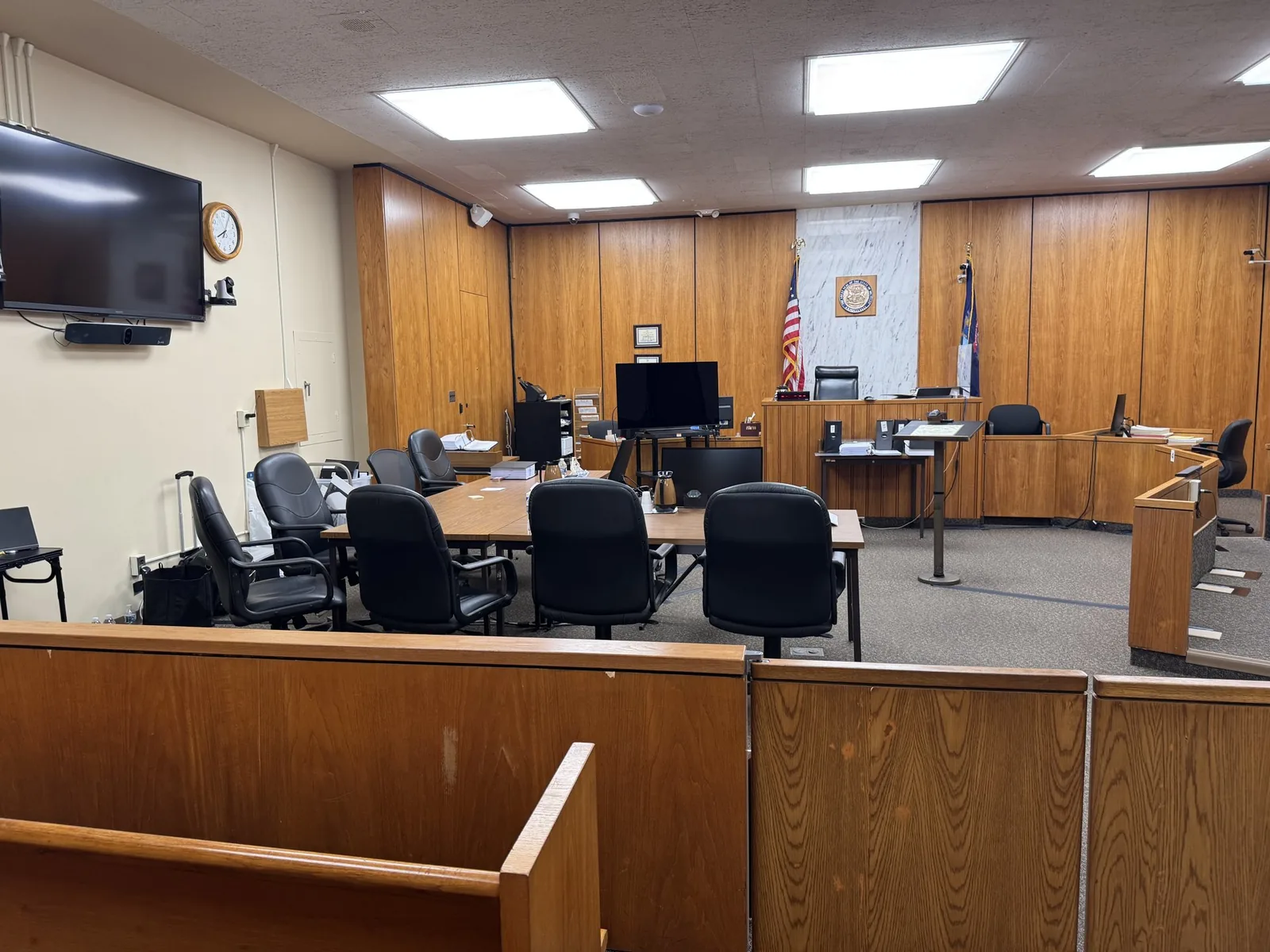
A witness can spend an entire day answering questions under oath, and a jury may hear only a handful of minutes from it. Those minutes carry real weight. They need to match the certified transcript, reflect every ruling the judge has made, and play cleanly the moment an attorney calls for them.
John Schmitzer II has spent more than 13 years on both ends of that process. He records testimony in conference rooms and plays it back in courtrooms across Southeast Michigan. The work in between is quiet and detailed, and it is easy to underestimate until something goes wrong in front of a jury.
In This Article
- What Is Video Deposition Editing for Trial?
- Why Would an Attorney Play Deposition Video Instead of Reading the Transcript?
- What Rules Shape Deposition Video Used at Trial?
- How Do Designations and Counter-Designations Become Trial Clips?
- What Happens During the Deposition Editing Process?
- What Makes an Edited Deposition Clip Trial Ready?
- Impeachment Clips: Editing for Moments You Can't Script
- Testimony the Jury Can Follow and Edits the Court Can Trust
- Let's Get Your Deposition Clips Ready Before Opening Statements
What Is Video Deposition Editing for Trial?
Video deposition editing for trial is the process of turning recorded testimony into designated, synced clips approved for courtroom playback. The editor works from the certified transcript and the attorneys' page-and-line selections. The finished clips reflect the court's rulings on objections and are formatted for trial presentation software.
How Trial Editing Differs From Standard Video Editing
Most video editing exists to shape a story. Trial editing exists to protect a record. The goal is accuracy, not polish, and every decision has to hold up if opposing counsel or the judge asks how a clip was built.
A legal video editor preparing trial clips will never:
- Reorder answers to change the flow of testimony
- Trim a response mid-sentence in a way that alters its meaning
- Adjust tone, pitch, or pacing of the witness's voice
- Add music, effects, or dramatic transitions
Where Editing Fits Between Deposition Day and Verdict
Editing usually begins weeks after the deposition itself. The certified transcript arrives, the parties exchange designations, and the court rules on objections. Only then can final clips be built, tested, and loaded for trial.
Why Would an Attorney Play Deposition Video Instead of Reading the Transcript?
Unavailable Witnesses, Out-of-State Experts, and Treating Physicians
Some witnesses simply cannot appear in person. Experts may live three states away, and some witnesses have moved, fallen ill, or passed away. Video lets their testimony reach the jury in their own voice.
Demeanor, Tone, and the Details Jurors Notice
Many attorneys don't realize how much a read-aloud transcript flattens testimony. Jurors pick up on things that never appear on the page:
- A long pause before a difficult answer
- A shift in posture when a document is introduced
- Confidence or hesitation in the witness's voice
- Facial reactions to follow-up questions
Holding Juror Attention Through Long Testimony
Listening to two attorneys read a transcript aloud can lose a jury quickly. A tightly edited clip moves at the pace of real conversation. It also keeps the focus on the witness rather than on whoever happens to be reading.
What Rules Shape Deposition Video Used at Trial?
Michigan Court Rules on Video Depositions
In Michigan state courts, MCR 2.315 governs how video depositions are taken and handled. MCR 2.308 addresses when depositions may be used in court proceedings. Recording standards at the deposition stage directly affect how usable the footage will be at trial.
Federal Rule of Civil Procedure 32 and Nontranscript Form
In federal court, Rule 32 addresses how deposition testimony is offered at trial. In jury trials, a party can generally request that testimony offered for purposes other than impeachment be presented in nontranscript form when available. That makes clean, synced video especially valuable in federal cases.
The Rule of Completeness and Why Context Matters
Rule 106, found in both the Michigan and Federal Rules of Evidence, reflects a simple fairness principle. When one side plays part of a statement, the other side may seek to include related portions for context. Clip boundaries that start or stop too abruptly can invite a completeness challenge.
Judge-Specific Preferences Across Southeast Michigan Courtrooms
Courtrooms in Oakland, Macomb, Wayne, and Washtenaw counties don't all run the same way. Individual judges set their own expectations for how clips are previewed and approved. Common variations include:
- Whether captions are required, preferred, or discouraged
- How far in advance final clips must be exchanged
- Whether playback time counts against a party's trial time
- How objection rulings are communicated before testimony plays
How Do Designations and Counter-Designations Become Trial Clips?
Page-and-Line Designations Explained
Designations identify the exact testimony each side wants the jury to hear. They typically look like "45:12 to 47:03," meaning page 45, line 12 through page 47, line 3. Because the video is synced to the transcript, each range maps to a precise segment of footage.
Counter-Designations and Completeness Clips
Opposing counsel often responds with counter-designations. These are woven into the playback sequence, usually in transcript order. The attorneys and the court decide the final order, and the editor builds exactly what is approved.
Removing Sustained Objections and Attorney Colloquy
Once the judge rules, sustained objections and the testimony they cover come out. Attorney exchanges that don't belong before a jury are also removed. Clean edits at these points keep the testimony easy to follow without hiding where cuts occurred.
When Rulings Change the Night Before Testimony
Picture a judge ruling on a final set of objections at 4:30 p.m. The clip is scheduled to play at 9:00 the next morning. Updated edits, a revised run-time report, and fresh backup copies all need to be ready before court opens. That timeline is normal in trial work, and it rewards teams who plan for it.
What Happens During the Deposition Editing Process?
Receiving the Certified Transcript and Original Media
Editing starts with the certified transcript and the original, unaltered video files. Working from a rough draft transcript creates page-and-line errors that surface later.
Synchronizing Video to the Transcript
Every line of testimony is matched to its exact timecode. Accurate sync is what allows designations to become clips quickly and precisely.
Building Clips From Approved Designations
Each approved range becomes an individual clip or part of a combined playback sequence. Clips are labeled so attorneys can find them instantly during trial.
Adding Captions and Picture-in-Picture Exhibits
Synced captions help jurors follow technical or soft-spoken testimony. When a witness references a document, it can appear on screen beside them.
Run-Time Reports and Attorney Review
A run-time report shows how long each clip plays and how much time belongs to each party. This matters when courts track time allocations closely. Attorneys review the clips and report before anything is finalized.
Final Export, Software Loading, and Backup Copies
Approved clips are exported in courtroom-compatible formats and loaded into trial presentation software. Duplicate copies go onto separate drives and devices.
What Makes an Edited Deposition Clip Trial Ready?
Clean Audio and Consistent Volume
Courtroom speakers are unforgiving. Uneven audio forces jurors to strain or causes attorneys to adjust volume mid-playback. Leveling happens during editing, never by altering the witness's voice itself.
Captions That Match the Record
A single caption error can raise questions about the whole clip. Captions should come directly from the synced certified transcript, not from automated speech recognition alone.
Transitions That Stay Honest
Jurors and judges should never wonder whether testimony was altered. A brief, consistent transition between segments signals that time has passed.
Preserving Original Source Files
Original deposition media stays untouched and archived. Every trial clip can be traced back to its source, which protects the record if a question arises during or after trial.
Impeachment Clips: Editing for Moments You Can't Script
Building an Impeachment Library Before Trial
Impeachment rarely goes exactly as planned. A witness changes an answer, and the attorney needs the prior testimony on screen fast. Building a library ahead of time makes that possible.
A useful impeachment library typically includes:
- Clips organized by witness and topic
- Page-and-line references attached to every clip
- Short and extended versions of key answers
Pulling a Clip in Seconds During Cross-Examination
The attorney and trial technician agree on cues before trial begins. When the moment comes, a spoken page-and-line reference is enough to bring up the clip. To the jury, it looks effortless.
Why Preparation Matters More Than Speed
The fastest impeachment clip is the one that already exists. No technician can edit a new clip mid-cross as smoothly as they can play one built the week before.
Testimony the Jury Can Follow and Edits the Court Can Trust
Good deposition editing rarely draws attention to itself. The witness speaks, the jury listens, and the attorney moves forward without a second thought about the technology. That smooth moment is built on accurate sync, careful cuts, and a clear respect for the record.
For trial teams, the real value is confidence. Knowing that every clip reflects the court's rulings, plays on the first try, and has a backup waiting frees attorneys to focus on the case itself. That peace of mind is what thoughtful editing is really meant to deliver.
Let's Get Your Deposition Clips Ready Before Opening Statements
Whether you have designations in hand or a trial date that just moved up, John is glad to talk through your case. Share what you're working with, and he'll help you map out a plan that fits your court and your timeline.
Reach out directly:
- Email: jpschmitzer@gmail.com
- Phone: (248) 804-7488
- Address: P.O. Box 805983, Saint Clair Shores, MI 48080
Key Takeaway
Video deposition editing turns recorded testimony into precise, synchronized clips approved for courtroom use, strictly preserving the legal record rather than dramatizing a story. Editors match the certified transcript to exact timecodes, remove sustained objections and excluded remarks according to court rulings, and prepare clean playback and impeachment clips that capture the witness's authentic demeanor and tone without distorting context.
Planning a trial or deposition in Michigan? Let us make the technology the last thing you have to worry about.
Request a Consultation