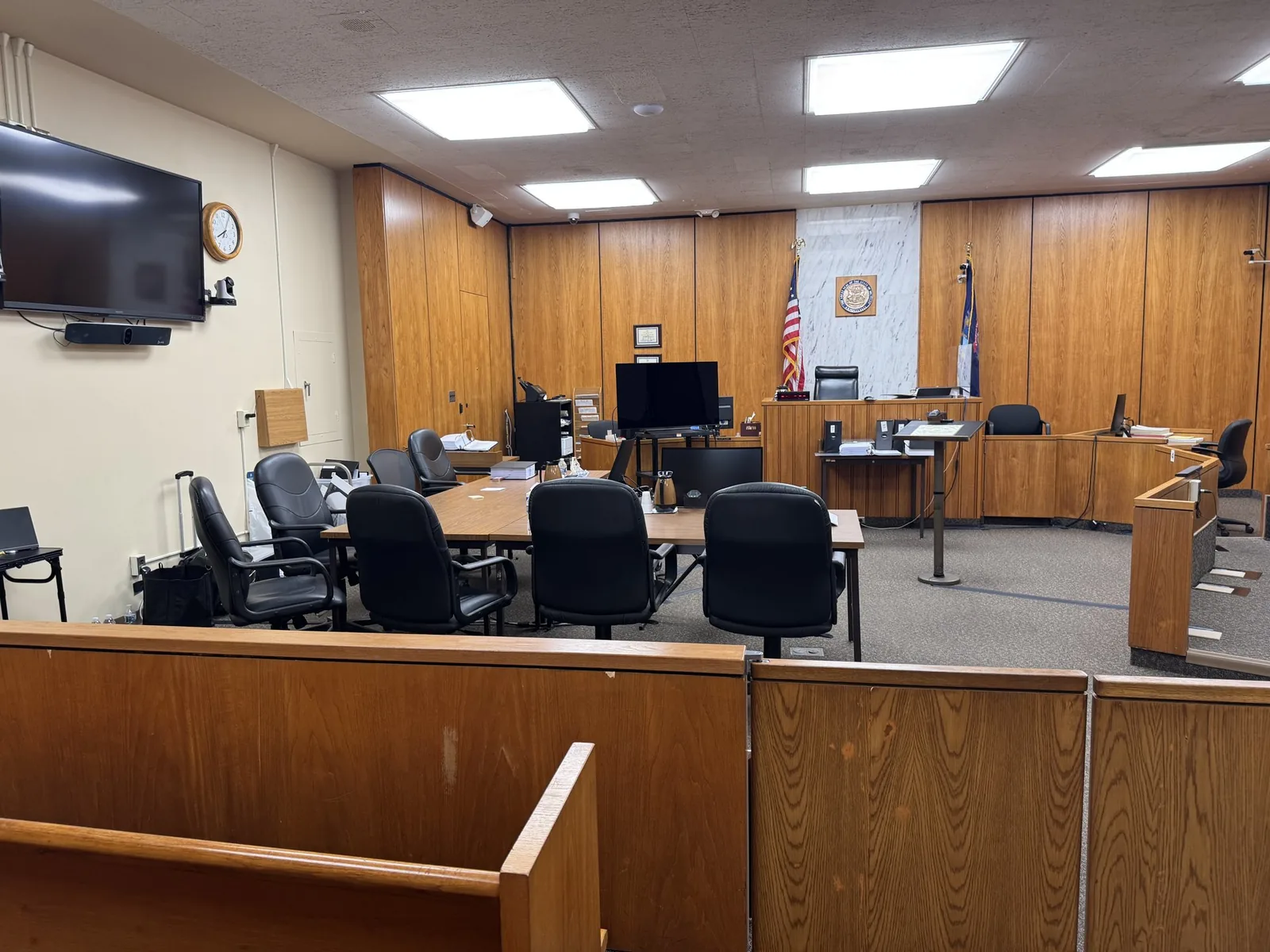
There is a specific kind of quiet that settles over an attorney's office the night before trial. The witness list is finalized. The opening statement is memorized. And somewhere on the desk sits a folder of exhibits that need to become something a jury can actually understand in the space of a few seconds on a screen.
Michigan courtrooms are not forgiving of last-minute exhibit trouble. A projector that won't cooperate, a photo that looks blurry blown up on a courtroom monitor, a timeline that made sense on paper but confuses a jury when it finally appears, these are the moments that pull attention away from the case itself. John Schmitzer II has spent more than 13 years making sure that moment never happens to the attorneys he works with.
What "Trial Exhibit Help" Covers
More Than Printing and Enlarging Documents
Exhibit support gets misunderstood a lot. Some attorneys picture a print shop that blows up a document to poster size and calls it done. That is a small piece of a much bigger job.
Real exhibit help means building a visual strategy for the case. It means knowing which document needs emphasis, which photo needs cropping for clarity, and which piece of evidence needs a completely different treatment to land with a jury.
The Range of Exhibits Attorneys Bring Into a Michigan Courtroom
Every case brings its own visual needs. A construction defect case might rely on diagrams and photographs. A medical malpractice case might need anatomical illustrations paired with medical records.
Exhibit work typically spans several categories:
- Contracts, records, and other documents that need highlighting or callouts
- Scene photographs that need enhancement or annotation
- Timelines that organize complex sequences of events
- Medical or technical illustrations that simplify complicated concepts
- Charts and graphs built from financial or statistical data
- Video excerpts synchronized with transcript text
Where Exhibit Support Fits Alongside Trial Presentation
Exhibits do not exist in isolation. They work alongside trial presentation technology, courtroom AV systems, and the overall flow of a trial day. An exhibit that looks perfect on a laptop screen can fail completely if it was not built with the courtroom's actual display system in mind.
This is why exhibit preparation and trial presentation support work best when they come from the same source. One team, one system, one point of contact who already understands how the pieces fit together.
Why Exhibits Fall Apart Without the Right Support
Common Breakdowns: Formatting, File Types, and Courtroom Compatibility
Attorneys are rarely the ones who discover a formatting problem before it becomes visible in front of a jury. A file built in the wrong resolution looks pixelated on a courtroom screen. A document scanned at an angle looks unprofessional enlarged to full size.
Some of the most common issues include:
- File formats that are not compatible with courtroom projection or display systems
- Images captured at low resolution that lose clarity when enlarged
- Text-heavy documents with no visual hierarchy, making key language hard to find
- Exhibits built for a laptop screen that do not translate well to a courtroom monitor
What Happens When an Exhibit Doesn't Display Correctly Mid-Trial
A courtroom is an unforgiving place for a technical hiccup. When an exhibit fails to load, appears distorted, or simply will not display, the jury notices. So does the judge. That moment of scrambling undercuts the credibility an attorney has spent hours building.
Jurors are watching for signals about who is prepared and who is not. A stumble over exhibit logistics can plant a small seed of doubt, even if the underlying case is strong.
The Cost of Treating Exhibits as an Afterthought
Exhibits often get pushed to the final week before trial, treated as a formality rather than a strategic tool. That approach leaves little room for testing, revisions, or troubleshooting.
Building exhibits early gives an attorney the chance to see how the evidence will actually look and adjust the strategy if something is not landing the way it should.
There is also a hidden cost that rarely shows up until it is too late. An exhibit rushed together the weekend before trial often needs a second version. That version eats into hours an attorney should spend on witness prep, not a formatting fix.
How Schmitzer Prepares Exhibits Before They Ever Reach the Courtroom
Reviewing Case Materials and Identifying What Needs Building
Preparation starts with a conversation about the case itself, not just the documents. Understanding the theory of the case shapes which exhibits deserve emphasis and which details matter most to highlight visually.
From there, the work becomes practical:
- Reviewing raw materials such as photos, records, and depositions
- Identifying which pieces of evidence benefit from visual treatment
- Flagging gaps where an exhibit could strengthen a weak point in the case
- Sorting exhibits by priority, since not everything needs the same level of visual polish
Formatting for Michigan Courthouse AV Systems
Every courthouse has its own equipment quirks. What works seamlessly in one Michigan courtroom might need adjustment in another. Formatting exhibits with the specific courtroom in mind avoids surprises on trial day.
This includes matching resolution, aspect ratio, and file type to the courtroom's actual display and projection setup, not a generic assumption of what "should" work.
Testing, Backups, and Redundant Systems
Preparation does not stop once an exhibit is built. Everything gets tested ahead of time, on the actual equipment when possible, to confirm it displays the way it is supposed to.
Redundant systems matter here too:
- Backup copies of every exhibit stored across multiple devices
- A secondary display setup ready in case primary equipment fails
- A tested run-through before the trial day arrives, not during it
Working With Schmitzer Before and During Trial
What the Intake and Planning Conversation Looks Like
The process starts with a straightforward conversation about the case, the courtroom, and the timeline. From there, a plan takes shape around what exhibits are needed and how much lead time each one requires.
Coordinating With Attorneys as Strategy Shifts Close to Trial
Trial strategy rarely stays completely fixed until the final week. New evidence surfaces. A witness list changes. An exhibit that seemed essential a month ago suddenly needs revision.
Staying flexible during that stretch matters as much as the initial preparation. Quick turnarounds on revised exhibits keep an attorney's strategy moving without adding stress to an already demanding week.
A deposition taken two weeks before trial might change an entire timeline graphic. A judge might rule on a motion in limine and remove an exhibit entirely. These moments happen more often than attorneys expect. A team that can turn around a revised exhibit within a day or two keeps the whole strategy intact.
Being in the Room: Live Exhibit Support on Trial Day
Preparation is only half the job. Being physically present in the courtroom means exhibits get displayed at exactly the right moment, without fumbling through files while a jury waits.
That in-person presence also means problems get solved quietly and quickly, long before a judge or jury ever notices something went wrong.
Frequently Asked Questions
How far in advance should exhibits be prepared before trial? Ideally, several weeks before trial begins. Early preparation leaves room for testing, revisions, and adjustments if the case strategy shifts.
Can Schmitzer work with exhibits an attorney has already started building? Yes. Existing materials can be refined, reformatted, or expanded rather than rebuilt from scratch.
What file formats work best for courtroom display systems? It depends on the specific courthouse. Formatting gets matched to the equipment being used, rather than relying on a one-size-fits-all file type.
Is exhibit support available for federal courts in Michigan? Yes. Federal courtrooms often have distinct technical requirements, and preparation accounts for those differences ahead of time.
Prepared Jurors Understand, Confused Jurors Doubt
A jury cannot advocate for a case they do not fully understand. Every exhibit that displays clearly, every timeline that makes sense at a glance, and every photo that actually shows what it needs to show is doing quiet work toward a verdict.
Confusion, on the other hand, creates hesitation. A jury that struggles to follow the evidence starts filling in gaps with doubt instead of clarity. Strong exhibits close that gap before it ever opens.
Let's Get Your Exhibits Trial Ready
Trial exhibits deserve more attention than a rushed week can offer. Whether the case is heading to Wayne County or a federal courtroom across the state, getting exhibits built and tested early makes trial week calmer for everyone involved.
Reach out to Schmitzer Video & Trial Services to talk through your case, your exhibits, and what a fully prepared trial presentation looks like before your court date arrives.
Contact Schmitzer Video & Trial Services Address
Address: St. Clair Shores, MI
Phone: (555) 000-0000
Email: hello@schmitzervideo.com