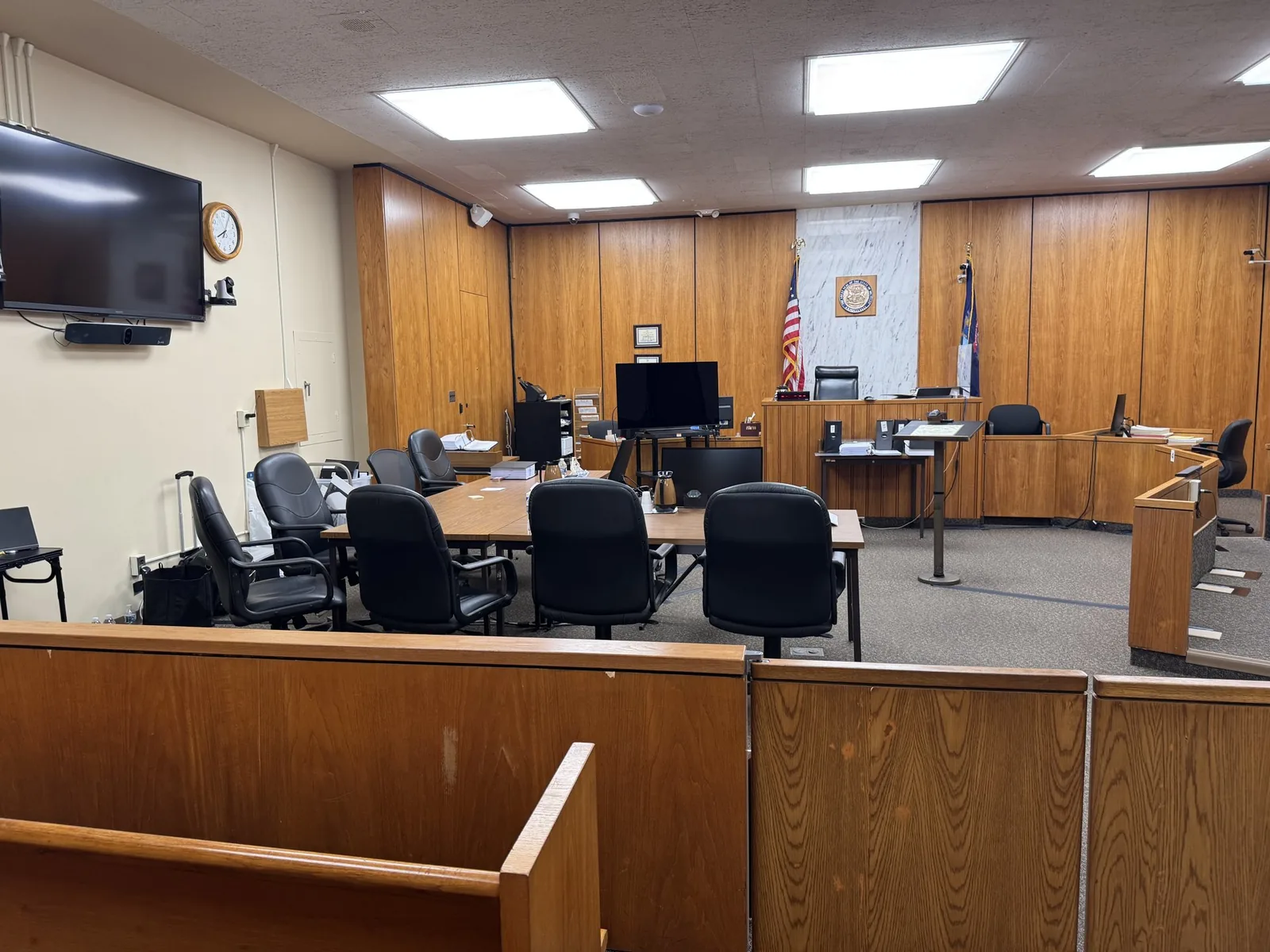
Jurors do not remember most of what they hear. They remember what they see. A well-built timeline or a simple chart can explain a case better than twenty minutes of testimony. That is the quiet power of legal graphics, and it is why Detroit attorneys now treat visual evidence as core trial strategy.
John Schmitzer II has spent more than 13 years helping litigation teams turn complicated facts into visuals that land with a jury. Every case has its own story, and every story deserves graphics that support it clearly and persuasively. A construction defect, a catastrophic injury, or a financial dispute buried in spreadsheets can all become clear in seconds with the right graphic.
What Legal Graphics Actually Means in a Courtroom Setting
Beyond Slideshows: Defining Demonstratives
A demonstrative exhibit is any visual aid created to illustrate testimony or explain a concept. It is not the same as physical evidence collected from the scene. Demonstratives are built specifically for trial, designed to make an argument clearer without replacing the underlying facts.
Common demonstratives include:
- Timelines showing the sequence of events
- Diagrams explaining how an injury occurred
- Charts breaking down financial damages
- Maps showing location-based evidence
- Enlarged photos with callouts and annotations
The Difference Between Evidence and Illustration
Evidence is admitted because it proves something happened. A demonstrative illustrates or explains that evidence for the jury. Courts treat the two differently. Opposing counsel will often challenge a graphic that blurs the line.
A good legal graphic never invents facts. It presents facts that are already in the record, just in a form that is easier to absorb. That distinction protects the graphic from objections and keeps the focus on credibility.
Why Visual Evidence Changes How Jurors Understand a Case
How Jurors Process Complex Information
Jurors are asked to absorb technical, medical, or financial information they may have never encountered before. Without a visual reference, complicated testimony can blur together after just a few hours. A graphic gives the brain a shortcut, turning abstract numbers or medical terms into something the eye can follow.
This matters most during closing arguments, when attorneys need jurors to recall specific facts accurately. A graphic seen once is far easier to recall than a spoken detail buried in hours of testimony.
Common Case Types That Benefit Most
Some case types rely on visual clarity more than others. These tend to produce the strongest results:
- Medical malpractice cases involving anatomy or surgical error
- Construction defect cases requiring structural diagrams
- Accident reconstruction cases with vehicle positioning or timing
- Financial and fraud cases with layered transactions or damages calculations
- Product liability cases requiring mechanical or design breakdowns
What Happens When Graphics Are Missing or Poorly Made
Weak or missing graphics create real risk. Jurors left to imagine complex scenes on their own may fill in gaps incorrectly. A poorly made graphic can be worse than none at all. Inaccuracies invite objections and damage credibility with the jury.
Rushed graphics also tend to look unprofessional, and that impression rubs off on the case itself. A clean, accurate exhibit signals preparation. A sloppy one signals the opposite, whether that is fair or not.
Types of Legal Graphics Schmitzer Builds for Detroit Attorneys
Graphic TypeBest Use CaseTypical Courtroom StageTimeline / sequence boardEstablishing order of eventsOpening statement, witness testimonyMedical illustrationExplaining injury or procedureExpert testimonyAccident reconstructionShowing vehicle or scene positioningExpert testimony, closingFinancial chartBreaking down damages or transactionsClosing argumentComparison boardContrasting claims, standards, or timelinesCross-examination, closing
Timelines and Sequence-of-Events Boards
Timelines help jurors track what happened and when. They are especially useful in cases with overlapping events, multiple parties, or long gaps between incidents and discovery.
Medical Illustrations and Anatomical Diagrams
Medical cases often hinge on details jurors have no personal frame of reference for. A clear anatomical diagram or surgical illustration can turn dense expert testimony into something a layperson can actually follow.
Accident and Scene Reconstructions
Reconstructions show how an incident unfolded, often combining maps, measurements, and vehicle positioning. These graphics help jurors visualize causation in a way words alone rarely achieve.
Financial Charts and Damages Breakdowns
Damages calculations can involve years of lost wages, medical costs, or business losses. A well-organized chart keeps these numbers from becoming an overwhelming wall of figures.
Comparison Boards and Side-by-Side Exhibits
Comparison boards are useful when contrasting two versions of events, two standards of care, or two sets of numbers. Side-by-side layouts make discrepancies immediately visible to the jury.
Building Graphics That Hold Up Under Scrutiny
Accuracy, Sourcing, and Defensibility
Every figure, measurement, and detail in a graphic needs to trace back to the record. That means depositions, medical records, expert reports, or discovery documents. When a graphic can be defended line by line, objections tend to lose their force quickly.
Working With Attorneys on Case Strategy Before Building Anything
Graphics work best when built alongside the attorney's overall strategy. They should never arrive as a finished product with no context. Early conversations about case theory, key witnesses, and anticipated objections shape how a graphic should look and function.
Anticipating Opposing Counsel's Objections
Experienced trial teams think about objections before they happen. Common concerns include:
- Whether a graphic accurately represents the underlying evidence
- Whether it introduces facts not already in the record
- Whether it unfairly emphasizes one interpretation over another
- Whether the source data has been properly disclosed
How Detroit Courtrooms Shape the Technical Side
Courtroom AV Compatibility and Display Formats
Every Detroit courtroom setup is a little different. Screen size, projector placement, and how evidence routes to the jury box all vary by room. Graphics need to be formatted and tested for the specific room, not just built and assumed to fit.
Coordinating With Wayne County and Federal Courthouses
Wayne County Circuit Court and the Eastern District of Michigan federal courthouse each follow their own technology standards. Coordinating with courtroom staff ahead of trial confirms compatibility and avoids surprises once the jury is seated.
Backup Systems and On-Site Contingencies
Technology fails at the worst possible moments if it is going to fail at all. That is the entire reason behind the Mobile Office approach. Redundant equipment, backup files, and a team that stays calm when something unexpected happens.
Before trial day, a few things should always be confirmed:
- Backup copies of every graphic in multiple formats
- A secondary display or projection method on hand
- Battery and power redundancy for all equipment
- A tested run-through in the actual courtroom, if possible
The Process: From Case File to Courtroom-Ready Exhibit
Initial Consultation and Case Review
The process starts with a conversation about the case and what the attorney wants the jury to understand. This includes reviewing relevant records, depositions, and expert reports.
Draft Review and Attorney Revisions
Early drafts are shared for feedback before anything is finalized. Attorneys often catch small but important nuances, from wording choices to which details deserve the most visual emphasis.
Final Delivery and Trial Day Support
Once approved, graphics are finalized in courtroom-ready formats and tested against the actual display equipment. Support does not end at delivery. Being present on trial day means technical issues get solved immediately, not discovered mid-argument.
Common Questions Attorneys Ask About Legal Graphics
How far in advance should legal graphics be started?
Ideally, four to six weeks before trial. Complex cases with multiple graphics may need more lead time, especially if expert review is involved.
Can graphics be adjusted during trial if strategy shifts?
Yes, in many cases. Having a technician available during trial allows for quick adjustments when testimony develops in unexpected directions.
Are legal graphics only useful for jury trials?
No. Bench trials, arbitration, and mediation all benefit from clear visual explanations, even without a jury present.
What file formats work best for courtroom presentation?
It depends on the courtroom's equipment. Formats are typically confirmed and tested ahead of time to match whatever system is in place.
Prepared Cases Tell Clearer Stories
The strongest trial presentations are not the flashiest ones. They are the ones where every visual has a purpose. Every detail can be traced back to the record. That kind of preparation does not happen by accident, and it happens long before the jury ever walks into the room.
Detroit attorneys carry enough on their plates already. They should not have to worry whether a graphic will hold up under cross-examination. A clear, well-built exhibit gives one less thing to think about on trial day, and one more reason the jury walks away understanding what happened.
Let's Build Your Next Exhibit Together
Every case has a story worth telling clearly. If a trial is coming up and the facts feel complicated, a conversation now can save a lot of stress later.
Reach out to talk through the case, the timeline, and what kind of visual support would help the most.
Contact Schmitzer Video & Trial Services