
Michigan Trial Presentation Services for Medical Malpractice Cases
Medical malpractice trials are some of the most demanding cases a Michigan attorney can bring before a jury. The evidence is technical. The stakes are high.
Medical malpractice trials are some of the most demanding cases a Michigan attorney can bring before a jury. The evidence is technical. The stakes are high.
Medical malpractice trials are some of the most demanding cases a Michigan attorney can bring before a jury. The evidence is technical. The stakes are high. And jurors are often being asked to understand years of medical history in a matter of days.
Winning these cases takes more than strong expert testimony and a well-prepared legal team. It takes a courtroom that functions smoothly, exhibits that make sense at a glance, and technology that never becomes a distraction. Schmitzer Video & Trial Services, LLC has spent more than 13 years helping Michigan litigation teams present complex cases clearly. That might mean synchronizing a deposition transcript, coordinating a remote expert witness, or making sure a courtroom's AV setup works exactly as it should.
Radiology scans, physician notes, and treatment timelines need to be displayed clearly and pulled up instantly during testimony. Static printouts and binders slow down the flow of a trial. Digital display systems let attorneys move through medical records in real time, without breaking the jury's attention.
Video depositions of treating physicians and experts carry more weight than a read transcript. When video is synced to the transcript text, attorneys can jump directly to key testimony during trial. This is especially valuable when impeaching a witness or reinforcing a critical admission.
Out-of-state medical experts are common in malpractice cases, and travel isn't always practical. Remote testimony setups allow experts to appear credibly and clearly from anywhere, while hybrid coordination keeps in-person and remote participants working from the same courtroom system.
During trial, exhibits need to appear on screen the moment they're needed. That includes:
Complex medical concepts often need a visual translation. Anatomical diagrams, injury timelines, and standard-of-care comparisons help jurors grasp what happened and why it matters. Strong demonstratives don't replace expert testimony. They make that testimony easier to understand and remember.
Equipment failure during a routine hearing is inconvenient. Equipment failure during expert cross-examination in a medical malpractice trial can disrupt momentum at the worst possible moment. Backup audio, video, and display systems are brought to every courtroom appearance, not just the ones expected to run long.
Objections happen. Judges make quick rulings on what the jury can see. A calm, experienced trial technician adjusts in real time without drawing attention away from the attorney or the witness. That composure is built through years of courtroom experience, not something that can be improvised.
This standard applies whether a trial lasts three days or six weeks. Consistency matters just as much on day twenty as it does on day one.
Rather than relying entirely on whatever equipment a courthouse provides, a self-contained system is brought in and configured for that specific room. This reduces dependence on outdated courthouse infrastructure and gives attorneys one less variable to worry about heading into trial.
Being courtroom-ready also means understanding how quickly circumstances can shift. A judge might rule on an exhibit's admissibility moments before it's needed. A witness might reference a document that wasn't part of the original presentation plan. Having both the equipment and the experience to adapt matters most here. Reliable trial support works even when circumstances shift, not only when everything goes according to plan.
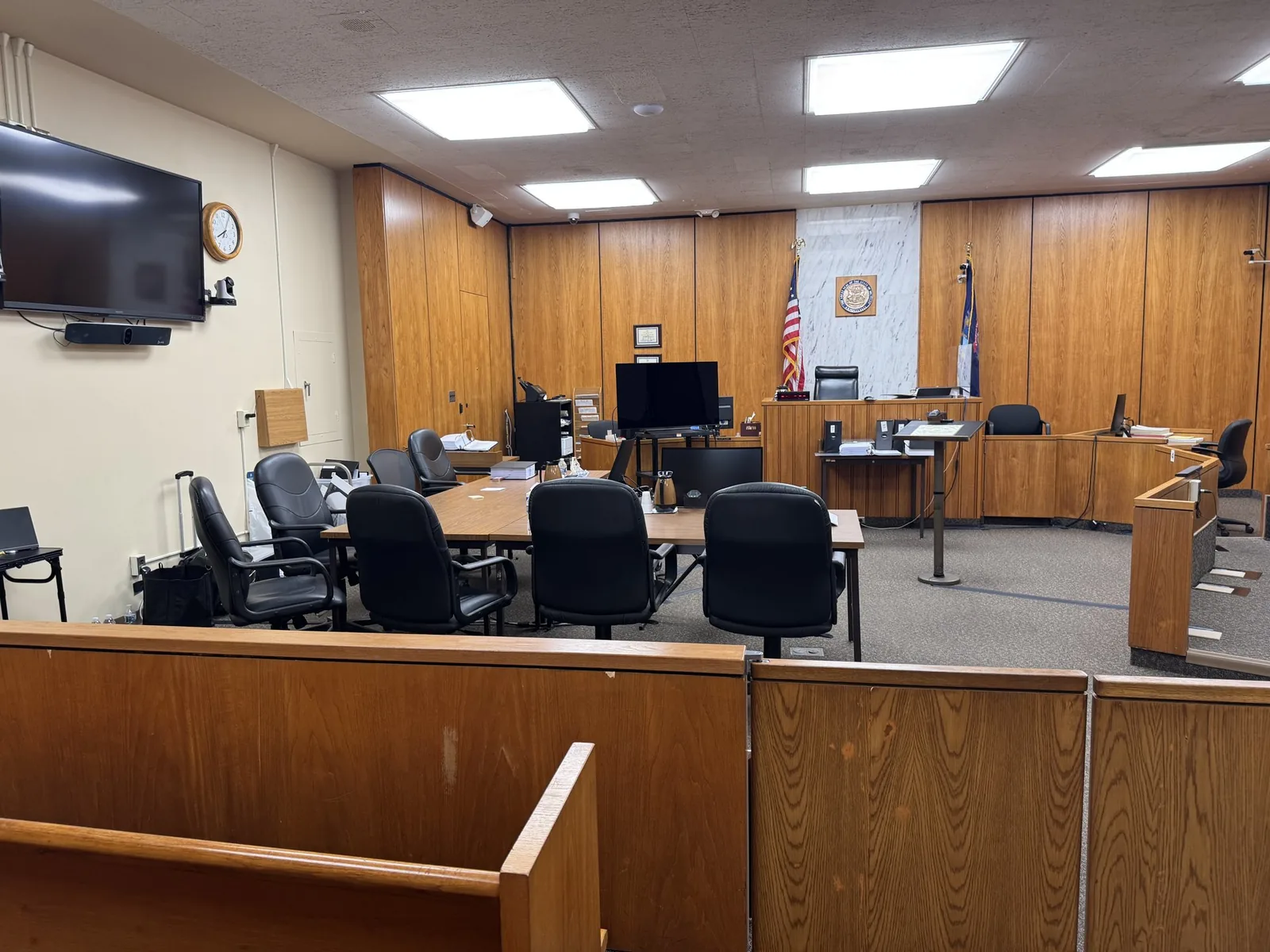
Courtrooms in Detroit, Ann Arbor, and Troy vary in available AV infrastructure, screen placement, and technical limitations. Knowing these details in advance means less setup time and fewer surprises once the jury is seated.
Trial and deposition support is available in Grand Rapids, Lansing, and other Michigan communities where litigation teams need reliable courtroom technology. Michigan's medical malpractice bar also regularly works with expert witnesses based out of state, which makes remote testimony coordination a routine part of trial preparation rather than an exception.
A few local realities shape how these cases typically unfold:
A trial technician who has worked in a given courthouse before already knows where cameras can be positioned, how the room's acoustics behave, and what backup connectivity options exist if a remote witness loses signal. That kind of preparation isn't something that can be built the morning of trial. It comes from having done the work in that courtroom, or one very similar to it, many times before.
Jurors respond to what they can see and follow, not just what they hear described in testimony. This is especially true in medical malpractice cases, where causation and standard-of-care arguments can be dense without the right visual support.
Watching a treating physician's tone and hesitation on video is more persuasive than an attorney reading their words aloud. Jurors pick up on nonverbal cues that a transcript simply can't convey, particularly during cross-examination moments.
A clear injury timeline or anatomical diagram can make a standard-of-care argument click for a jury in seconds. Complex medical causation becomes far easier to follow with the right visual translation.
One detail many firms overlook: waiting until the week before trial to organize exhibits and video clips creates unnecessary risk. Presentation planning works best when it starts early, alongside discovery and expert preparation, rather than being treated as a final-week task.
Ideally, presentation planning begins well before trial, often alongside expert witness preparation. This gives enough time to organize medical records, sync depositions, and build demonstratives without a last-minute scramble.
Yes. Michigan courts commonly allow remote expert witness testimony, particularly for out-of-state medical experts. Proper setup and testing in advance help ensure the testimony comes across clearly and credibly to the jury.
Reliable trial presentation support includes backup equipment for audio, video, and display systems. A prepared setup means a technical issue causes a brief pause at most, not a disruption to the trial's momentum.
Yes. Coordinating remote and hybrid testimony for out-of-state experts is a routine part of medical malpractice trial support. These cases often rely on specialists who practice outside Michigan.
A professionally recorded video deposition uses dedicated equipment and synchronization with the transcript, producing courtroom-ready footage. A Zoom deposition is a video call recording, which typically lacks the quality and syncing needed for effective trial use.
Medical malpractice trials leave little room for error. Between dense medical evidence, multiple expert witnesses, and trials that can stretch for weeks, attorneys need a presentation partner who understands what's at stake.
Schmitzer Video & Trial Services isn't just a videographer. The role is closer to a courtroom technology specialist and trial presentation consultant. It's a calm, prepared partner for litigation teams handling Michigan's most demanding cases. Preparation matters. Presentation matters. And helping attorneys feel supported in high-stakes moments matters most of all.
Every medical malpractice case deserves presentation support that's planned early and executed without surprises. Whether a trial date is months away or already on the calendar, it's worth talking through what your case will need.
Reach out to discuss your upcoming trial dates, expert witness logistics, or exhibit planning needs. Schmitzer Video & Trial Services supports attorneys throughout Michigan, from Detroit and Ann Arbor to Grand Rapids and Lansing. Your case deserves the courtroom technology and trial presentation experience to match its stakes.
Have a trial or deposition coming up? Tell us about your case and we will help you get courtroom ready.
Request a consultation →More than a decade of legal video, trial presentation, and courtroom technology experience across Michigan.
Meet John →Trial presentation, legal video depositions, courtroom technology, and remote testimony support.
View services →Trial presentation, legal video, courtroom technology, and remote testimony support for litigation teams across Michigan.
Home base in St. Clair Shores, with same-day reach across Southeast Michigan and travel statewide.
Tell us about your case. We'll bring the technology, the preparation, and the calm.