Articles

Articles in This Category

FAQ

FAQs in This Category

Do courtroom technology requirements vary between Southeast Michigan courts?

They do, sometimes more than attorneys expect. Wayne, Oakland, Macomb, and Washtenaw County courthouses each have their own built-in technology, courtroom layouts, and IT policies. Some courtrooms come equipped with modern displays and integrated systems, while others require bringing in most of the equipment from scratch. Knowing these differences ahead of time, rather than discovering them on the morning of trial, is part of what makes preparation so important across different venues.

What materials should attorneys provide before trial presentation preparation begins?

The more organized the materials arrive, the smoother preparation goes. Attorneys generally provide:

  • Final exhibit lists and any pre-marked exhibits
  • Deposition transcripts and corresponding video files
  • Trial exhibit binders or digital exhibit folders
  • Witness and testimony order, if finalized
  • Any specific demonstratives or graphics already created

Even a rough outline of trial strategy helps shape how exhibits and video clips get organized. The earlier this information comes together, the more time there is to prepare it properly.

Can you organize electronic exhibits that come from multiple attorneys and experts?

Yes, and this is one of the more common challenges trial teams run into. Exhibits arrive from different sources, in different formats, often right up until the week of trial.

Part of the job involves collecting materials from co-counsel, experts, and outside vendors, then organizing everything into a single, courtroom-ready system. That means standardizing file formats, labeling exhibits consistently, and building a presentation order that matches how the attorney plans to argue the case. A little organization ahead of time prevents a lot of scrambling once the trial starts.

What does a trial technician do before the courtroom opens?

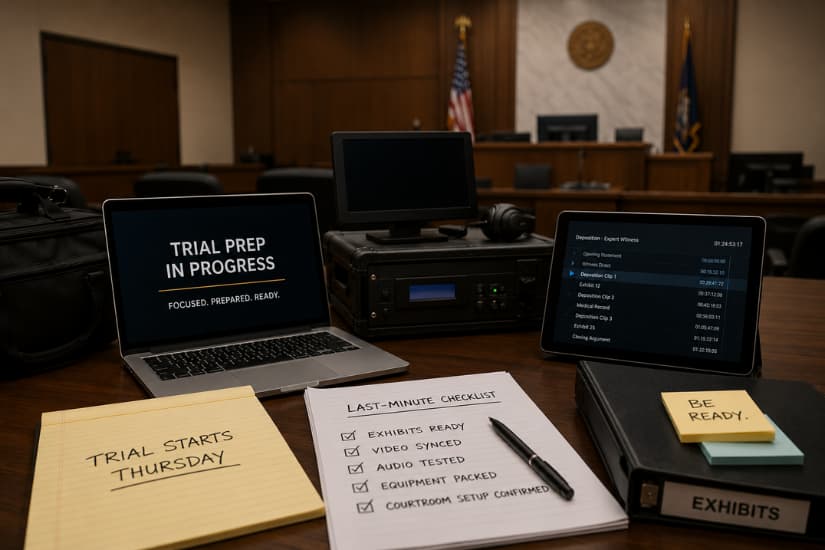
Long before a jury takes their seats, the trial technician has already been at work. Setup usually begins hours ahead of the first witness, not minutes.

  • Confirm courtroom AV systems function properly with the case files
  • Test monitors, projectors, and audio feeds for every station in the room
  • Load exhibits, video clips, and presentation software onto backup systems
  • Run through the day's presentation order with the attorney
  • Set up redundant equipment in case anything fails mid-trial

By the time the judge calls the courtroom to order, everything has already been checked twice.

Can remote expert witnesses be displayed alongside exhibits during testimony?

Yes, .this is one of the more technically involved things we do, and it's become much more common since remote testimony became standard practice.

  • We can display the remote witness on one screen while exhibits, documents, or video clips are shown simultaneously on another.
  • Audio and video are coordinated so the jury can follow the witness's testimony while referencing the exhibit in real time.
  • We test the full setup in advance to account for connectivity issues, since remote testimony only works if it's seamless.

Done well, jurors shouldn't even notice the added complexity, it should feel as natural as an in-person witness.

Can you assist if my trial starts in just a few days?

Yes. We understand trial dates shift, settlements fall through, and sometimes you inherit a case with almost no runway. We can move quickly to review your exhibits and build a presentation on a compressed timeline.

We bring backup equipment and redundant systems to every job, which matters even more when there's been less prep time. We'll ask direct questions upfront about courtroom layout, exhibit format, and witness needs so nothing gets missed in the rush.

Short notice isn't ideal, but it's not a dealbreaker. Call us, we'll tell you honestly what's possible in the time you have.

‍

When should I hire a trial presentation specialist?

Earlier than most attorneys think. Ideally, you loop us in as soon as trial is scheduled — not the week before.

  • 6-8 weeks out: We start reviewing exhibits, discussing courtroom layout, and identifying any tech needs specific to that courthouse.
  • 2-3 weeks out: We build the exhibit presentation, test synced video clips, and confirm equipment logistics.
  • Trial week: We're on-site early, testing every system before the jury ever walks in.

The earlier we're involved, the more we can prevent problems instead of reacting to them. That said — we know litigation doesn't always go on schedule.

How early should I contact a trial presentation provider before trial?

The earlier, the better. Ideally, attorneys should reach out as soon as a trial date is set, even if that's months away. Trial presentation involves more than showing up with equipment. It takes time to review exhibits, build demonstratives, sync video depositions with transcripts, and test technology in the actual courtroom.

Reaching out at least four to six weeks before trial gives enough time to:

  • Review the case file and identify key exhibits or video testimony
  • Coordinate with the courtroom on available technology and layout
  • Build a backup plan in case of equipment failure or last-minute changes
  • Run a technical rehearsal before opening statements

That said, trial schedules shift constantly. If a trial gets moved up or a settlement falls through at the last minute, a good provider should still be able to step in quickly and get up to speed. Early contact is ideal, but preparation and flexibility matter just as much.

Get Started

Let's Prepare Your Team for Trial

Tell us about your case. We'll bring the technology, the preparation, and the calm.