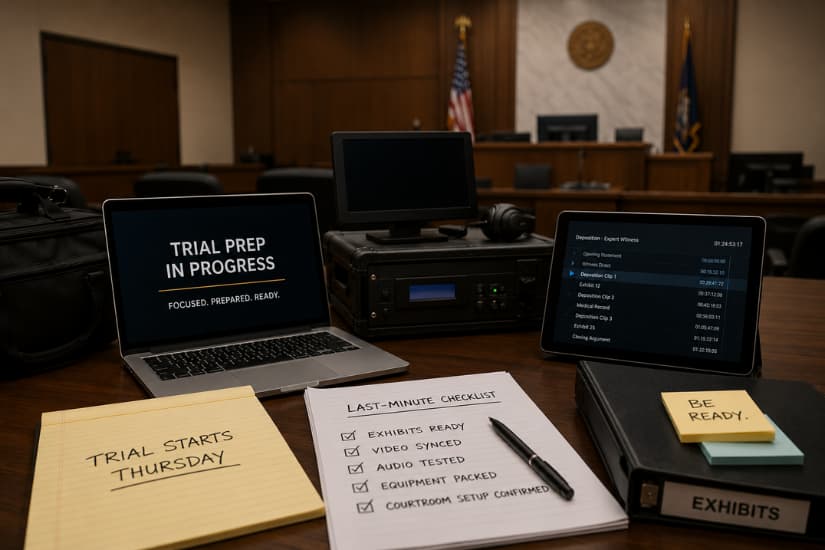
The call usually comes in on a Tuesday, and trial starts Thursday. An attorney is on the line, calm on the surface but clearly running numbers in their head. They have exhibits that need formatting, a witness who may need to appear remotely, and a courtroom they have never actually stepped foot in. They are hoping the technology side of things can just catch up.
It happens more than people expect. Litigation moves fast, trial dates shift, and courtroom technology is often the last thing on a long checklist. But timing changes almost everything about how a trial presentation comes together. The difference between a call made one week out and a call made two days out is not small.
That difference shapes what gets tested. It shapes what gets backed up. It shapes how much of the trial team's preparation actually happens before the courtroom doors open, instead of during a break in testimony.
In This Article
- What Actually Happens When Attorneys Call Late
- Why One Week Makes Such a Big Difference
- What That Early Call Actually Covers
- What Happens When There Isn't Time
- Why This Call Is Worth Making Early
- Let's Get Ahead of Your Trial Date
What Actually Happens When Attorneys Call Late
The Compressed Timeline Problem
When a call comes in two or three days before trial, the entire process gets compressed. There is less room to confirm details, less room to catch problems, and almost no room for a true dry run. Everything moves fast, and fast is not usually where good trial presentation happens.
A trial technician can still show up prepared under these conditions. But preparation under pressure looks different than preparation with time to breathe. Site visits get skipped. Exhibit formats get checked the morning of instead of days ahead.
Redundant systems get built in a rush instead of tested calmly. There is also less room for small conversations that matter, like a judge's preferences or a witness's comfort with remote testimony. Those answers often get figured out on the fly instead of ahead of time.
What Gets Rushed (and Why It Shows)
Here is what tends to get compressed or skipped entirely when the call comes late:
- Confirming courtroom AV compatibility ahead of time
- Testing exhibit files in the actual format the courtroom system requires
- Building in backup equipment and redundant systems
- Walking through the judge's specific courtroom preferences and rules
- Coordinating remote or hybrid witness testimony logistics
None of these steps are optional. They are just harder to do well with 48 hours on the clock. A judge who requires exhibits in a specific format, or a courtroom with older AV equipment, can turn a rushed job into a visible problem in front of a jury.
We have walked into courtrooms cold before and made it work. That is part of the job. But "making it work" and "working smoothly" are two different experiences for the attorney at the podium. The jury usually feels that difference even if they cannot name it.
Why One Week Makes Such a Big Difference
Time to Test, Not Just Deliver
Seven days sounds simple, but it changes the entire structure of trial prep. It gives a trial technician time to actually test equipment in the courtroom itself, rather than assuming it will work the way it did in the office. Courtroom AV compatibility varies more than most people realize, even within the same county.
A week also allows time to review synced video and transcript files carefully before trial starts. Designations and counter-designations can be checked against the actual clips. Impeachment testimony can be cued and verified in advance instead of searched for live.
This kind of review is not glamorous, but it is exactly where mistakes tend to hide. A mislabeled clip or a mistimed cue rarely shows up until the moment it is needed most. Catching that a week out is a minor fix. Catching it mid trial is a much bigger problem.
Room for Redundancy
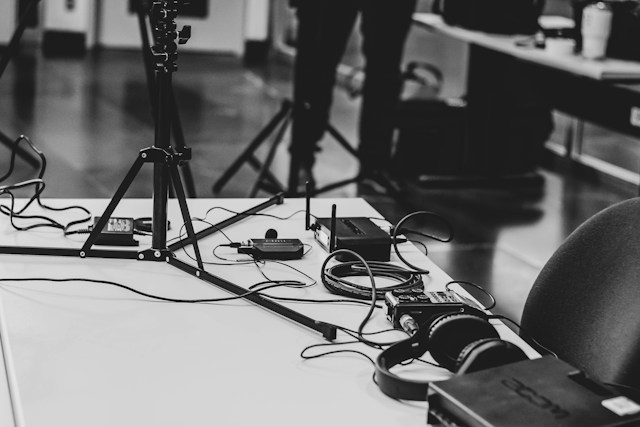
Redundant systems are one of the biggest advantages that extra time provides. Backup equipment does not build itself the morning of trial. It takes time to stage a second projector, a spare laptop, or a backup connection for hybrid testimony.
With a week of lead time, the trial team can:
- Run a full equipment check in the actual courtroom
- Stage backup hardware in case of failure
- Confirm remote witness connections ahead of the trial date
- Walk through the exhibit sequence with the attorney beforehand
- Address any last questions calmly instead of urgently
This is the quiet work that rarely gets noticed when it goes right. That is actually the point. A trial presentation that runs without a hitch is the direct result of preparation nobody in the jury box ever sees. Most of that work happens during the week people assume is just for waiting.
What That Early Call Actually Covers
The Questions We Ask First
An early planning call is not a formality. It is where the real groundwork gets laid. A good trial presentation team is going to ask specific, practical questions right away.
- Which courthouse and courtroom will the trial take place in
- How many witnesses will testify remotely or in a hybrid format
- What exhibit formats does the judge require
- Are there designations or counter-designations that need to be synced
- How many trial days are expected, and does the schedule allow flexibility
These are not throwaway questions. Each one shapes how much preparation time is needed and what kind of equipment should be staged. A trial with three remote witnesses needs a very different setup than a single day bench trial with one live witness.
What We're Checking on Our End
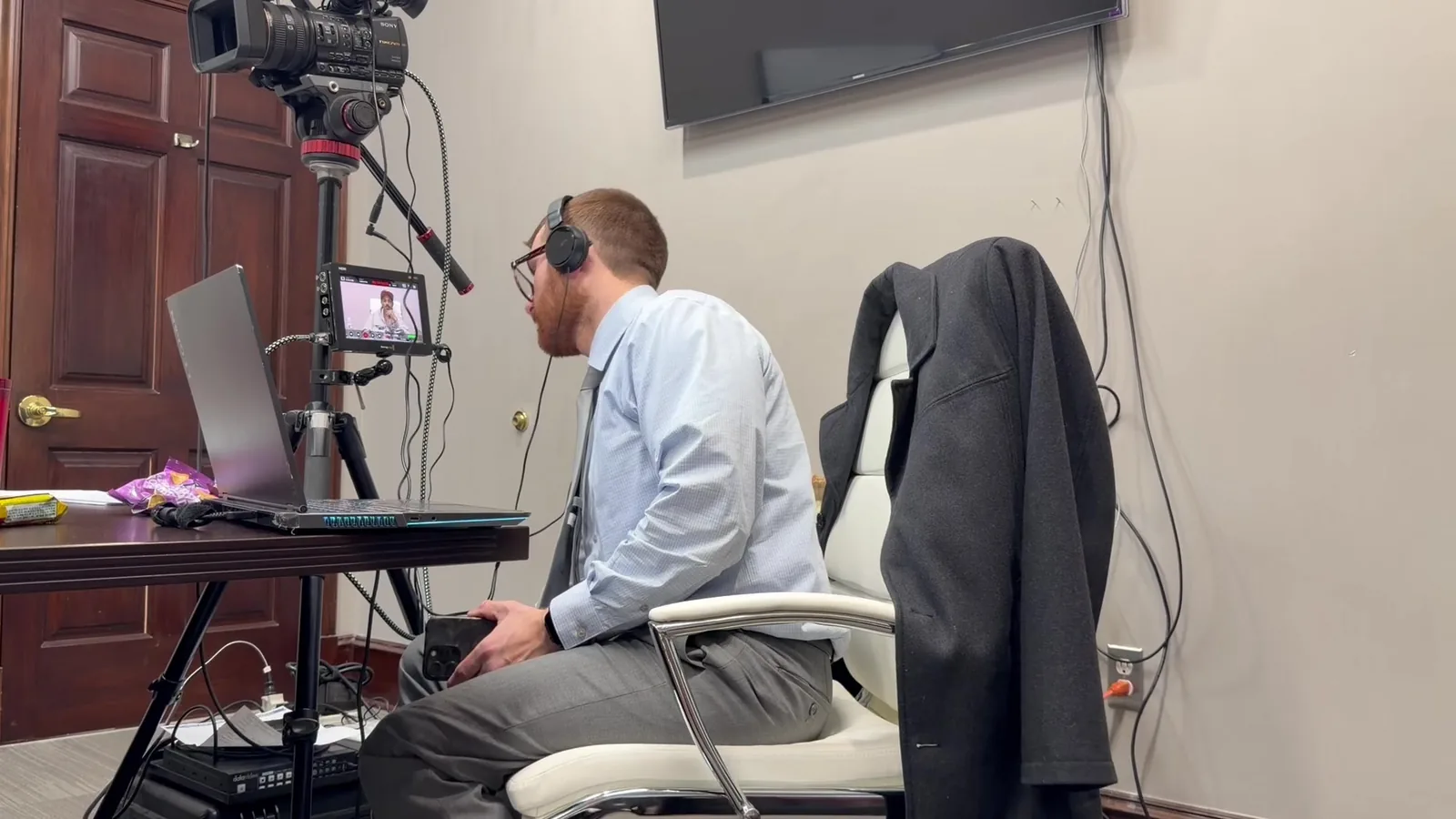
While the attorney is answering those questions, the trial technician is already working through a parallel checklist. This is where trial presentation services in Michigan earn their value long before the trial actually starts.
- Confirming courtroom AV setup and compatibility
- Reviewing exhibit files for formatting issues
- Building backup systems for equipment and connectivity
- Coordinating remote testimony logins and test calls
- Mapping out the trial schedule day by day
Attorneys do not need to manage any of this directly. That is the entire point of bringing in a trial technician early. The goal is for the attorney to focus on the case, not the cables, and trust the technology side is handled.
What Happens When There Isn't Time
Common Workarounds
Sometimes the early call simply is not possible. Trial dates get moved up, cases settle and reopen, or a new attorney inherits a file with days to spare. When that happens, a trial technician still finds ways to make it work.
Common workarounds include prioritizing the most critical exhibits first and doing a rapid courtroom walkthrough the morning of. Extra equipment often gets brought as a general safety net rather than a tailored one.
It is not ideal, but it is workable. Attorneys should know a compressed timeline means less customization and fewer tested contingencies, even with an experienced technician on site.
What We Recommend Instead
Quick takeaway for attorneys short on time before trial:
- Call as soon as the trial date is confirmed, even if details are incomplete
- Send exhibit files early, even in rough form, so formatting issues surface sooner
- Flag any remote or hybrid witnesses immediately
- Mention any known courtroom quirks, even secondhand information helps
- Expect a more reactive, less tested setup, and plan mentally for that
None of this means the trial presentation will fail. It means the margin for smoothing out surprises gets thinner. A trial technician can still perform well under pressure. Attorneys just have fewer options once the clock runs out.
Why This Call Is Worth Making Early
None of this is about creating pressure or making attorneys feel like they are behind. Trial dates shift, cases evolve, and litigation rarely follows a clean, predictable timeline. That reality is understood, and it is part of why trial presentation support exists in the first place.
What the early call really offers is room. Room to test equipment properly, room to catch a formatting issue before it becomes a courtroom problem, and room to walk into trial with a plan instead of a scramble. The best trial presentation work is often invisible precisely because it was prepared for well in advance.
Let's Get Ahead of Your Trial Date
If a trial date is on the calendar, even a rough one, that is the right time to start the conversation. Schmitzer Video & Trial Services works with attorneys across Michigan to prepare courtroom technology, synced video, and exhibit presentation well before the pressure sets in.
Whether trial is a month away or already close, our team is ready to talk through what your case needs. Reach out to Schmitzer Video & Trial Services to schedule a planning call and get your trial presentation built on a timeline that works in your favor.
Phone: (Insert Schmitzer contact number)Email: (Insert Schmitzer contact email)Website: Schmitzer Video & Trial Services Contact
Key Takeaway
Early planning and scheduling trial presentation support at least a week in advance give legal teams crucial time to thoroughly test courtroom technology, verify exhibit formats, stage backup systems, and coordinate remote witnesses, ultimately ensuring a smooth and professional presentation that minimizes last-minute stress.
Planning a trial or deposition in Michigan? Let us make the technology the last thing you have to worry about.
Request a Consultation