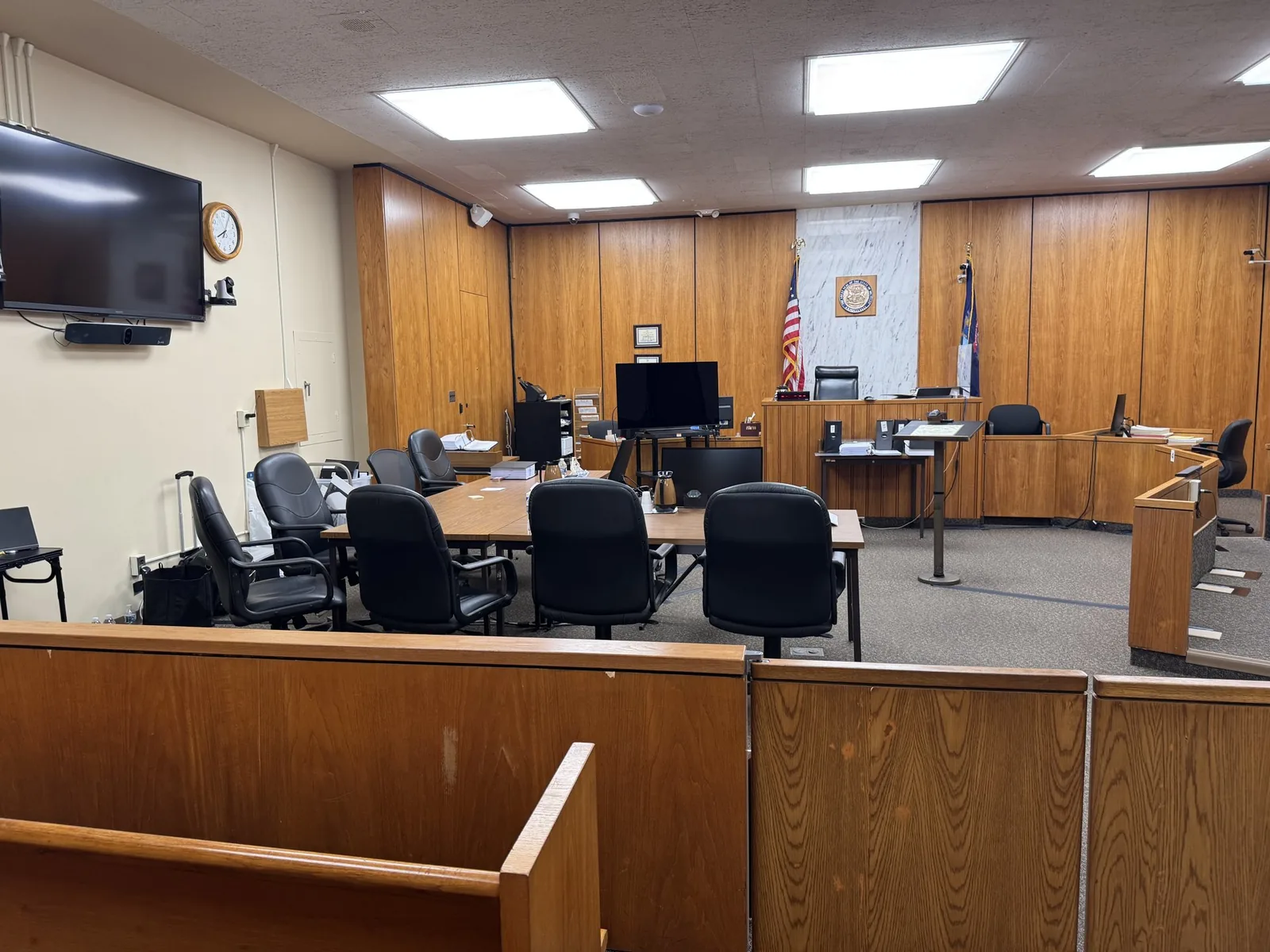
It's 9:40 on a Sunday night, and opening statements start at 9:00 tomorrow morning. You know your theory of the case cold. What keeps you up is smaller and harder to control: whether the timeline exhibit will actually appear on the jurors' monitors when you reach for it.
That worry is reasonable. Trial technology stopped being a nice extra years ago, and jurors now expect evidence to show up cleanly and on cue. When a clip freezes or a document won't load, the awkward pause lands on the lawyer, not the laptop. For Michigan trial teams, the technology has quietly become part of the case itself.
In This Article
- What Trial Technology Support Covers
- Where In-House Trial Tech Tends to Break Down
- How Trial Tech Needs Change by Firm Size and Practice Area
- Michigan Courtrooms Come With Their Own Variables
- What Support Looks Like From Pretrial to Verdict
- The Mobile Office Approach to Redundancy
- Better Trials Start Long Before Opening Statements
- Bring Schmitzer Into Your Next Trial Team
What Trial Technology Support Covers
Hot Seat Operation During Live Testimony
The "hot seat" is the technician's chair at counsel table. From there, every exhibit reaches the jury the moment you call for it. Good hot seat work feels invisible because it keeps pace with your questioning.
During testimony, a hot seat operator typically handles:
- Pulling exhibits by number within seconds of your request
- Zooming, highlighting, and calling out key lines on a document
- Building side-by-side comparisons of records or prior statements
- Blanking juror screens instantly when an objection is raised
Courtroom AV Setup and Equipment Integration
Every courtroom has a different mix of screens, inputs, and audio. Some Michigan courtrooms have built-in evidence presentation systems. Others offer little more than a wall outlet and a projector cart. Either way, someone has to make all of it work together before the jury walks in.
Exhibit Database Building Before Trial
Before a single witness takes the stand, your exhibits need to live in an organized presentation database. Platforms like TrialDirector, OnCue, and Sanction allow instant retrieval, but only when files are built correctly. That means consistent naming, accurate exhibit numbers, and a clear line between admitted and anticipated evidence.
Video deposition testimony is often the most persuasive evidence at trial, and also the easiest to fumble. Synced clips tie the video to the certified transcript, so jurors see and read testimony together. Designations, counter-designations, and impeachment clips should all be cued long before they're needed.
Expert witnesses don't always travel to Michigan for trial. Remote testimony requires tested connections, clear courtroom audio, and a backup plan if video drops. A technician coordinates the witness side and the courtroom side at the same time.
Where In-House Trial Tech Tends to Break Down
One Paralegal, Three Jobs
During trial, paralegals are often managing witness schedules, exhibit binders, and client updates. Adding live exhibit presentation stretches them past a reasonable limit. Something eventually slips, and it tends to slip at the worst possible moment.
Equipment Nobody Tested Until Opening Day
Some of the most common first-morning surprises include:
- A laptop port that doesn't match the courtroom's input
- Juror monitors that won't mirror the display correctly
- Audio that plays at counsel table but not in the jury box
- A courtroom system that needs an update nobody can install
Rulings That Rewrite the Clip List Overnight
A judge may sustain objections to several deposition designations after court adjourns. Those clips now need to be re-edited before 9 a.m. When no one is assigned to that work, it often happens at a kitchen table at midnight. Experienced trial tech support plans for these evenings from the start.
How Trial Tech Needs Change by Firm Size and Practice Area
Solo Practitioners and Small Firms
Smaller firms often need a full partner in the courtroom, not just an operator. Support at this level usually includes:
- Complete exhibit database preparation
- Courtroom setup and daily breakdown
- Hot seat operation for the entire trial
- Deposition clip editing between trial days
Mid-Size Litigation Firms
Mid-size firms frequently have some in-house capability but face overlapping trial dates. Outside support fills gaps during busy stretches without adding permanent overhead. It also frees existing staff to focus on case strategy.
Large and Multi-Office Firms
Larger teams bring more attorneys, more exhibits, and more opinions about presentation. A trial technician in that setting works as a coordinator as much as an operator. Typical responsibilities include:
- Working alongside in-house litigation support departments
- Managing exhibit requests from multiple examining attorneys
- Keeping one clean master database for the whole team
Plaintiff Personal Injury and Medical Malpractice Teams
Plaintiff cases often rely on emotionally powerful visual evidence. Day-in-the-life videos, medical illustrations, and treating physician depositions all need careful, respectful handling. Timing matters too, since a sensitive clip played at the wrong moment can lose its impact.
Defense and Insurance Defense Counsel
Defense work tends to reward speed during cross-examination. When a witness contradicts earlier testimony, the impeachment clip should be on screen within seconds. That requires a database built around likely contradiction points, not just exhibit numbers.
Commercial and Business Litigation
Business disputes are usually document-heavy. Contracts, email chains, and financial records dominate the exhibit list. Helpful presentation tools for these trials include:
- Side-by-side comparisons of contract versions
- Timeline exhibits that organize months of correspondence
- Spreadsheet callouts that keep jurors focused on one number
Michigan Courtrooms Come With Their Own Variables
Wayne County Circuit Court in Detroit
Wayne County carries one of the busiest civil dockets in the state. Courtrooms in the Coleman A. Young Municipal Center can differ in available equipment. Confirming each courtroom's setup with staff ahead of time prevents morning scrambles.
Oakland County sees a steady volume of complex civil and commercial trials. Individual judges may have their own preferences about how technology is used. A pretrial conversation with the judge's staff clarifies expectations early.
Macomb County Circuit Court in Mount Clemens
Like any busy circuit court, Macomb County can move quickly once a jury is seated. That pace leaves little room for troubleshooting after proceedings begin. Early access for setup and testing makes a noticeable difference.
Federal Courtrooms in the Eastern and Western Districts
Federal trials in Detroit and Grand Rapids come with their own procedures for bringing equipment into the building. Security screening, courtroom deputy coordination, and integrated evidence systems all require advance planning.
What Support Looks Like From Pretrial to Verdict
Several Weeks Out: Planning Call and Exhibit Intake
The first conversation covers trial dates, courtroom location, witness lists, and expected exhibit volume. From there, exhibits and deposition files begin moving into the presentation database. Early intake leaves time to catch missing pages, bad scans, or mislabeled files.
The Week Before: Courtroom Walkthrough and Tech Check
A pretrial visit to the courtroom is one of the most valuable hours in the entire engagement. The checklist usually covers:
- Testing every input on the courtroom's system
- Confirming juror monitor placement and sightlines
- Running sample clips through courtroom audio
- Coordinating equipment access with court staff
Each Trial Morning: The 30-Minute Setup Window
Most mornings allow a short window before the jury arrives. That time goes to powering on, running a quick test, and confirming the day's first exhibits are ready.
Each Trial Evening: Clip Edits for Tomorrow's Witnesses
Trial days rarely end when court adjourns. Evenings are for updating designations, adding new exhibits, and preparing callouts for the next witnesses. Attorneys can walk in the next morning knowing the plan is already loaded.
After Verdict: Archived Files and Appeal-Ready Records
Once trial ends, presentation files are organized and archived. That record can matter if post-trial motions or an appeal follow. Nothing should need to be rebuilt from scratch months later.
The Mobile Office Approach to Redundancy
Schmitzer Video & Trial Services arrives at every trial as a fully equipped Mobile Office. The idea is simple: never depend on a single piece of hardware or a courthouse network. John Schmitzer II has spent more than 13 years in courtrooms learning exactly where things tend to break. If something fails, the backup is already sitting on the table.
Backup Hardware on Every Job
- A second fully loaded laptop mirroring the primary
- Spare HDMI, VGA, and USB-C cables and adapters
- Extra power strips and extension cords
- Portable speakers and a backup display
Offline Copies of Every Exhibit and Clip
Courthouse Wi-Fi is unreliable at best. Every exhibit, clip, and demonstrative is stored locally on multiple devices. Nothing depends on a cloud login during testimony.
Staying Calm When Something Goes Sideways
Picture a primary laptop freezing halfway through a treating physician's video testimony. The jury sees a brief pause, then the clip resumes from the backup machine. The attorney never breaks stride, and most jurors never notice.
Better Trials Start Long Before Opening Statements
The best trial technology is the kind a jury never thinks about. Attention stays on the witness, the testimony, and the argument you've spent months building. That kind of smoothness isn't luck. It comes from weeks of preparation, tested equipment, and backups nobody hopes to use.
For Michigan attorneys, the right support removes one more variable from an already demanding stretch. It lets you walk into court focused on persuasion rather than cables and file formats. When the stakes are high, that focus is worth protecting.
Bring Schmitzer Into Your Next Trial Team
Have a trial date on the calendar, even a tentative one? John Schmitzer II would be glad to talk through your courtroom, your exhibits, and the support that makes sense for your team. There's no pressure, just a practical conversation about getting your case trial ready.
- Email: jpschmitzer@gmail.com
- Phone: (248) 804-7488
- Mailing Address: P.O. Box 805983, Saint Clair Shores, MI 48080
Key Takeaway
Trial technology support ensures exhibits, video depositions, and remote testimony run smoothly during live proceedings. Dedicated trial technicians manage courtroom AV setup, edit clips, organize databases, and provide reliable backup systems so attorneys can stay focused on the case.
Planning a trial or deposition in Michigan? Let us make the technology the last thing you have to worry about.
Request a Consultation