A witness can spend an entire day answering questions under oath. Counsel works through exhibits, timelines, and follow-ups until everyone in the room is worn out. Then trial arrives, and the jury might watch twelve minutes of it. Many attorneys don't realize how much trial value gets decided between the deposition room and the courtroom screen.
Video deposition editing for trial is really about selection and precision. Nothing a witness said gets reworded, rearranged to change its meaning, or polished into something it wasn't. The work is about presenting the testimony counsel has chosen cleanly, accurately, and without distraction.
In This Article
- What Does Video Deposition Editing for Trial Involve?
- How Deposition Designations Shape Every Clip
- What Typically Gets Cut From Deposition Clips
- What Stays In and Why It Carries Weight
- The Technical Side of Trial Video Editing
- Questions Attorneys Often Ask About Deposition Clips
- The Best Edits Are the Ones Nobody Notices
- Planning Your Clips Before the Trial Calendar Tightens
What Does Video Deposition Editing for Trial Involve?
Editing Means Selecting, Not Altering
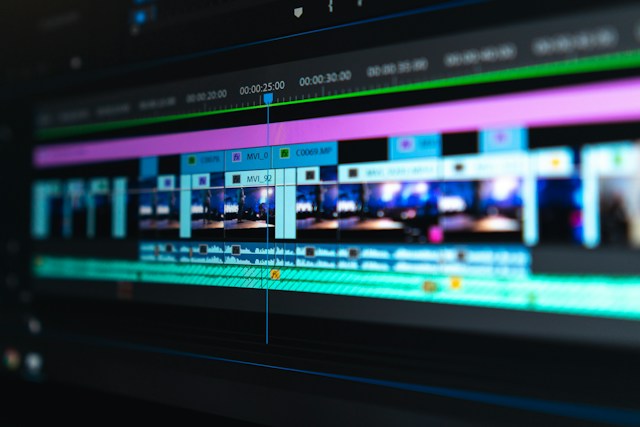
Video deposition editing for trial turns a full recorded deposition into the specific segments counsel will play in court. Those segments come from approved page and line ranges in the transcript. The testimony itself stays exactly as the witness gave it. What changes is how much of it the jury sees.
Why Juries Rarely See a Full Deposition
Full depositions are built for discovery, not storytelling. They include background questions, exhibit handling, clarifications, and long stretches that matter to the record but not to a jury. Playing all of it would test anyone's patience.
Several practical pressures push attorneys toward shorter, focused deposition clips:
- Court time limits. Many judges set time allotments, and video playback usually counts against a side's clock.
- Juror attention. Even engaged jurors drift during long, flat stretches of testimony.
- Strategic clarity. A tight clip lets the key answer land without getting buried.
- Rules of evidence. Only admissible, properly designated testimony can be played.
Who Decides What Stays in the Final Cut?
The attorneys and the court make those calls. Counsel designates the testimony they want played, opposing counsel responds, and the judge rules on disputes. A trial technician's role is to carry out those decisions accurately.
How Deposition Designations Shape Every Clip
Designations, Counter-Designations, and Objections
Deposition designations are the page and line ranges a party intends to present at trial. Once one side serves its designations, the other side typically responds. They may object to certain portions, or they may add testimony of their own.
Here is how each piece fits together:
- Designations: The testimony the offering party wants the jury to hear.
- Counter-designations: Additional portions the opposing party believes are needed for fairness or completeness.
- Objections: Challenges to specific questions or answers, often based on form, relevance, or foundation.
What Changes After the Judge Rules
Designations are rarely final when they're first exchanged. Judges may rule on objections at a pretrial conference or right before a witness is played. Each ruling can remove a line, restore a passage, or shorten a segment by a few words.
Timeline: From Transcript to Courtroom-Ready Clip
Every case moves at its own pace. Still, the path from a full deposition to a finished clip tends to follow a familiar sequence:
- Transcript and video are synced. Each line of testimony is matched to its moment in the recording.
- Designations are exchanged. Each side identifies the testimony it plans to use.
- Objections and counter-designations are resolved. The court rules, and the ranges are adjusted.
- The final edit list is locked. Everyone works from the same page and line references.
- Clips are built. Segments are cut, sequenced, and captioned.
- Counsel reviews each clip. Attorneys confirm the content matches the approved ranges.
- Playback is tested. Files are checked on the equipment that will actually be used.
What Typically Gets Cut From Deposition Clips
Objections and Attorney Colloquy
Objections and back-and-forth between counsel usually come out. If the court overrules an objection, the answer can stay while the objection itself is removed. If the objection is sustained, the question and answer typically come out together.
Common examples include:
- Brief "objection to form" interjections
- Disputes between attorneys over scope or instructions
- Requests to have the court reporter read back a question
Breaks, Off-the-Record Moments, and Dead Air
Long depositions have natural lulls. Witnesses review documents, attorneys search for exhibits, and everyone needs a break eventually. A thoughtful pause before an answer is different, and it usually stays.
Typical cuts in this category include:
- Time spent locating or reading exhibits
- Going on and off the record
- Connection problems or audio dropouts during remote depositions
Testimony the Court Has Excluded
When a judge sustains an objection, that testimony cannot reach the jury. The edit must remove it cleanly, without a stray word or an awkward jump that invites questions. Precision here protects both the record and the trial itself.
Answers Outside the Designated Ranges
Sometimes a witness wanders. A simple yes-or-no question turns into a two-minute tangent about something unrelated. Only designated lines make it into the clip, so anything outside those ranges stays out. That holds true no matter how interesting the tangent might be.
What Stays In and Why It Carries Weight
Answers That Stand on Their Own
The strongest clips contain answers that make sense without a long setup. The question is clear, the answer is direct, and the jury grasps its meaning immediately. Designations built around these moments tend to be the most persuasive.
Demeanor, Pauses, and the Moments Jurors Read
Video captures information a transcript simply cannot. Jurors notice tone, eye contact, hesitation, and body language. A transcript might show a one-word answer. Video shows whether that answer came quickly or after a long, uncomfortable silence.
Details worth preserving usually include:
- Natural pauses before an answer
- Shifts in tone, pace, or confidence
- Reactions to exhibits shown during questioning
Impeachment Clips That Need Exact Context
Impeachment clips are often short, sometimes a single question and answer. They are also among the most demanding to prepare. The clip must match the transcript exactly and start on the right word. It also needs to play the instant counsel calls for it, with no fumbling or searching.
The Technical Side of Trial Video Editing
Why Transcript Syncing Makes Precise Edits Possible
Transcript syncing links each line of the transcript to its exact moment in the video. Once that link exists, clips can be built by page and line instead of by scrubbing through hours of footage. It also makes last-minute changes far faster.
Clean Transitions Between Designated Segments
When a clip jumps from page 42 to page 118, the transition should feel intentional. Abrupt cuts can confuse jurors or make it look like something was hidden. The goal is transparency without distraction.
Common approaches to trial video editing transitions include:
- A brief fade between separate segments
- A subtle on-screen marker signaling a change in testimony
- Consistent caption formatting that resets cleanly at each new segment
Formats, Captions, and Courtroom Playback Readiness
A finished clip has to work in the room where it will play. Courtrooms vary in display systems, audio setups, and connection options. Synced captions help jurors follow along, especially when a witness speaks softly or audio quality is uneven.
Questions Attorneys Often Ask About Deposition Clips
Can Opposing Counsel Challenge How a Clip Was Edited?
Yes, and that's one reason precision matters so much. Clips should match the approved designations exactly. A clear edit log with page and line references makes it simple to answer any question about what was included.
How Much Lead Time Does Clip Preparation Need?
It depends on the number of witnesses and how settled the designations are. Starting as soon as designations are exchanged leaves room for revisions. When the transcript is already synced, post-ruling changes can often be turned around quickly.
What Happens When Designations Change Mid-Trial?
They often do. Rulings, strategy shifts, and scheduling changes can all affect a witness's clips. A trial technician working from synced files can usually rebuild a clip the same day, sometimes during a lunch recess.
Does the Original Recording Quality Limit What Can Be Edited?
It can. Poor audio, shaky framing, or missing timecode makes precise edits harder. That's why the quality of the original video deposition matters long before trial begins.
The Best Edits Are the Ones Nobody Notices
When a deposition clip is done well, jurors never think about the editing. They hear the question, watch the witness respond, and form their own impressions. The technology fades into the background, which is exactly where it belongs.
That kind of seamless playback rarely happens by accident. It comes from careful designation tracking, synced transcripts, tested equipment, and a steady hand on the controls. Continuity from deposition day through verdict is what keeps the testimony, and the case, in focus.
Planning Your Clips Before the Trial Calendar Tightens
If you have depositions headed toward trial, it's never too early to talk through clip planning. Whether your designations are still taking shape or you have a witness scheduled for next week, Schmitzer Video & Trial Services is happy to help you sort through the details.
Key Takeaway
Video deposition editing turns lengthy testimony into focused trial clips based on approved designations, objections, and court rulings without changing the witness's words. Transcript syncing, precise edits, clean transitions, and tested playback help jurors focus on the testimony rather than the technology.
Planning a trial or deposition in Michigan? Let us make the technology the last thing you have to worry about.
Request a Consultation