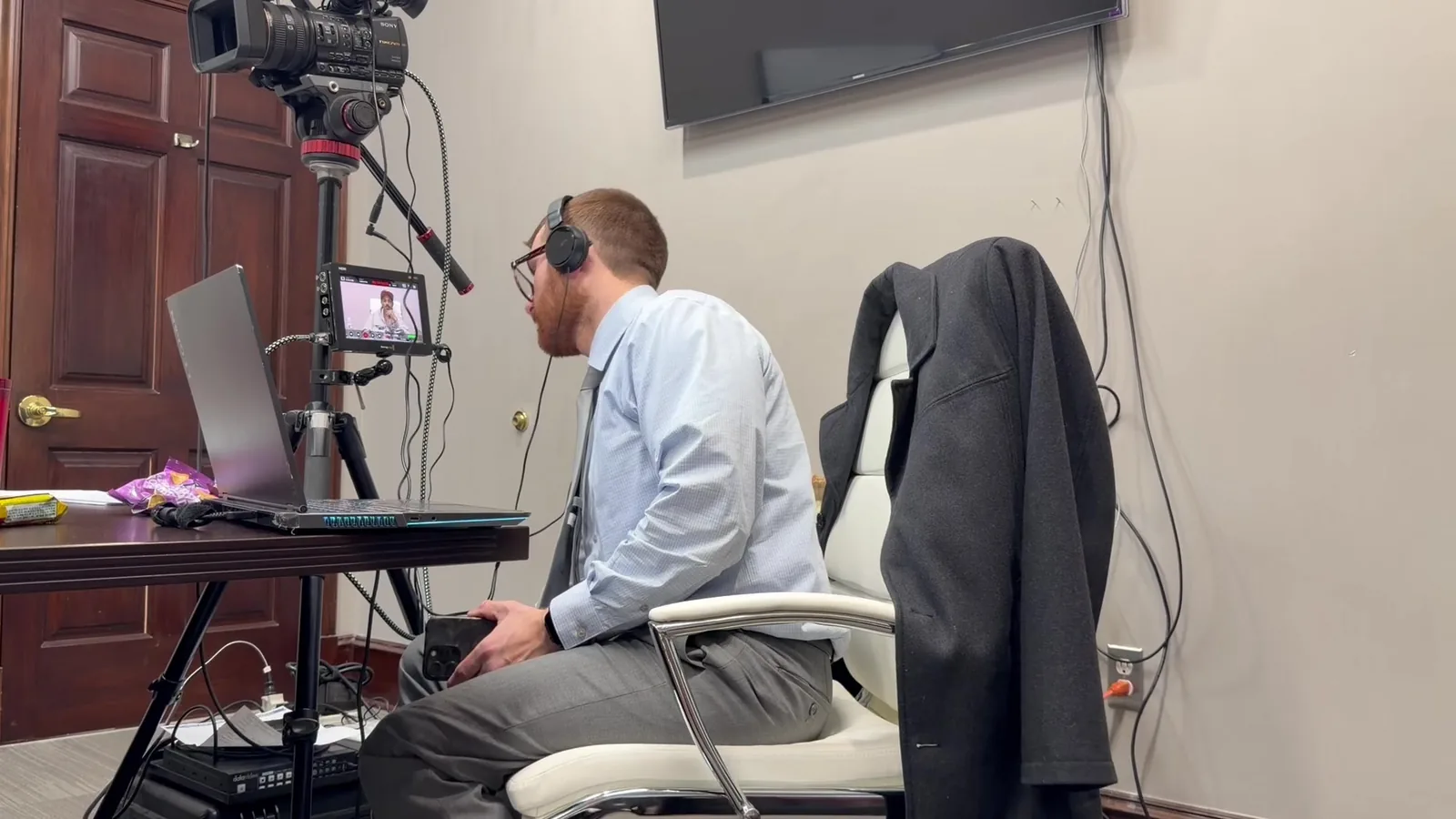
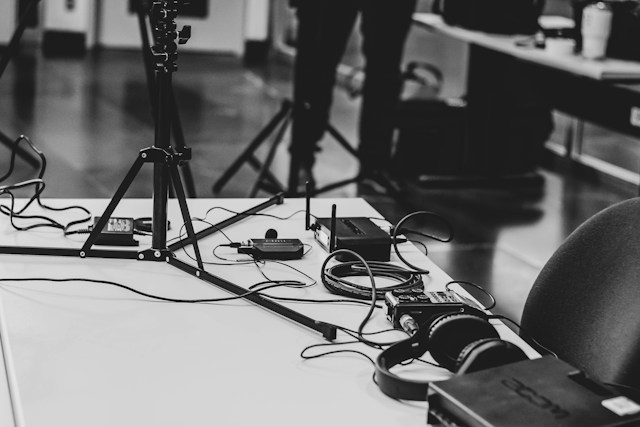
It's 6:40 in the morning, and the courthouse hallway is still half dark. The only sound is the click of hard-shell cases rolling across the tile. The judge is probably at home finishing a first cup of coffee. The jurors are still asleep or sitting in traffic on I-94.
Ask most people what trial technology looks like, and they'll describe someone pressing play during testimony. That moment matters, but it's the final step in a very long morning. For attorneys who depend on trial technology support in Michigan, the most important work happens in a room with no audience at all. Honestly, that's exactly how it should be.
In This Article
- 6:45 a.m.: Unloading the Mobile Office
- 7:15 a.m.: Reading the Room Before Anyone Else Does
- 7:45 a.m.: The Test Run No One Sees
- 8:10 a.m.: The Problem That Never Makes It to Trial
- 8:30 a.m.: The Attorney Walks In
- Why the Invisible Hours Show Up in Front of the Jury
- By the Time Someone Says "All Rise"
- Let Someone Else Be First in the Courtroom
6:45 a.m.: Unloading the Mobile Office
What Comes Through the Courthouse Doors
The cart looks simple from the outside. Inside, every case has a specific job. A typical trial morning load-in includes:
- A primary presentation laptop loaded with exhibits, clips, and synced transcripts
- A mirrored backup laptop holding the exact same files
- Spare monitors for counsel tables and the witness stand
- Cable kits in several lengths, plus adapters for older and newer courtroom inputs
- Power strips, extension cords, and gaffer tape to secure every cable run
- Portable speakers and audio cables for deposition playback
- A presentation switcher that moves between devices without a blank screen
Why Everything Comes in Pairs
Equipment doesn't fail on a convenient schedule. A laptop can freeze during a surprise software update. A cable can work perfectly on Monday and quit on Tuesday. A courtroom input can simply stop responding for no clear reason. When something breaks, the fix is a swap instead of a search.
7:15 a.m.: Reading the Room Before Anyone Else Does
Sitting in the Jury Box
One of the most useful habits in this work is also the simplest. A trial technician sits down in the jury box and looks around. What can a juror in the back row actually see?
A monitor that looks fine from the counsel table may be washed out by glare from seat twelve. A screen angled toward the witness may be nearly invisible to half the jury. Fixing those problems takes minutes at 7:15 a.m., while discovering them during testimony costs far more.
The Details Nobody Thinks About
Some parts of a courtroom technology setup never show up in a photo. They still decide whether the day runs smoothly. Before building anything, a trial technician checks:
- Which outlets actually work, and which ones share a circuit
- How cables can run without crossing walkways or tripping a witness
- Which direction the witness stand faces in relation to each screen
- Where speakers should sit so every juror hears clip audio clearly
- How the light changes as the sun moves across the windows
No Two Southeast Michigan Courtrooms Behave the Same
After years in courthouses across the region, one lesson stands out. Every building has its own personality. Some courtrooms in Wayne, Oakland, and Macomb counties have modern built-in display systems. Others rely almost entirely on equipment the trial team brings in.
Federal courtrooms add their own layer of procedures and security expectations. That's why local courthouse experience matters so much for a trial technician in Michigan. Knowing a room before you walk into it saves real time on trial day.
7:45 a.m.: The Test Run No One Sees
The Morning Systems Check
Every trial morning follows a consistent routine. It isn't glamorous, but it's the reason the first exhibit appears right on cue.
- Power up every device, including the backups, and confirm nothing is waiting on an update.
- Connect to the courtroom's display system or set up the portable monitors.
- Test each screen from the jury box, the bench, and both counsel tables.
- Play a sample deposition clip and check the audio from the back row.
- Confirm that synced transcripts scroll in step with the video.
- Queue the first exhibits of the day so they're ready the moment counsel asks.
- Switch to the backup laptop once to prove the failover actually works.
Checking In With Court Staff
The courtroom belongs to the judge, and the clerk usually knows it best. A quick morning check-in with court staff goes a long way. It's a chance to confirm where equipment can stay, whether anything changed overnight, and how the judge prefers exhibits to be handled.
8:10 a.m.: The Problem That Never Makes It to Trial
Here's a scenario that happens more often than most attorneys realize. It's 8:10 a.m., and the system check went perfectly twenty minutes ago. Then the courtroom's main display input suddenly goes dark.
Maybe a connector failed. Maybe the building's system reset overnight and didn't come back cleanly. Whatever the cause, opening statements are set for 9:15, and the clock is running.
In this moment, panic is the real enemy. Calm, practiced steps are what solve the problem:
- Confirm the fault is the courtroom input rather than the laptop or cable
- Move the feed to a portable monitor or an alternate input
- Recheck sightlines from the jury box with the new configuration
- Let the clerk know, calmly, in case building maintenance needs to follow up
8:30 a.m.: The Attorney Walks In
The Morning Huddle
Trials rarely unfold exactly as scripted. A witness is running late, so the order shifts. The judge ruled on an objection last night, so a clip needs trimming. A new exhibit surfaced during evening prep and needs to be loaded.
What Attorneys Can Hand Off the Night Before
Some morning surprises are unavoidable. Many others can be handled the evening before with one short email. This simple checklist makes the next morning much smoother:
- The final exhibit list for the day, in the order you expect to use them
- Witness order, including a backup plan if someone runs late
- Deposition clip designations, with any trims from recent rulings
- Exhibits the judge excluded or limited, so they stay off the screen
- Special requests, like callouts, highlighting, or side-by-side comparisons
Quick Takeaway: A ten-minute email the night before can save thirty minutes of scrambling in the morning. It also gives your trial technician time to test every change before court begins.
Why the Invisible Hours Show Up in Front of the Jury
Jurors notice more than attorneys sometimes expect. They read confidence in small moments. A crisp first exhibit tells them this team is prepared. A frozen screen and an awkward pause send a very different message.
First impressions in a courtroom are hard to undo. When technology stumbles early, jurors may start watching the equipment instead of the evidence. That quiet shift in attention can weaken even a strong argument.
The early morning work protects several things that matter deeply at trial:
- The attorney's focus, which stays on witnesses and arguments instead of cables
- Trial momentum, because testimony moves forward without technical pauses
- The judge's patience, which wears thin with repeated delays
- The client's story, told clearly and without distraction
By the Time Someone Says "All Rise"
When the gallery fills and the bailiff calls the room to order, everything looks easy. Screens light up on cue. Deposition clips play at just the right volume. Exhibits appear the instant counsel asks for them, and nobody gives the equipment a second thought.
That ease is earned long before anyone takes a seat. It comes from tested backups, careful cable runs, and a technician who already sat in seat twelve. The real reward is peace of mind. Attorneys get to walk in thinking about their opening, their witnesses, and their client, because the technology is already handled.
Let Someone Else Be First in the Courtroom
If you have a trial on the calendar, it's worth starting the conversation early. John Schmitzer II and Schmitzer Video & Trial Services support attorneys across Southeast Michigan with prepared, redundant, courtroom-ready trial technology. The first call is easy, and there's no pressure.
Share your trial date, your courthouse, and a rough idea of your exhibits. We'll take it from there.
Key Takeaway
A trial technician’s work begins long before the courtroom fills, with equipment setup, sightline checks, audio testing, exhibit preparation, and backup systems. Early preparation helps attorneys maintain focus and keeps technology from disrupting testimony, evidence, or trial momentum.
Planning a trial or deposition in Michigan? Let us make the technology the last thing you have to worry about.
Request a Consultation