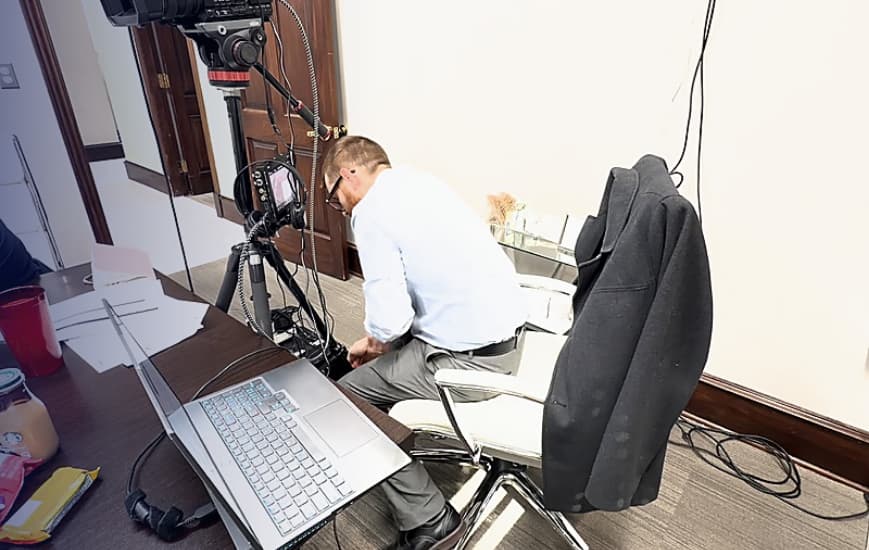
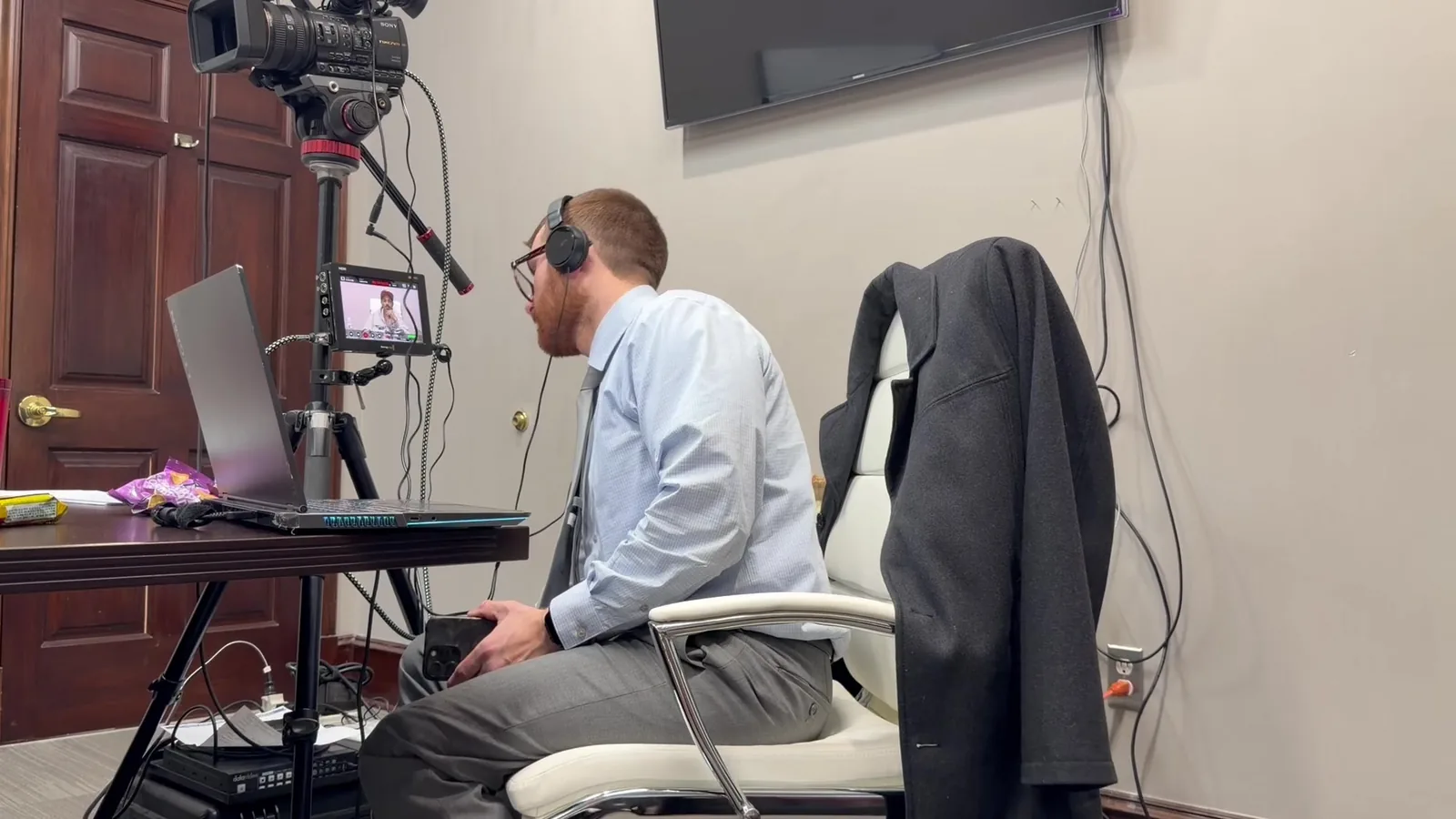
Seven in the morning, and the courthouse parking lot is already half full. A trial team walks in carrying banker's boxes, laptop bags, and a folder of exhibits finalized less than twelve hours ago. Nobody knows exactly how the day will unfold. The judge could call an early recess, a witness could say something unexpected, or opposing counsel could raise an objection that shifts the entire order of proof.
Trial days rarely go exactly as planned. Anyone who has spent real time in a courtroom knows this. What separates a smooth trial from a chaotic one usually has nothing to do with luck. It comes down to who is managing the technology, the exhibits, and the logistics happening quietly in the background.
In This Article
- The Morning Before Anything Starts
- What Happens When the Judge Calls a Recess for Five Minutes
- Mid-Trial Curveballs
- Supporting the Attorney's Focus, Not Just the Equipment
- A Steadier Trial Day
- Let's Talk Before Your Next Trial Date
The Morning Before Anything Starts
Arriving Early Isn't Optional
Most courtrooms feel calm before the judge takes the bench. That calm is deceptive. Behind it, a trial technician has usually been working for an hour or more, confirming that every piece of equipment functions exactly as expected. This means testing courtroom AV compatibility, checking that monitors display correctly, and verifying that exhibits load in the correct order.
Attorneys walking in at 8:30 for a 9:00 start assume the courtroom is simply ready. It is ready because someone made it that way. Cables get taped down and volume levels get checked. Every exhibit gets a final pass to confirm nothing is missing.
Small courthouses and older buildings add their own wrinkles. Some rooms were never designed with modern courtroom technology in mind. An outlet might sit in an odd spot, or a projector might be older than the case itself. Part of the job is knowing these quirks ahead of time.
Redundant Systems as a Habit, Not a Luxury
Redundancy is not something added after a piece of equipment fails once. It gets built into the process from day one. A second laptop sits ready to go if the primary machine has any issue. Backup cables, adapters, and battery packs travel to every courthouse, every time.
This habit exists because courtrooms are unpredictable environments. Wi-Fi can be unreliable. Power can flicker. A single point of failure is not something a trial team can afford when a jury is waiting.
Preparation on this level rarely gets noticed, which is exactly the point. Nobody in the gallery should ever know that a laptop died fifteen minutes earlier and a second one picked up seamlessly. The goal is not to look impressive. The goal is for the trial to feel uninterrupted from start to finish.
What Happens When the Judge Calls a Recess for Five Minutes
The Scramble Attorneys Don't See
A five minute recess sounds simple from the gallery. Behind the scenes, it often becomes a small sprint. An attorney may lean over and ask for a different exhibit or a specific deposition clip, all before the jury returns to their seats.
These requests tend to happen in tight windows. There is rarely time to explain the reasoning behind them, and there does not need to be. A trial technician has to move fast, stay organized, and trust the system built ahead of time. Common five minute recess requests include:
- Pulling up a specific exhibit that was just referenced in testimony
- Cueing a deposition clip for possible impeachment use
- Adjusting a timeline or demonstrative based on new testimony
- Reordering exhibits to match a shift in the attorney's line of questioning
- Printing a quick hard copy for opposing counsel or the judge
Why Preparation the Night Before Still Matters
None of this quick turnaround is possible without serious preparation the night before. Trial exhibit management is not something that happens on the fly. Every exhibit needs to be organized, labeled, and easy to locate within seconds, long before the courtroom doors open.
This is part of what litigation support services for trial lawyers actually provide. It is less about reacting well in the moment and more about removing guesswork before it becomes a problem. A five minute recess only feels manageable because someone spent hours the night before making sure it would.
Attorneys are usually reviewing their notes or talking strategy with co-counsel during these gaps. They should not have to think about where an exhibit is filed or whether a clip is cued correctly. That mental space belongs to the case, not to logistics.
Mid-Trial Curveballs
A Witness Changes Testimony
Witnesses do not always say what they said in their deposition. Sometimes it is a small inconsistency. Other times it directly contradicts earlier sworn testimony. When this happens, an attorney may need an impeachment clip pulled up immediately, with the exact timestamp ready to play.
This is where video transcript synchronization becomes essential rather than convenient. A trial technician needs to locate the precise moment in seconds, not minutes. Jurors notice hesitation.
A smooth, immediate response reinforces the attorney's credibility as much as the content itself. If the clip takes too long to find, the moment loses its impact. Timing matters as much as accuracy in these situations.
Technology Hiccups
Courtroom technology fails sometimes. A projector bulb dims unexpectedly, or a monitor loses signal mid presentation. These moments test how well a team prepared, since the response has to be immediate and calm.
Common on the fly technology issues include:
- A projector or monitor losing signal during a presentation
- Audio not syncing correctly with a video deposition clip
- A courtroom's in house AV system behaving inconsistently with outside equipment
- Wi-Fi or internet connectivity issues during remote testimony
- A laptop freezing at an inconvenient moment
Every one of these situations has a backup plan attached to it. A second device is already running in standby. A second copy of every exhibit exists on a separate drive. The goal is for the jury to never notice that anything went wrong at all.
Supporting the Attorney's Focus, Not Just the Equipment
Reading the Room
Good litigation support is not just about handling equipment correctly. It is about anticipating what an attorney will need before they ask for it. If testimony is heading toward a specific exhibit, a prepared trial technician already has it staged and ready.
This kind of anticipation comes from experience, not guesswork. It means paying attention to the flow of questioning, the judge's patience level, and the pace of the trial itself. Attorneys should be able to focus entirely on their case, not on whether the technology will keep up.
Some of this comes from sitting through hundreds of trial days over the years. Patterns emerge. A certain type of question usually leads to a specific exhibit. A witness hesitating a particular way often signals a follow up clip is coming next.
Staying Calm When the Pace Speeds Up
Trials can shift from slow and methodical to fast and unpredictable within minutes. A witness may go off script. A judge may push the schedule forward. An objection may change the direction of an entire afternoon.
Calm execution matters more in these moments than raw technical skill alone. Attorneys need someone beside them who reacts steadily, not someone who adds visible stress to an already tense room. This steadiness is often the most valuable part of trial day support, even though it rarely gets mentioned out loud.
Juries pick up on tension more than people realize. If the trial team looks rattled, the whole courtroom feels it. Staying composed is not about hiding stress. It is about handling problems quietly enough that stress never has a chance to spread.
A Steadier Trial Day
Litigation support services for trial lawyers exist for one simple reason. They remove friction so attorneys can put their full attention on the case itself, not on whether a laptop will cooperate or an exhibit will load correctly. The work described here rarely shows up in a closing argument, but it shapes whether that closing argument lands the way it should.
When the technology and exhibits move as smoothly as the argument itself, the whole case feels more credible. Jurors trust what they can follow easily. A trial that runs without visible friction lets the substance of the case speak clearly, without distraction pulling attention away from it.
Let's Talk Before Your Next Trial Date
If you have a trial date on the calendar, it helps to have these conversations early rather than the week before jury selection. We can walk through courtroom AV compatibility, exhibit organization, backup planning, and anything specific to your case before you ever step into the courtroom.
Key Takeaway
Fast-moving trial days require meticulous management of courtroom technology, exhibits, and unexpected mid-trial developments to ensure legal teams maintain momentum and keep juries focused on the case.
Planning a trial or deposition in Michigan? Let us make the technology the last thing you have to worry about.
Request a Consultation