The call usually comes later than anyone would like. Your expert has confirmed the trial date, reviewed the file, and prepared thoroughly. There is just one catch: they will be testifying from their office several states away. Suddenly, a witness you trust completely depends on a camera, a microphone, and an internet connection you have never seen.
That moment is more common than it used to be, and it rarely means something is wrong. Courts across Michigan have grown comfortable with remote appearances, and many experts now expect the option. What decides how the testimony lands is the work that happens behind the scenes. Good remote witness testimony support turns a long-distance appearance into something the jury simply watches and understands.
In This Article
- The Expert Who Cannot Make the Trip
- What Is Actually Happening Behind the Screen
- The Decision Points That Shape the Setup
- A Countdown to Testimony: How the Final Week Might Unfold
- What a Real Backup Plan Includes
- The Testimony Jurors See Is Built Days Before They See It
- Bring Your Next Out-of-State Witness Into the Courtroom With Confidence
The Expert Who Cannot Make the Trip
The Case, the Courtroom, and the Witness
Picture a civil trial in an Oakland County courtroom. The plaintiff's attorney has retained a medical expert who practices in Arizona. The expert can offer one afternoon, not two days of travel. The court has approved remote testimony, so the question shifts from "Can we?" to "How will this actually work?"
At this point, the attorney knows a few things for certain:
- The judge expects a clean connection with no extended delays
- The expert will be walked through roughly a dozen exhibits
- Opposing counsel plans a detailed cross-examination
- Arizona sits two or three hours behind Michigan, depending on the season
Why Distance Changes Everything About the Plan
When a witness is down the hall, small problems get fixed in minutes. A cable gets swapped or a volume knob gets turned. When the witness is several states away, nobody can walk over and help. Every piece of equipment on the far end has to be planned, tested, and backed up ahead of time.
What Is Actually Happening Behind the Screen
The Courtroom Side
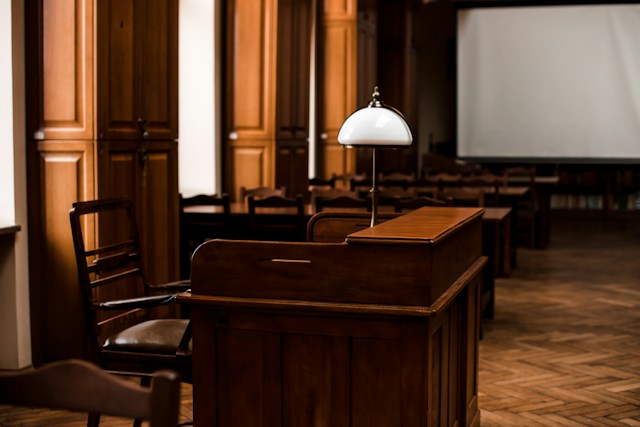
The courtroom has its own displays, speakers, microphones, and sometimes a court-run video platform. The judge, jurors, attorneys, and court reporter all need a clear view and clean audio. Many Southeast Michigan courtrooms were not originally designed for this.
Courtroom pieces that need confirming include:
- Display size and placement relative to the jury box
- Microphone coverage for counsel, the bench, and the lectern
- Speaker volume at the far end of the jury box
- How the court reporter receives the audio feed
The Witness Side
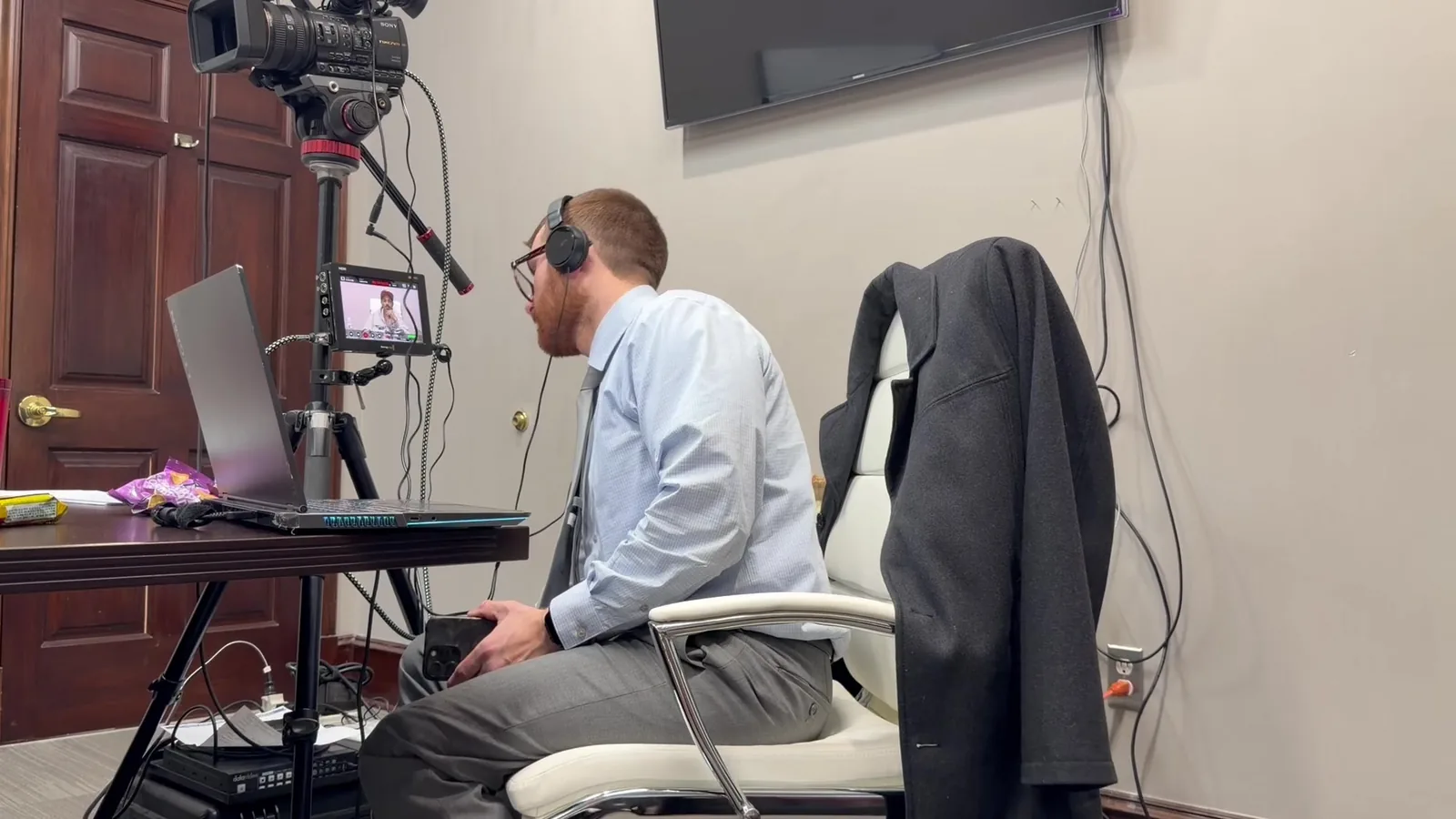
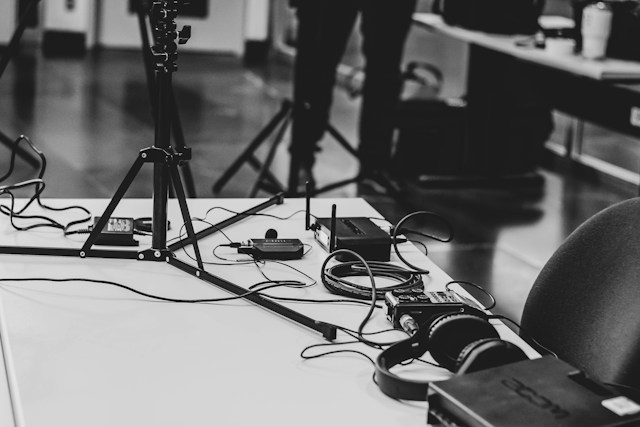
On the other end, the witness needs a proper camera, steady lighting, and a quality microphone. A laptop's built-in camera and speakers may be fine for a quick meeting. They often fall short across several hours of testimony.
The Connection Between Them
Bandwidth, network stability, and platform settings all affect what the jury sees. Even a slight audio delay can disrupt cross-examination, since attorneys and witnesses begin talking over each other. Anyone familiar with remote deposition technology knows the principles are similar, but trial raises the stakes considerably.
Connection details worth checking:
- Upload speed at the witness location, not just download speed
- Whether other people will share the network that afternoon
- Firewall or security settings that might block the platform
- A wired Ethernet option instead of relying on Wi-Fi
The Decision Points That Shape the Setup
Which Platform Does the Court Expect?
Some courts run their own video platform, and others allow counsel to arrange one. The judge may have preferences, and local practice can vary by county and courtroom. Clarifying this early prevents a scramble later.
- Court-hosted platform or counsel-arranged link
- Who sends the invitation and controls admission
- Whether the courtroom AV system can route the platform's audio and video
Where Will the Witness Physically Sit?
A private office with a closed door is usually the best option. A home office can work with the right preparation, while a hotel room or shared space adds risk. The court may also want assurance that nobody else is in the room with the witness.
- A room with a door that closes and no foot traffic
- A neutral background with no documents or screens visible
- Lighting in front of the witness, not behind
How Will Exhibits Reach the Witness?
Exhibits are often the most overlooked part of remote testimony. The expert needs to read documents, images, and records clearly, and at the right moment. Depending on the court and counsel's preference, there are a few common approaches.
- Sealed exhibit binders shipped in advance and opened on the record
- Screen sharing controlled by the trial technician
- A secure digital folder with pre-marked exhibits
- A plan for new exhibits introduced during cross-examination
Who Owns the Time Zone Math?
Time zones sound simple until a morning recess runs long. A 1:30 p.m. start in Pontiac may be 10:30 a.m. for a witness in Arizona. Someone needs to track the court's schedule in real time and keep the witness informed.
A Countdown to Testimony: How the Final Week Might Unfold
Seven to Ten Days Out
This is when the practical details lock into place. The platform is confirmed, the witness location is finalized, and exhibits start moving.
- Ship exhibit binders with tracking and delivery confirmation
- Send a backup webcam, microphone, or hotspot if needed
- Collect the witness's direct phone number and IT contact
- Confirm the witness's time zone and availability window
Three Days Out: The Full Rehearsal Connection
The rehearsal should mirror testimony day as closely as possible. That means the same room, the same network, the same device, and ideally the same time of day. If the courtroom is available, testing through its actual system is far more useful than testing office to office.
The Morning of Testimony
The technician connects early, well before the witness is called. Audio and video get checked from the jury box, not just the counsel table. The fallback phone line is confirmed and ready. Exhibit binders are verified as sealed and in the witness's room.
The First Few Minutes on the Record
Once the witness is sworn, the goal is to make the technology disappear. The technician watches connection quality, audio levels, and how jurors respond to the screen. Small adjustments happen quietly, without interrupting the examination. If something needs attention, the attorney hears about it early, not after an answer is lost.
What a Real Backup Plan Includes
Redundant Connections on Both Ends
A single internet connection is a single point of failure. On both the courtroom and witness sides, a secondary option should be ready to take over quickly.
- A cellular hotspot as a secondary network
- A backup laptop or tablet with the platform already installed
- Simple written instructions the witness can follow alone
A Phone Bridge Nobody Hopes to Use
If video fails entirely, an audio-only phone line can keep things moving while the video is restored. Whether testimony continues by phone is always the judge's decision. Having the line ready gives the court an option instead of an automatic recess.
Recorded Testimony as a Safety Net
Some legal teams choose to record the expert's testimony in advance through a video deposition. That recording can serve as a fallback, or as the primary plan when live testimony is uncertain. Professional video deposition services and certified transcript syncing help keep that option ready for playback.
The Testimony Jurors See Is Built Days Before They See It
An expert testifying from another state can be every bit as persuasive as one sitting in the witness box. The difference is that both rooms have to be treated as part of the courtroom. The witness's office, the network between cities, and the jury's view of the screen all carry weight. When they are planned together, the distance fades into the background.
No two remote appearances look exactly alike. The court, the witness, the exhibits, and the case itself all shape the right approach. What stays constant is the value of testing early and preparing for the unexpected. It also helps to have someone watching the technology while counsel focuses on the witness.
Bring Your Next Out-of-State Witness Into the Courtroom With Confidence
If a remote expert witness is on your trial calendar, a quick conversation now can save a stressful afternoon later. Schmitzer Video & Trial Services coordinates both sides of the connection, from first test call to final question. Your witness can focus on testifying, and you can focus on the case.
Reach out to talk through your trial date, your witness's location, and what needs to work before testimony begins.
Key Takeaway
Remote witness testimony requires careful coordination between the courtroom, the witness location, the video platform, exhibits, and internet connections. Early testing and reliable backup systems can help out-of-state experts testify clearly while attorneys stay focused on the case.
Planning a trial or deposition in Michigan? Let us make the technology the last thing you have to worry about.
Request a Consultation